
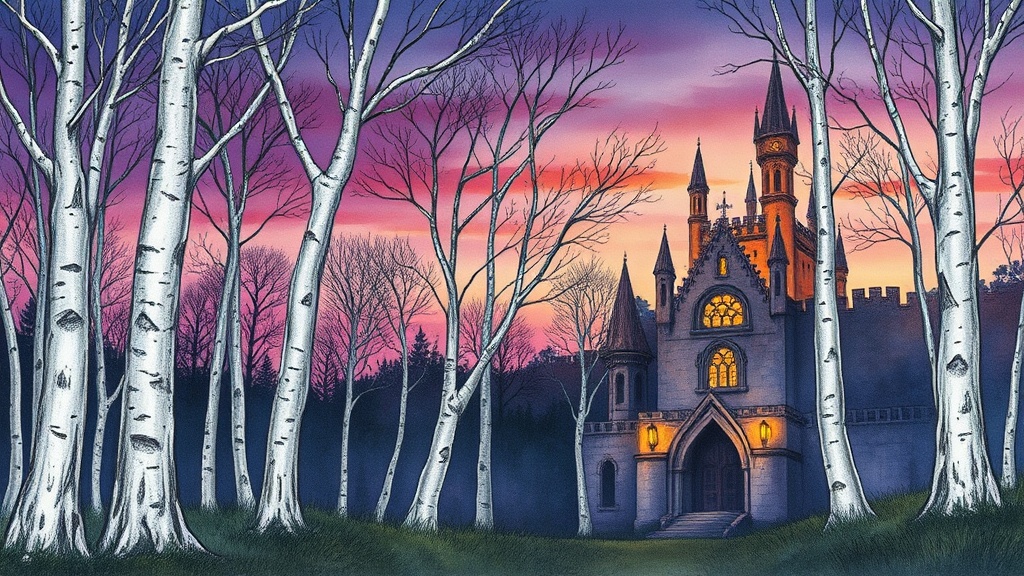
Princess Bedtime Stories — Personalised for Your Household

Most princess stories put the girl in the tower and the hero on the horse. At Dreamtime, we flip it.

Our princesses climb the tower themselves. They befriend the dragon, solve the riddle, ride home by starlight. They're brave. They're kind. They've got a plan. These are classic fairy-tale bedtimes reimagined — warm, familiar, softly magical — calibrated to your child's age and threaded with the values you've picked. No passive waiting. No rescue required. Just small heroes in velvet cloaks, doing something wonderful before bed. The child is the listener, not a character.

Here's the kind of story Dreamtime writes. Your child will hear a fresh one tonight — maybe about one of these characters, maybe about someone new from the recurring cast.

Generate princess story — free

Takes 30 seconds. Calibrated to your child's age. Ready to read tonight.

A child in a velvet cloak at a castle doorway — a watercolour bedtime illustration.

Why kids love princess stories at bedtime

Princesses are one of the oldest bedtime shapes in the world — and for good reason. A castle. A cloak. A clear little world where right and wrong are big and soft and understandable. Children reach for that shape again and again, because it helps them practise being someone.

The trouble with a lot of classic princess stories is how small the princess gets to be. She waits. She sleeps. Someone else fixes it. Bedtime is the one time of day where a child already feels small — the last thing they need is a hero who doesn't get to do anything.

So Dreamtime writes princesses with agency. The princess notices the problem. The princess says the brave thing. The princess walks into the forest, or talks to the worried queen, or decides, quietly, that a frog really isn't scary after all.

It works for the emotional arc of bedtime, too. A princess who chose kindness, or stood up, or helped someone home — that's a soft, satisfying shape to close the day on. One your child will want to hear another of tomorrow.

Three sample stories

A taste of tonight’s story

Here's the kind of story Dreamtime writes. Your child will hear a fresh one tonight — maybe about one of these characters, maybe about someone new from the recurring cast.

The Trees That Forgot Their Song

In the town of Mosshollow, the houses liked to wander.

Every night, while everyone slept, they shuffled quietly on their stone feet — just a little to the left, or around the corner, or tucked behind the baker's chimney. Every morning, the people of Mosshollow pulled on their boots and went to find their own front doors. It was ordinary and a little bit funny, and nobody minded much.

Princess Sable minded least of all. She loved the morning hunt. But tonight, as the sun turned the sky the colour of plums, she heard something strange.

A whispering.

It came from the wood at the edge of the castle — the old wood with silver-barked trees and roots like sleeping fingers. The whisper was thin and sad, like wind trying to remember a tune it had forgotten.

Sable pulled her deep-green velvet cloak around her shoulders. It was soft as moss and heavy as a hug. She did not call for a guard. She did not wait to ask permission. She walked into the wood herself.

The trees leaned close. Their branches shivered, not from cold, but from something missing.

"What is the matter?" Sable asked.

The oldest tree groaned low and slow. Its bark was carved with knots that almost looked like a frown. Sable put her hand on its trunk and felt the answer travel up through her palm: no song. The trees had lost their lullaby — the one they hummed to the town every night so the houses could sleep and wander safely. Without it, the houses would wander too far and too fast and nobody would find them come morning.

Sable thought hard. She needed a lullaby — a proper, sleepy one.

And then she remembered.

Her mother, Queen Orryn, sang to her every night. A song with no words, only a hum that moved like water over stones. Sable had never tried to sing it herself. Her heart went small and fluttery.

But the trees were waiting. The wood was quiet and kind.

So she sang.

Her voice came out wobbly at first, then warmer, then steady as the old stone walls of the castle. The hum filled the spaces between the branches. The silver bark began to glow, faintly, like moonlight trapped under water. One by one, the trees joined in — a deep, soft rumble beneath her melody.

Out in Mosshollow, the houses slowed their shuffling to a gentle, dreamy drift.

When Sable finally walked back out of the wood, the stars had come out and the castle torches were lit. She had gone in to find the lullaby. She had found something she did not know she had — a song that was also hers now.

She stood at the wood's edge for a moment, her velvet cloak dark as pine needles, listening to the trees hum on without her.

Then she went inside to find her own front door.
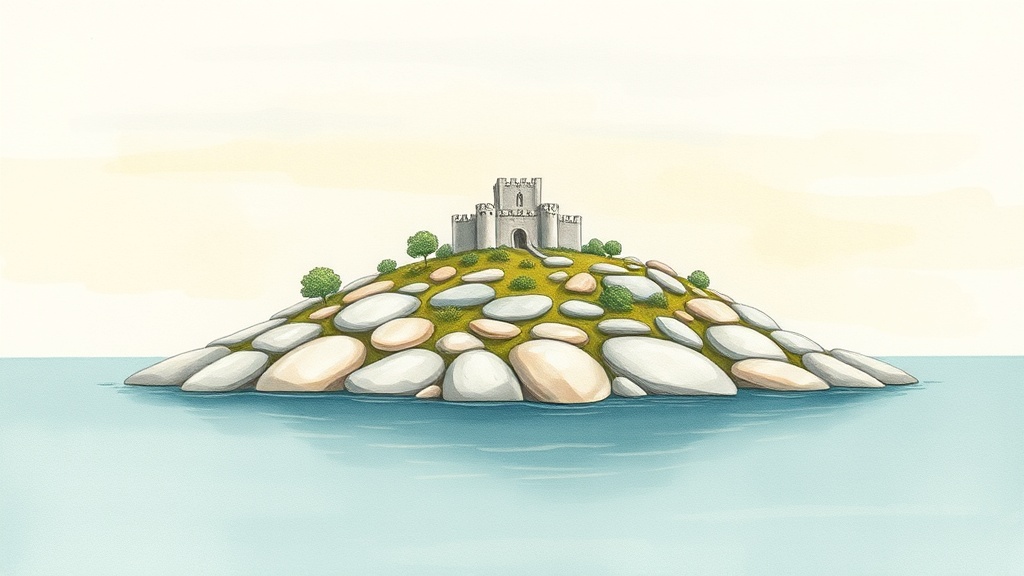
The Crown on the Clatterstone Isle

On a tiny island made entirely of smooth river stones, there stood a castle.

The stones were round and grey and pale gold, and they clicked softly underfoot whenever anyone walked across them. Everyone on the island had grown so used to the clicking that they barely heard it anymore.

Everyone except Prince Oswin.

Oswin noticed every click. He noticed the way the stones rang differently near the water's edge. He noticed which ones were cold in the morning and which ones kept their warmth from the day before. His tutors called him too slow. His guards called him too curious. His mother, Queen Tersaline, called him her careful one — and she meant it kindly.

But this morning, Queen Tersaline was not feeling kind about anything. She was feeling frantic.

"Oswin," she said, gripping his shoulders gently, "the royal banquet begins at sundown, and my crown is gone. I have looked everywhere I can think of."

Oswin straightened up. "I will find it," he said.

He started in the throne room. The high chair smelled of cold stone and candle wax. On the velvet seat, he found one golden hairpin — not a crown, but a clue. The pin pointed toward the kitchen.

In the kitchen, something was splashing in the big stone sink.

A duckling, small and cross, was tangled in a loop of gold. It was not a crown. It was a ring — one of the queen's, lost for weeks. Oswin took a very slow, very careful breath. He worked the ring loose, loop by loop, until the duckling waddled free with an affronted quack. He set the ring on the window ledge and moved on.

The gardens smelled of salt water and wild thyme. The gardener pointed wordlessly toward the far gate. "A gust blew something bright that way, earlier," he said, "toward the nursery tower."

Oswin climbed the round stone steps two at a time.

The nursery was dim and warm. Princess Beva, who was barely one year old and very small, was asleep on her side in the wooden cot. On top of her head, tilted at an extraordinary angle, sat the royal crown.

It wobbled with every tiny breath she took.

Oswin stood very still for a moment. Then, slowly — more slowly than he had ever done anything — he reached in and lifted the crown free without disturbing a single curl of Beva's hair.

The crown was cool and heavy in his hands.

Beva slept on, unbothered and uncrowned.

Oswin carried the crown back down the clicking stone steps, through the garden where the thyme smelled sharp in the afternoon heat, past the kitchen where the duckling was now sleeping too, back to his mother.

Queen Tersaline looked at the crown, then at Oswin.

"How did you know where to look?" she asked.

Oswin thought about it. "I just kept looking at small things," he said.

His mother set the crown on her own head and held out her hand.

Outside, the river stones clicked quietly in the evening breeze, and the sun began to sink toward the water.

The Light at the Edge of Everything

Princess Sorrel lived in a small stone castle at the very edge of the known world, where the sea was so wide you could not see the other side. Right beside the castle stood a tall lighthouse, and every evening Sorrel climbed the steps to light the big lamp herself. She liked the way it made the dark water glow gold.

One evening, just as the sun was turning pink and sleepy, Sorrel came down from the lighthouse and found someone on the castle steps. It was a person wrapped in a long dusty coat, with a satchel on their back and mud on their boots, fast asleep sitting up.

Sorrel looked at them for a moment. She felt a little worried. She did not know this person at all.

But their head was drooping, and their hands were cold, and they looked so very tired.

So Sorrel did what she always did when something needed doing. She went and did it.

She fetched a bowl of thick soup from the kitchen pot, still warm, with a hunk of bread on the side. She found an old wool blanket from the chest by the door. She carried out a small wooden stool and put it near a lantern so there would be light.

When she came back out, the stranger had woken up. They had soft brown eyes and grey hair at their temples and a voice like the sea on a calm night.

"I am Wren," the stranger said, looking at the soup in surprise. "A travelling storyteller. I did not mean to fall asleep on your steps."

"You were tired," said Sorrel simply, and handed them the blanket.

Wren ate the soup and was quiet for a while. Then Sorrel sat on the step below them, and Wren began to tell a story. It was about a fish who thought the lighthouse was a second moon, and it was the most wonderful story Sorrel had ever heard.

When it was finished, Sorrel felt a little sad. "Did the fish ever find the real moon again?" she asked.

"She looked up," said Wren, "and there it was, right where it had always been."

In the morning, before the sun had properly woken up, Sorrel heard the castle door creak. She ran to the window. Wren was already at the bottom of the hill, satchel on their back, walking on.

But on the stool by the lantern, where the soup bowl had been, there was something small and round and smooth. A white stone with a hole through the middle, like a tiny moon.

Sorrel held it up to the lighthouse lamp. The light came right through.

She put it in her pocket and climbed the steps to start the day.

What makes Dreamtime princesses stories different

  • Princesses with agency — the protagonist acts, never waits to be rescued.
  • Calibrated to your child's age — vocabulary, sentence length and plot complexity pitched to the youngest child in your household.
  • Values woven in, never lectured — courage, kindness, patience, honesty; one or two thread through each plot.
  • A recurring cast your child grows attached to across nights. Pin a princess they loved; she comes back tomorrow.
  • Never scary, never Disney-derivative — our princesses are fresh, warm, and ours. Safe for ages 2–10.
  • Stories that improve as you rate them — 👍 or 👎 after each one nudges future picks.

Tonight's princess story is a fresh one — calibrated to your child, woven with the values you picked.

More bedtime story themes

  • Unicorns
  • Fairies
  • Mermaids
  • Dragons
  • Horses
  • Bunnies

Frequently asked princesses bedtime story questions

Are Dreamtime princess stories based on Disney?

No — our princess stories are original. We write classic fairy-tale shapes (castles, cloaks, crowns, quests) with brave princess protagonists who act, so they feel familiar and warm without referencing any trademarked characters. If you want a tale that feels like the princess stories you grew up with, but fresh and calibrated to your child, that's exactly what Dreamtime does.

Can the princess be a prince, or non-binary?

Yes. Our recurring cast has princes, princesses, and simply “heroes” — all with the same agency and warmth. The adventure is the same; only the title changes. Nothing in our stories gates bravery or kindness to one gender.

Does my child appear as a character in the princess story?

No — and that's a deliberate choice, not a missing feature. Dreamtime writes stories for your child, not about them. Their name is captured so the app can greet them warmly, but it's never used inside the story. Kids settle more easily when they're the listener and the princess on the page is slightly outside them — a character to root for, follow, and notice.

What age are princess stories best for?

Princess stories work beautifully from age 2 upwards. For toddlers, we keep the castle small and the language simple. For older children (6–10), the princess can solve bigger puzzles, travel further, and help more people.

How long is a typical princess bedtime story?

About 5 minutes to read aloud (roughly 400 words) — long enough to feel complete, short enough not to stretch bedtime. You can also ask for a 2-minute or 10-minute version depending on how close to lights-out you are.

Can I influence the recurring cast or the themes I get?

Yes. You pick the values that matter, you pick the theme pool, and you pin princesses your child loves from past stories — they'll come back in future nights with consistent personality and visual description.

Tonight’s princesses story is 30 seconds away.