The Thermos That Held the Tide
A bedtime story shared by a Dreamtime family
22 August 2026
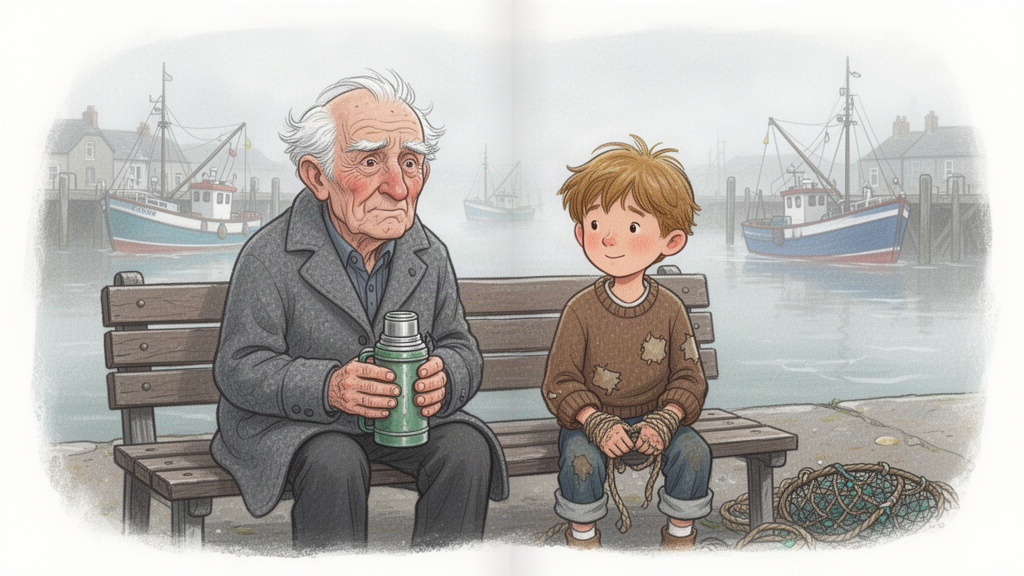
Dungarvan Quay was the kind of harbour town where nothing seemed to happen on a grey Tuesday afternoon, and everything did. Gulls stood on the mooring posts like they were on duty. Fishing boats knocked gently against the dock, and if you pressed your ear to the wood, old Pol Corrigan always said, you could hear them talking.
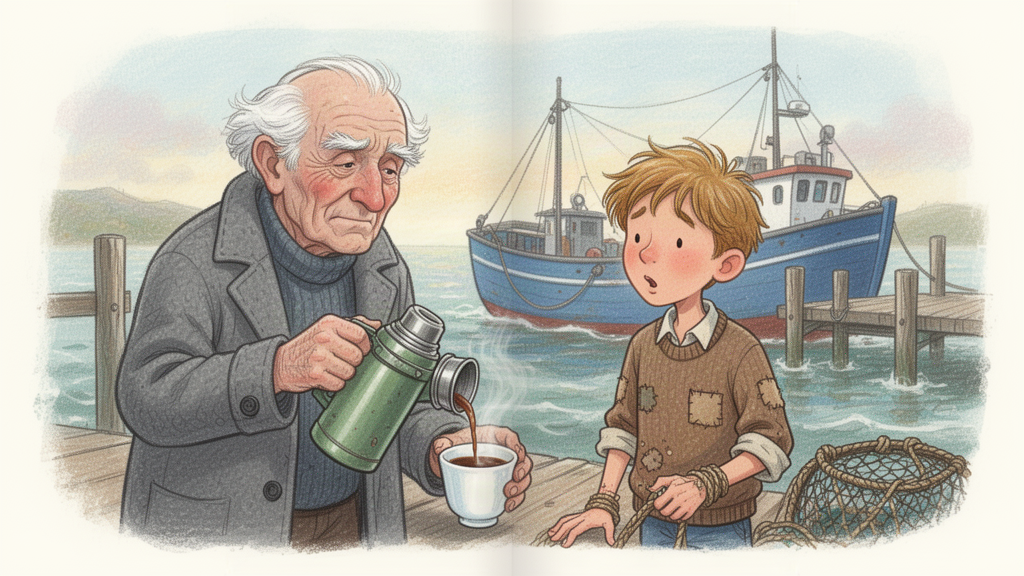
Pol was eighty-one and had a coat the colour of wet slate. He sat on the harbour bench every afternoon with a thermos wedged between his knees — a dented, sea-green thermos with a chipped cup for a lid and a strap worn soft from forty years of thumbs. The thermos had been down cliffs, up masts, into three shipwreck museums, and once, memorably, overboard and back again. It considered itself, quietly, a thermos of some importance.
"Today," Pol announced to no one and everyone, unscrewing the cup-lid, "the boats are telling the story of the Nettle Queen."
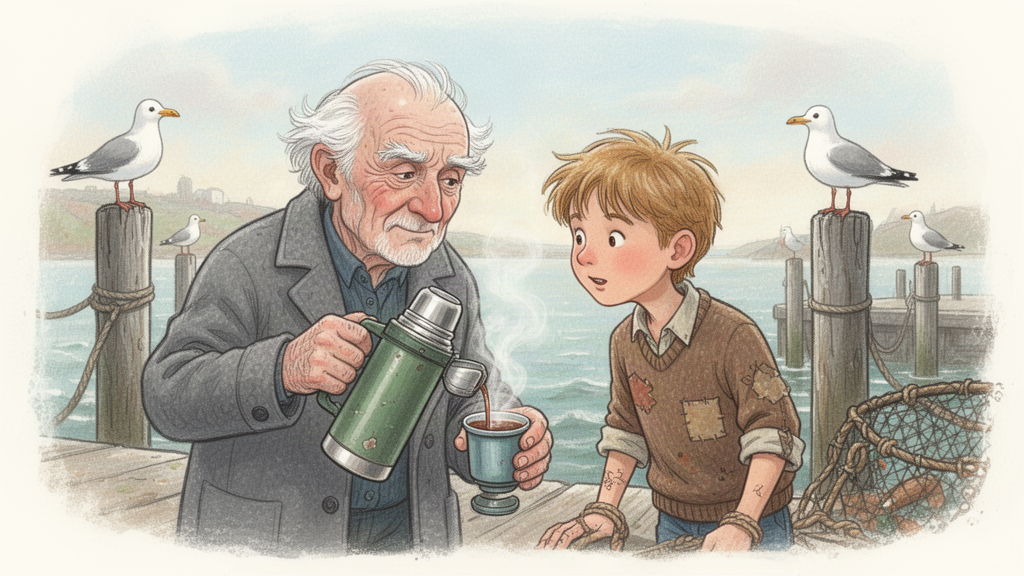
A boy called Fintan Doyle, who was mending a lobster pot nearby and pretending not to listen, listened.
The thermos, if thermoses could want things — and in Dungarvan, where boats gossiped and gulls kept ledgers, who was to say they couldn't — wanted only one thing that afternoon. It wanted to keep the cocoa inside it warm until the very last word of Pol's story, because Pol always drank the last of it exactly when a tale finished, and something about that felt like the story mattered.
"The Nettle Queen," Pol began, pouring a thin curl of steam into the cup, "sailed a boat called the Prickly Bess, and she was the bravest creature on this coast, though she was only the size of a teapot."
Fintan drifted closer. "How can something be brave if it's tiny?"
"Being tiny," said Pol, "has nothing to do with it. The Nettle Queen once sailed the Prickly Bess straight into the Widow's Fog, which is a fog so thick that boats go in and forget which way is home. Every fisherman in this harbour refused to follow her. Even the lighthouse keeper closed his eyes."
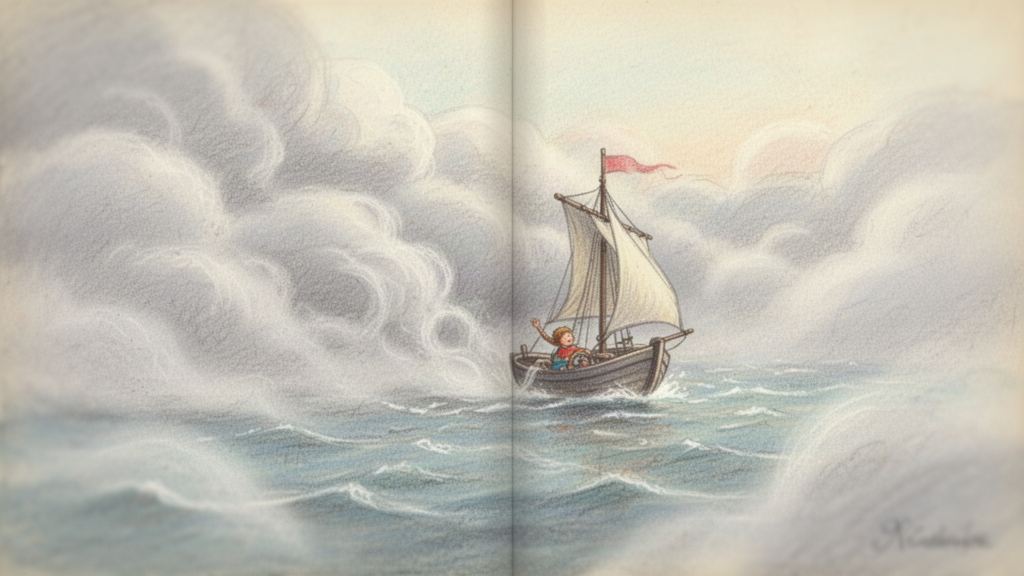
The wind picked up off the water, and the thermos, resting against Pol's knee, felt the cocoa inside it slosh and cool half a degree. It did not like that. It had one job today, and the job was warmth, right to the last word.
"Why'd she go in, then?" Fintan asked.
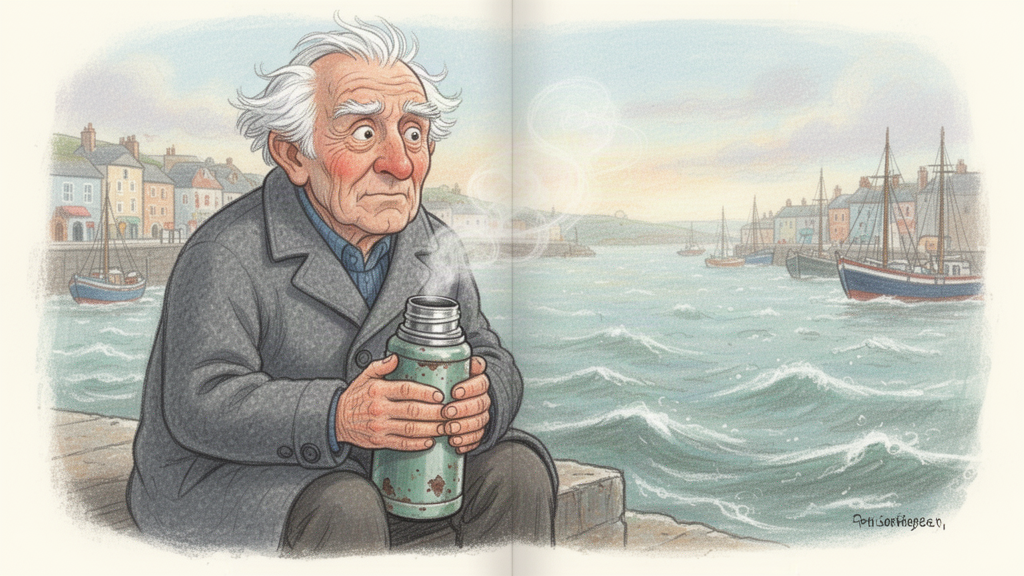
"Because her friend the ferryman, a soft-hearted fellow named Casimir Blane, had sailed in an hour before chasing a runaway hat, of all things, and hadn't come back."
Here Pol paused to sip, and the thermos felt suddenly, sharply, that this was the important part, the part where warmth mattered most, because a story left cold in the middle is a story that loses its listener. It could not do anything about wind. It could not do anything about time. But it held itself — every dent, every scratch, every year of being dropped and rescued — as tightly around that cocoa as it knew how, the way you hold a door shut against a draught.
"She had no light, mind," Pol went on. "No lamp, nothing. Just her own two eyes, no good in a fog like that, and her own two ears, which turned out to be plenty. She heard the little Prickly Bess's timbers creaking one way, and steered opposite, because a frightened boat always creaks toward danger, never away. And she heard, very faint, someone singing off-key, because Casimir Blane could never carry a tune, and she followed that terrible singing through the fog like it was the finest music in the world."
Fintan grinned. Somewhere out on the water, a real boat — the Marigold, chipped blue paint, patient as a cow — knocked twice against the pier, which the thermos had come to understand was boat-language for go on, go on.
"She found him tangled in his own nets, hat still missing, singing to keep his own spirits up. And the Nettle Queen, being small but not being nothing, didn't shout at him for wandering off. She just said, 'Well, you found a fine song for a fog,' and towed him home."
Pol lifted the thermos and turned the cup-lid all the way over, tipping out the very last of the cocoa — and it was warm. Not scalding, not lukewarm regret, but warm exactly the way cocoa should be at the end of a story, the way it had been at the start.
Fintan let out a breath he hadn't noticed holding. "Is any of that true?"
"Every boat in this harbour will swear to it," said Pol, "which in my experience is either completely true or beautifully invented, and either way it's worth keeping."
The thermos sat, emptied now, dented and salt-stained and entirely satisfied, while the gulls resettled and the Marigold creaked its slow applause and the grey afternoon went on being, to anyone not paying attention, an afternoon where nothing at all had happened.
Fintan picked his lobster pot back up, but slower now, glancing at the water like it might have more to say. Pol screwed the cup back onto the thermos, snug and certain, the way you close a good book.
"Same time tomorrow?" Fintan asked.
"If the boats are talking," said Pol, "we'll be listening."
And the thermos, riding home under Pol's arm as the streetlamps came on one by one along the quay, thought — if thermoses think such things — that it had done its one small job, and that tomorrow, it would do it again.
Give your child a new story every night
Dreamtime writes a brand-new illustrated bedtime story every night, calibrated to your child's age, with themes you pick and values woven in, never lectured.
Start your free trial →