Why Children Who Are Read to Every Night Sleep Better (And the Science Behind It)
Dreamtime
7 June 2026
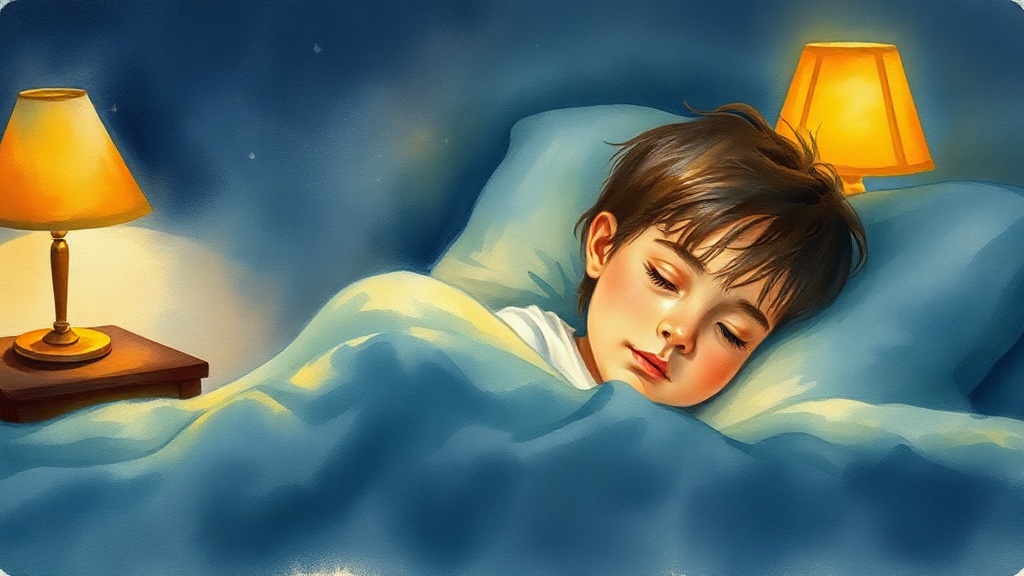
It turns out the humble bedtime story is doing a lot more than filling time before lights-out. Research shows that children who are read to regularly fall asleep faster, sleep more deeply, and wake less often in the night. Here's why — and how to make it work in your home.
It turns out the humble bedtime story is doing a lot more than filling time before lights-out. Most parents read to their children at bedtime because it feels like the right thing to do — a quiet, cosy ritual passed down through generations. But researchers have spent years looking closely at what actually happens in a child's brain and body during that story, and the findings are remarkable. Children who are read to consistently at bedtime fall asleep faster, sleep more deeply, and wake less frequently in the night. This isn't coincidence. There's a clear, well-understood chain of biology and psychology at work — and once you understand it, you'll never skip story time again.
The Stress-Sleep Connection (And How Stories Break It)
Children's bodies produce cortisol — the stress hormone — throughout the day. Even a perfectly happy day at nursery or school involves stimulation, social demands, and physical activity that keep cortisol levels elevated. The problem is that high cortisol at bedtime actively suppresses melatonin, the hormone that triggers sleep. In other words, a wired, stimulated child isn't just being difficult at bedtime — they are biologically less ready to sleep.
This is where stories come in. Listening to a calm, familiar narrative — a parent's voice, a predictable story arc, a safe and warm imaginary world — activates the parasympathetic nervous system. That's the "rest and digest" branch of the nervous system that counters the stress response. Heart rate slows. Breathing deepens. Cortisol drops. Melatonin rises. The body, quite literally, begins preparing for sleep.
The key word here is calm. Action-packed screen time before bed has the opposite effect, flooding the brain with stimulation and blue light. A quietly narrated story, by contrast, gives the brain something to gently focus on — just engaging enough to crowd out the day's anxieties, but not so exciting that it ramps up arousal again.
Why Predictability Is the Secret Ingredient
Child psychologists have long recognised that young children are calmed by predictability. When a child knows exactly what comes next — bath, pyjamas, story, sleep — their nervous system registers safety. Uncertainty and unpredictability, even minor versions of it, keep children in a mild state of alertness. A consistent bedtime ritual removes that uncertainty entirely.
Stories are a uniquely powerful part of this because they have their own internal predictability: a beginning, a middle, and an end. Story structure itself is reassuring to a child's developing brain. There's a problem, a journey, and a resolution. Night after night, the child learns that things work out. Challenges are overcome. Characters arrive home safely. That narrative rhythm is quietly teaching children that the world — even the scary, uncertain parts — tends to resolve.
For younger children especially, hearing the same story repeatedly amplifies this effect. The familiarity is the point. But as children grow through the toddler and early school years, the need for fresh stories that still feel safe and familiar becomes the sweet spot — which is why personalised stories, tailored to a child's own name and interests, can work so well. Apps like Dreamtime are built around exactly this principle: a brand-new story every night, but one that always stars your child and the things they love, giving the brain novelty and comfort at the same time.
How Stories Prepare the Brain for Deep Sleep
Sleep isn't a single state — it cycles through stages, including light sleep, deep slow-wave sleep, and REM sleep. Deep sleep is when the brain consolidates memories and the body does most of its physical repair. REM sleep is when emotional experiences are processed and filed away. Both are essential for a growing child.
What happens in the minutes before sleep shapes which stage a child enters first and how smoothly the transitions between stages go. A child who falls asleep mid-anxiety — upset about something that happened at school, or overstimulated by screens — is more likely to have fragmented, restless sleep. A child who falls asleep after a story, in a calm and emotionally settled state, tends to move into slow-wave sleep more quickly and stay there longer.
There's also evidence that the content of a story can shape the emotional tone of early sleep. Stories that end on a note of safety, resolution, and warmth effectively "prime" the brain's emotional processing for the night ahead. This is one reason why storytime just before sleep — rather than earlier in the evening — makes such a difference.
The Attachment Bonus: Why Your Voice Matters
Beyond the neurological effects, there's an attachment dimension to bedtime stories that directly affects how well children sleep. Young children's sleep is intimately connected to their sense of security. A child who feels closely connected to their caregiver — who has experienced consistent warmth and presence — produces less cortisol at bedtime and has an easier time transitioning to sleep.
Hearing a parent's voice reading aloud is, for a young child, one of the most potent signals of safety and connection available. It's not just what the story says — it's the sound of you, steady and close, weaving a world for them. Research into attachment and sleep consistently finds that children with secure attachment fall asleep more easily and wake less in the night, in part because they have greater confidence that the world is safe and that their parent will be there in the morning.
This is why, even on the busiest evenings, finding even ten minutes to sit beside your child and read aloud is worth prioritising. The investment in connection pays dividends all night long.
Practical Tips to Get the Most From Bedtime Stories
Understanding the science is one thing — making it work on a Tuesday night after a long day is another. Here are a few things that genuinely help:
- Start the wind-down earlier than you think you need to. The story works best when cortisol is already beginning to fall. Build in ten minutes of quiet time — dim lights, calm voices — before you even pick up the book.
- Use your voice intentionally. Slow down. Speak more softly as the story progresses. A gradually quieter, slower narration mirrors the sleep transition you're guiding your child towards.
- Let your child choose, but have a backup. Choice gives children a sense of control that reduces resistance. But if the choosing becomes a stalling tactic, keep two or three pre-approved options ready.
- Sit close. Physical proximity during story time amplifies the attachment benefits. A hand on the back, a child tucked into your side — the body calms through contact as much as through words.
- End the story, then end the night. Use the story's ending as a clear, gentle signal that the day is done. "And that's where our story ends — and where your sleep begins." Ritual phrases like this become powerful cues over time.
The Simplest Sleep Tool You Already Have
In a world full of sleep sprays, white noise machines, and weighted blankets, it's easy to overlook the thing that's been helping children sleep since humans first gathered around fires. A story, told with warmth and care, does more for a child's sleep than almost anything else you can offer — and it costs nothing but a little time. The science simply confirms what generations of parents have known instinctively: when a child's imagination is gently, safely engaged, and their nervous system is held in the presence of someone who loves them, sleep comes naturally. Tonight, that's all you need to remember.
Give your child a new story every night
Dreamtime creates personalised bedtime stories with beautiful illustrations, tailored to your child, every single night.
Start your free trial →