Why Some Children Hate Bedtime (And How to Tell If It's Anxiety, Overtiredness, or Just a Habit)
Dreamtime
13 April 2026
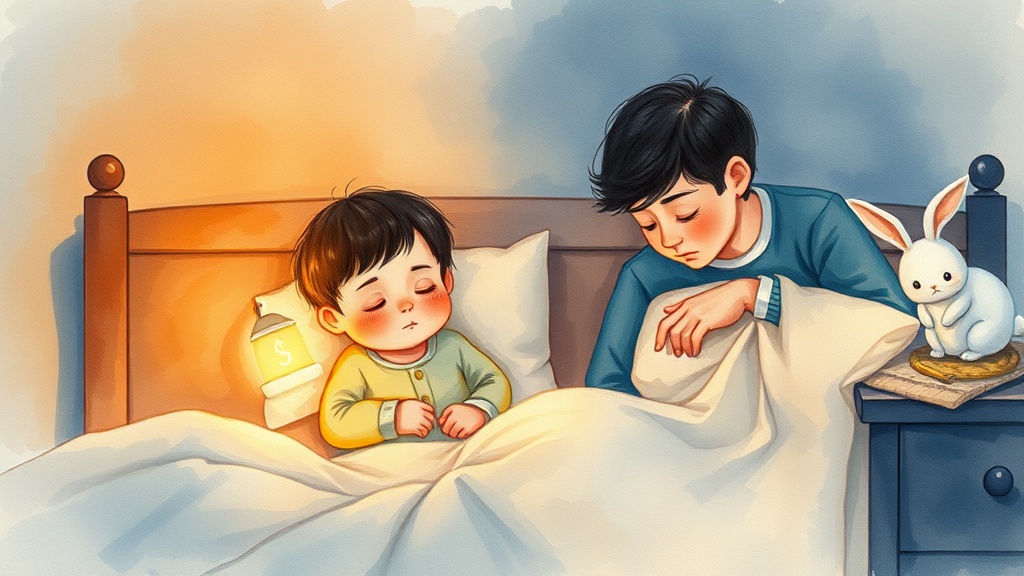
If your child fights bedtime every single night, you're not alone — and you're probably not doing anything wrong. Understanding *why* your child resists sleep is the key to finally making bedtime easier for everyone.
If your child treats bedtime like a battle to be won every single night — the stalling, the crying, the sudden urgent need for a glass of water — you've probably asked yourself more than once: why is this so hard? The frustrating truth is that bedtime resistance rarely has one simple cause. What looks like a child simply not wanting to go to sleep is often something quite different underneath. And identifying what's actually going on is the difference between strategies that work and ones that just add to the stress. Here's how to decode what your child is really telling you at bedtime — and what to do about it.
The Three Most Common Reasons Children Resist Bedtime
Before you can fix the problem, it helps to know which problem you're actually dealing with. Most bedtime resistance falls into one of three categories: anxiety, overtiredness, or habit — and each one looks subtly different, even when the behaviour on the surface seems the same.
Anxiety tends to show up as genuine distress: a child who clings, cries, worries aloud about monsters or bad dreams, asks repeated reassurance questions, or seems unable to settle even when they're clearly exhausted. They're not being manipulative — their nervous system genuinely feels unsafe when the lights go out and the house goes quiet.
Overtiredness is counterintuitive but extremely common, especially in toddlers and preschoolers. When children miss their sleep window — that narrow stretch of time when their body is ready to sleep — cortisol kicks in as a second-wind mechanism. The result looks a lot like hyperactivity or defiance: a child who is bouncing off the walls, laughing too loudly, or melting down over nothing. The more tired they are, the harder it becomes to fall asleep.
Habit is the third culprit, and it's perhaps the most reassuring one to identify because it's also the most responsive to change. If your child has learned over time that resistance leads to more time with you — one more story, a cuddle, coming into your bed — bedtime has inadvertently become a learned negotiation rather than a predictable transition.
How to Tell Which One You're Dealing With
Watch your child closely for a few nights and ask yourself these questions:
When does the resistance start? If it begins hours before bedtime — fretting about going to sleep at dinnertime — anxiety is likely a factor. If it only kicks in the moment you say "time for bed," habit may be the bigger driver.
How does your child seem physically? Rubbing eyes, glassy eyes, clumsiness, and emotional fragility all suggest overtiredness. A child who seems genuinely wired and energetic might have missed their sleep window by an hour or more.
What makes it better? If your presence alone calms them quickly, you're probably looking at habit or mild separation anxiety. If they remain distressed even with you in the room, the anxiety is deeper and worth addressing more carefully.
Is there a pattern around life events? Starting nursery, a new sibling, a change in routine, or even something that upset them at playgroup can all trigger genuine sleep anxiety in young children who don't yet have the words to tell you what's worrying them.
It's also worth remembering that these categories aren't mutually exclusive. A child can be overtired and anxious, or anxious and in the habit of stalling. Understanding the primary driver helps you choose where to start.
What to Do About Bedtime Anxiety
For children whose resistance is rooted in anxiety, the most important thing you can do is validate their feelings without reinforcing the fear. Saying "there's nothing to be scared of" is well-meaning but often backfires — it dismisses the feeling rather than addressing it.
Instead, try:
- Naming the feeling: "It sounds like you're feeling a bit worried about being on your own. That makes sense." Children who feel understood tend to calm faster than children who feel corrected.
- Creating a comfort ritual: A specific soft toy, a nightlight they choose themselves, or a simple breathing exercise ("let's blow out the candles" — slowly exhale five times) can give anxious children a sense of agency.
- Using story as a bridge: Stories featuring characters who face their fears gently — and come out safe on the other side — can do quiet therapeutic work that a direct conversation can't. This is one reason many parents find that personalised bedtime stories, like those created by Dreamtime, help anxious children settle: when a child sees themselves as the brave character in the story, it shifts the emotional narrative before sleep.
- Gradual retreat: If your child needs you present to fall asleep, try sitting by the door instead of the bed, then outside the door the following week. Small, consistent steps are far more effective than sudden changes.
What to Do About Overtiredness
If overtiredness is the culprit, the fix is often counterintuitive: put them to bed earlier. Many parents assume that a child who won't sleep needs less sleep time, when the opposite is true. Moving bedtime 20–30 minutes earlier for a week can dramatically reduce resistance because you're catching them before cortisol floods their system.
Other helpful steps:
- Protect the wind-down window: The 45–60 minutes before bed should be genuinely calm — no screens, no roughhousing, no stimulating activities. Even exciting books or games can make the transition harder.
- Watch for tired cues: Yawning, eye-rubbing, and a dip in mood or coordination are your signals. When you see them, start the bedtime routine immediately rather than finishing what you're doing.
- Keep nap times consistent for children under five: dropping naps too early, or letting them nap too late in the day, is one of the most common causes of overtired bedtime chaos.
What to Do About Bedtime Habits
If your honest assessment is that bedtime resistance has become a learned pattern, the good news is that habits can be unlearned — it just takes consistency and a willingness to ride out a few difficult nights.
- Make the routine predictable and non-negotiable: A clear sequence — bath, pyjamas, teeth, story, lights out — removes the opportunity for negotiation because the routine itself becomes the authority, not you.
- Offer limited, genuine choices: "Do you want the blue pyjamas or the stripy ones?" gives children a sense of control without opening the door to endless bargaining.
- Respond warmly but briefly to stalling: A quick check-in at five minutes is fine; repeated visits reward the behaviour. A calm, consistent "I love you, it's sleep time" and then leaving achieves more than debating at the door.
- Don't make the consequence interesting: If your child comes downstairs, walk them back with minimal fuss and zero engagement. The more boring the response, the faster the habit fades.
A Final Word for Exhausted Parents
Bedtime resistance is one of the most universally reported challenges in early parenting — which means if you're in the thick of it, you are in extremely good company. The fact that you're trying to understand why your child struggles, rather than simply surviving the battle each night, already puts you a step ahead.
Most children do grow through difficult sleep phases, particularly when supported by a calm, consistent routine and a sense that bedtime is safe and predictable rather than something to dread. Small, thoughtful changes — an earlier bedtime, a better wind-down, a story that feels made just for them — can shift the dynamic more quickly than you might expect.
Be patient with yourself too. Bedtime is hard partly because it comes at the end of the day when everyone is running on empty. You don't have to get it perfect every night. You just have to keep showing up — which, clearly, you already are.
Give your child a new story every night
Dreamtime creates personalised bedtime stories with beautiful illustrations — tailored to your child, every single night.
Start your free trial →