Why Children Ask for the Same Story Every Night (And When to Mix It Up)
Dreamtime
1 April 2026
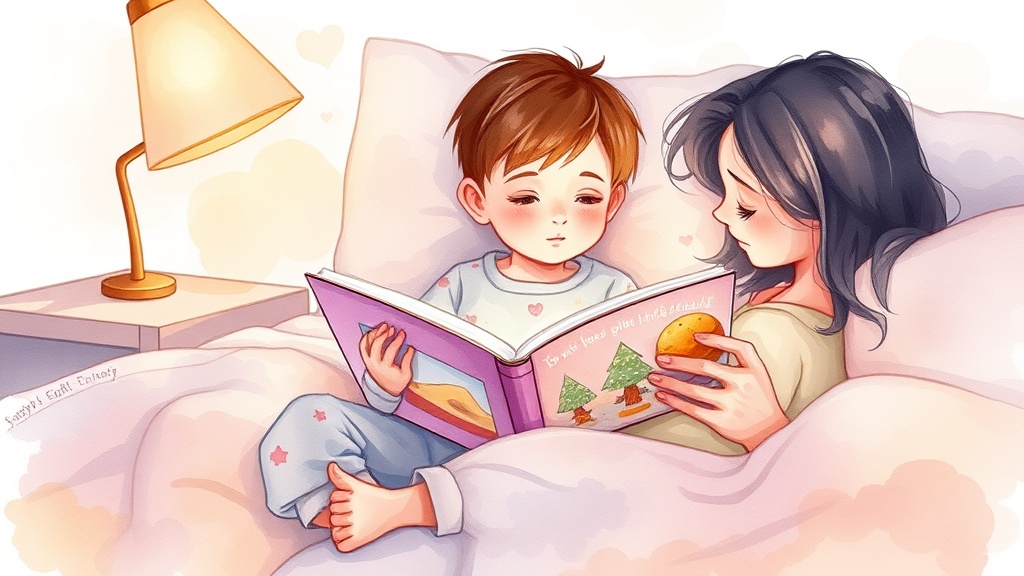
If your child demands the same book for the fiftieth night in a row, you're not alone — and there's fascinating science behind why they do it. Learn what repetitive reading tells us about child development, when it's genuinely beneficial, and how to gently introduce new stories when the time is right.
You've read The Very Hungry Caterpillar so many times you could recite it backwards. You know exactly which page makes your child giggle, which one they'll "helpfully" finish for you, and which line they'll shout if you try to skip it. If this sounds familiar, welcome to one of the most universal — and quietly exhausting — experiences of early parenthood. But here's the thing: your child's insistence on the same story night after night isn't stubbornness or a limited imagination. It's actually a sign that their brain is doing something quite remarkable.
The Developmental Science Behind Repetition
For children aged roughly 2–6, repetition isn't boring — it's deeply satisfying in a way that's hard to overstate. When a child hears a familiar story, their brain isn't passively receiving information; it's actively predicting, confirming, and consolidating.
Researchers call this "predictive processing," and for young children, it's a major source of pleasure and security. Each time the story unfolds exactly as expected, their brain gets a small but genuine reward. They anticipated correctly. The world made sense. That feeling — of being right, of being safe, of knowing what comes next — is particularly powerful for toddlers and preschoolers who spend most of their waking hours navigating a world that is largely unpredictable and confusing.
There's also strong evidence that repetition is one of the most effective ways children acquire language. Studies from the University of Edinburgh found that children learn new vocabulary significantly faster when words appear in a familiar, repeated story context rather than a new one. The predictable structure frees up cognitive resources so the child can focus on the language itself — the rhythm, the meaning, the new word hiding in a sentence they already know.
What Repetitive Reading Actually Teaches Your Child
Beyond comfort and language, there's a longer list of genuine skills your child is quietly building every time you re-read their favourite book:
Narrative understanding. Story structure — character, problem, resolution — becomes deeply internalised through repetition. Children who understand how stories work become stronger readers and more sophisticated thinkers later in life.
Early literacy. Familiar text encourages children to track words on the page and start connecting spoken sounds to written letters. Many children begin "reading" a beloved book from memory, which is actually a meaningful early literacy milestone, not cheating.
Emotional processing. Children often fixate on stories that contain themes they're working through — a new sibling, starting nursery, fear of the dark. Returning to the same story is a safe way to sit with big feelings and process them in a contained, predictable space.
Confidence and mastery. Being able to finish your sentences, predict the ending, or spot the error when you "accidentally" get a word wrong gives children a powerful sense of competence. At an age when adults control almost everything, knowing a story better than the grown-up is genuinely thrilling.
When the Loop Might Be Worth Breaking
None of this means you have to read the same book forever. There are real signals that a child is ready — or even quietly hungry — for something new, even if they'd never admit it unprompted.
Watch for these signs:
- They seem distracted or less engaged than they used to be during the story
- They've stopped joining in or predicting along
- They're asking more questions about the world beyond what the book addresses
- They're older (school age children, 5+, typically have a broader appetite for novelty)
Around age 6–7, the psychological pull of repetition naturally loosens as children develop a stronger sense of narrative curiosity — the genuine desire to find out what happens next. This is a wonderful window to expand their reading world.
How to Introduce New Stories Without a Meltdown
The trick is never framing it as a replacement. Here are approaches that tend to work well:
The "one new, one old" rule. Keep the beloved favourite as a guaranteed part of the routine, but add a new story first. The security of knowing the familiar one is coming makes children far more open to trying something unfamiliar.
Follow their interests, not yours. A child obsessed with dinosaurs who resists new books will often embrace a new dinosaur story enthusiastically. Interest-led novelty feels safe because the subject matter is already familiar territory.
Let them choose from a curated shortlist. Offering two or three new options gives children a sense of control that dramatically reduces resistance. "Do you want the dragon story or the one about the little girl who goes to the moon?" is far more effective than simply presenting something new.
Make the new story an event. Build gentle anticipation during the day — "Tonight we're going to hear about a bear who gets lost in a jungle" — so the new story arrives with a sense of occasion rather than surprise.
This is one area where apps like Dreamtime can be genuinely useful: because each story is personalised to your child's name and current interests, the "new story" still feels familiar and safe — a helpful bridge for children who find novelty stressful at bedtime.
A Note for Parents Who Are Simply Tired of The Book
It would be dishonest not to acknowledge this: sometimes the developmental wisdom is clear, but you have read this book forty-seven times and you simply cannot do it again tonight with full emotional presence.
That's completely valid. A few things that help:
- Read it differently. Try a silly voice, read it slower, read it faster, whisper it. Children often find this hilarious, and it keeps you sane.
- Ask questions as you go. "Why do you think the caterpillar ate all that food?" keeps you engaged and builds comprehension skills simultaneously.
- Hand over some control. Older toddlers and preschoolers often love "reading" the book to you. Their version will be wonderfully wrong and completely delightful.
- Be honest (gently). "Mummy's read this one lots lately — can we try something new together?" Children are often more receptive to honesty than we expect.
The Bigger Picture
Your child's attachment to a single story is not a problem to solve. It's a window into how they're making sense of the world — finding comfort in predictability, building language through repetition, and processing emotions in the safest space they know: right next to you, at the end of the day.
When the time comes to explore new stories, it will happen naturally, especially if you follow their lead and make novelty feel like an adventure rather than a disruption. Until then, you can read that caterpillar book one more time — knowing that every single repetition is doing something real and good for the little mind listening beside you.
Give your child a new story every night
Dreamtime creates personalised bedtime stories with beautiful illustrations — tailored to your child, every single night.
Start your free trial →