Why Children Ask for 'One More Story' (And What It's Really Telling You)
Dreamtime
12 April 2026
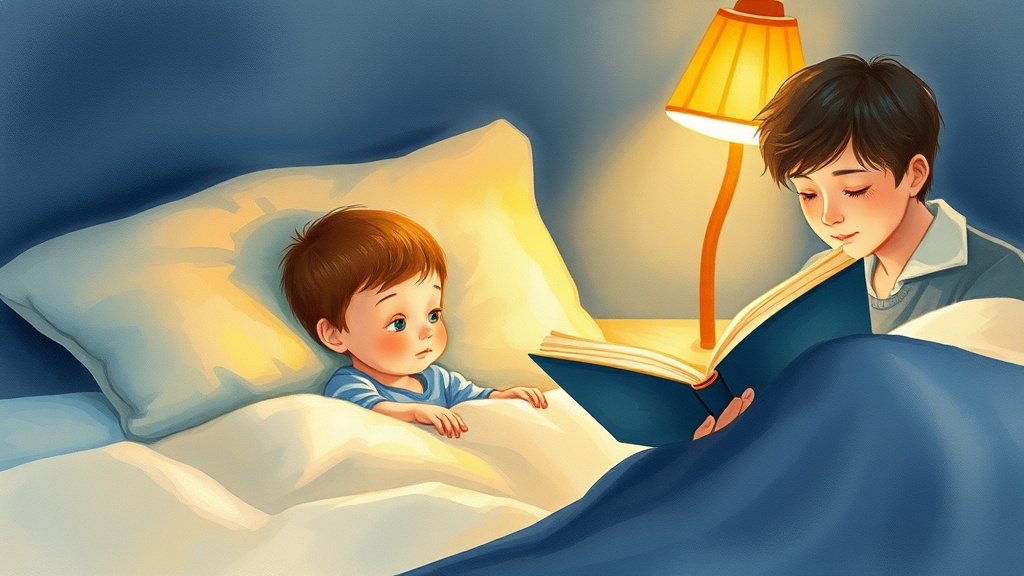
If your child begs for another story the moment you close the book, you're not alone — and it's not just a stalling tactic. Understanding what's really behind that request can transform your bedtime routine for the better.
It happens in homes everywhere, every single night. You've read the story, said the goodnights, tucked in the covers — and then comes the small voice: "One more. Please. Just one more." Most parents instinctively read this as a delay tactic, a last-ditch attempt to push back bedtime by another ten minutes. And sometimes, honestly, it is. But child development research and sleep science suggest there's often something much more meaningful going on — and understanding it can completely change how you respond.
It's Not Always About Avoiding Sleep
Children between the ages of two and ten are in the middle of an extraordinary period of emotional and neurological development. During the day, they absorb an enormous amount — new social dynamics, confusing feelings, fragments of overheard adult conversations, playground conflicts, exciting ideas they haven't had time to process. Bedtime is often the first moment of genuine quiet they've had all day.
Stories provide a safe container for all of that. When a child asks for one more story, they may be reaching for something that helps them make sense of their world before they let go of the day. The narrative structure of a story — a character, a problem, a resolution — mirrors the very process their brain is trying to work through. It's not manipulation. It's meaning-making.
Research into children's emotional regulation consistently shows that the transition from wakefulness to sleep is one of the most emotionally vulnerable times of day for young children. Anxiety, loneliness, and unprocessed feelings tend to surface right at the moment the busyness stops. A story doesn't just entertain — it accompanies a child through that transition.
What Your Child Is Actually Looking For
When you dig a little deeper, the "one more story" request is usually expressing one of a few underlying needs:
Connection. Storytime is one of the most focused, undivided forms of attention a parent gives a child. In a busy household, it may genuinely be the only time that day your child has had you entirely to themselves. The story is partly a vehicle — what they really want is you, present and close, for just a little longer.
Comfort and safety. The ritual of story — the same lamp on, the same snuggle position, the familiar sound of your voice — is deeply regulating for a child's nervous system. Stories signal: the world is predictable, you are safe, all is well. Asking for another is sometimes simply asking to stay inside that feeling.
Unfinished emotional business. If something happened that day that your child hasn't fully processed — a falling-out with a friend, a moment of embarrassment, something that confused or frightened them — they may be drawn to stories that help them rehearse emotions they're still carrying. It's no coincidence that children often gravitate toward the same story repeatedly during unsettled periods.
Sensory winding-down. The sound of a calm, rhythmic voice is genuinely physiologically soothing. It slows the heart rate, lowers cortisol, and helps activate the parasympathetic nervous system. Your child's body may be using storytime to physically downregulate — and asking for more because it's working.
How to Respond Without Creating a Nightly Battle
Knowing why children ask for more doesn't mean you have to say yes indefinitely. Boundaries matter, and a predictable end to storytime is actually part of what makes it feel safe. But how you hold that boundary makes an enormous difference.
Set the expectation before you begin. Rather than negotiating at the end, establish the number at the start: "Tonight we're having two stories, then it's sleep time." Children cope far better with limits they can see coming than with ones that appear suddenly.
Give it a ritual ending. Create a small, consistent signal that storytime is over — a particular phrase, a gentle forehead kiss, switching on a nightlight. Rituals are powerful precisely because they don't require negotiation. The ritual says it's finished so you don't have to.
Acknowledge the feeling without caving. If your child protests, you can be warm and firm at the same time. "I know you'd love another one. I love reading with you too. And now it's time for sleep." Naming the feeling takes the pressure out of it without extending the session.
Build in enough story time that they don't feel rushed. Sometimes the "one more" plea is a sign that the story felt too hurried, too squeezed between other tasks. Even fifteen minutes of genuinely unhurried story time — phones away, fully present — tends to satisfy more completely than a longer but distracted session.
When Storytime Genuinely Isn't Enough
Occasionally, persistent requests for more stories signal something worth paying attention to. If your child seems genuinely anxious at bedtime over an extended period, if they're struggling to separate from you consistently, or if sleep resistance is escalating rather than settling, it's worth gently exploring what might be happening in their day. Sometimes a conversation — however simple — about what's on their mind at bedtime reveals more than any story could.
For families where storytime has become a source of stress rather than connection (maybe because you're exhausted, or you've run out of ideas, or your child has consumed every book on the shelf), it can help to take some of the pressure off yourself. Apps like Dreamtime generate personalised bedtime stories each night tailored to your child's name, age, and interests — complete with narration and watercolour illustrations — which can give both of you something fresh and engaging to settle into, without the scramble to find something new.
The Bigger Picture: Why This Moment Matters
It's easy to see bedtime as the finish line after a long day — the moment you're finally released back to yourself. And of course, you need that. But it's worth holding onto the fact that for your child, bedtime is not the end of the day. It's one of its most emotionally significant moments.
The stories you share, the voice they fall asleep to, the feeling of being safely seen before the lights go out — these are the experiences that become part of how children understand themselves and the world. The "one more story" request, annoying as it can be at 8:47pm, is your child reaching for something genuinely important.
You don't have to give them one more story every time. But understanding what they're really asking for means you can give them something better: a response that's warm, clear, and connected — even when the answer is no.
Give your child a new story every night
Dreamtime creates personalised bedtime stories with beautiful illustrations, tailored to your child, every single night.
Start your free trial →