When to Stop Reading Bedtime Stories (And Why You Don't Have To)
Dreamtime
4 May 2026
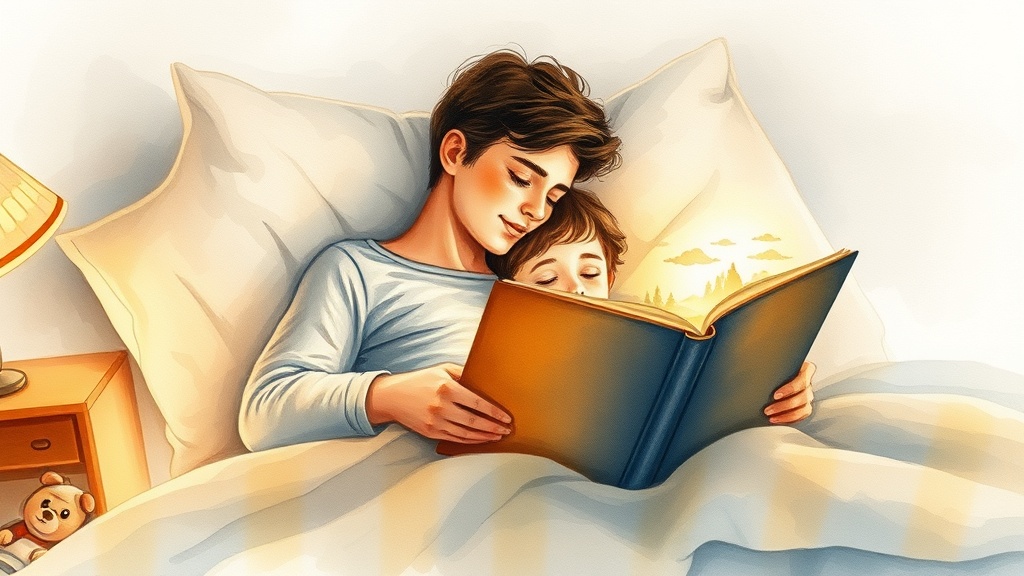
Many parents wonder when to stop reading bedtime stories — whether their child is 'too old' or ready to read alone. The answer might surprise you. Here's what child development experts actually say.
At some point, almost every parent finds themselves quietly wondering: when to stop reading bedtime stories? Maybe your child has started reading independently. Maybe they're seven, eight, nine years old, and it feels like storytime is something you've quietly outgrown together. Perhaps the books are getting longer, the evenings shorter, or life is simply getting busier. Whatever the reason, the question tends to sneak up on you — and most parents end up stopping much earlier than they need to. As it turns out, the 'right age' to stop is probably a lot older than you think.
Why Parents Stop Sooner Than They Should
There's a common assumption that bedtime stories are really for younger children — toddlers and preschoolers who can't yet read for themselves. Once a child can pick up a book independently, the thinking goes, the parent's job is done. But this conflates two very different things: a child's ability to read, and the value of being read to.
Research consistently shows that children can listen to and understand stories that are far more complex than they could read on their own. A seven-year-old who can decode simple chapter books can still follow and deeply enjoy a story pitched at a nine or ten-year-old level — but only if someone reads it to them. That gap between listening comprehension and reading ability can stretch well into the primary school years, sometimes beyond.
There's also the social and emotional side of things. Many parents stop reading aloud not because their child wants them to, but because it quietly falls away — a later bedtime here, a busy evening there — until one day it just isn't happening anymore. In most cases, nobody actually made the decision.
What the Research Actually Says About Reading Aloud to Older Children
The academic case for continuing to read aloud to children long past the 'learning to read' stage is genuinely compelling. Studies from the University of Melbourne found that children who were read to regularly at age eight had significantly better literacy outcomes at ten — independent of their own reading habits. Being read to builds vocabulary, comprehension, and a love of stories in ways that solo reading simply can't replicate at the same pace.
Beyond literacy, there's the matter of emotional development. Stories are one of the most powerful tools children have for understanding feelings — both their own and other people's. Hearing a story narrated by a trusted adult, with all the expression and warmth that brings, creates a kind of shared emotional experience. It opens conversations that might not happen any other way. A child who hears a story about a character feeling left out is far more likely to say that happened to me than one who reads the same passage silently alone.
And then there's the most straightforward benefit of all: connection. Bedtime storytime is a moment of genuine, unhurried closeness between parent and child. As children grow and days fill up with school, activities, and screens, that quiet ritual becomes more valuable, not less.
So When Should You Stop Reading Bedtime Stories?
Honestly? When your child clearly and genuinely doesn't want you to anymore — and even then, it's worth checking whether they mean it. Many older children still love being read to but feel they're supposed to have outgrown it. A casual "shall we carry on with our book tonight?" will often get a very enthusiastic yes from a ten-year-old who would never have asked themselves.
There are natural transition points worth acknowledging. Around ages eight to ten, children often start wanting more agency over their reading — they have opinions about books, favourite series, stories they want to explore at their own pace. This is a wonderful thing, and it doesn't have to replace shared storytime. It can sit alongside it. You might read one chapter of a shared book together, then they read independently for a while. The two things complement each other beautifully.
If your child is starting to read independently at night and you're looking for a way to keep the magic of storytime alive without the pressure of always having the right book to hand, it's worth knowing that tools like Dreamtime can help bridge that gap — generating a fresh, personalised story every night tailored to your child's name, age, and interests, complete with narration, so the ritual can continue even when life gets in the way.
How to Keep Storytime Going as Children Get Older
If you've drifted away from regular bedtime reading, it's genuinely never too late to start again. Here are a few ways to make it feel natural rather than forced:
Let your child lead on the books. Older children are much more likely to stay engaged with storytime if they've had a hand in choosing what you read. Visit the library together, ask their teacher for recommendations, or let them pick a series they've heard friends talking about.
Embrace chapter books. Long, immersive chapter books are actually better for older children than shorter stories — they build patience, memory, and the ability to hold a narrative in mind over time. The Chronicles of Narnia, the His Dark Materials trilogy, Roald Dahl, Michael Morpurgo — there is so much to enjoy together.
Keep it low-pressure. Some nights you'll manage a full chapter. Some nights you'll manage two pages. That's completely fine. The habit matters more than the duration.
Talk about what you've read. One of the greatest gifts of reading aloud together is the conversation it sparks. "What do you think will happen next?" or "Would you have done the same thing as she did?" — these small moments of reflection are quietly building huge things in your child's mind.
Don't worry about being a 'good' reader. Children don't care whether you do all the voices perfectly or stumble over the long words. They care that you're there, giving them your time and attention. That is the whole thing.
The Bigger Picture
Bedtime stories aren't really about stories. They're about the feeling a child carries with them as they fall asleep — that they are loved, that the world is interesting and safe, that someone took time to sit with them and share something magical. That feeling doesn't have an age limit.
So if you've been wondering when to stop reading bedtime stories, here's the gentle reassurance you might have been looking for: you almost certainly don't have to yet. And when the time does come — when your child is a teenager with a novel on their own bedside table and absolutely, definitely doesn't need you to read to them anymore — there's a good chance you'll both look back on those evenings as some of the best ones.
Give your child a new story every night
Dreamtime creates personalised bedtime stories with beautiful illustrations, tailored to your child, every single night.
Start your free trial →