Why What You Do After the Story Matters as Much as the Story Itself
Dreamtime
30 May 2026
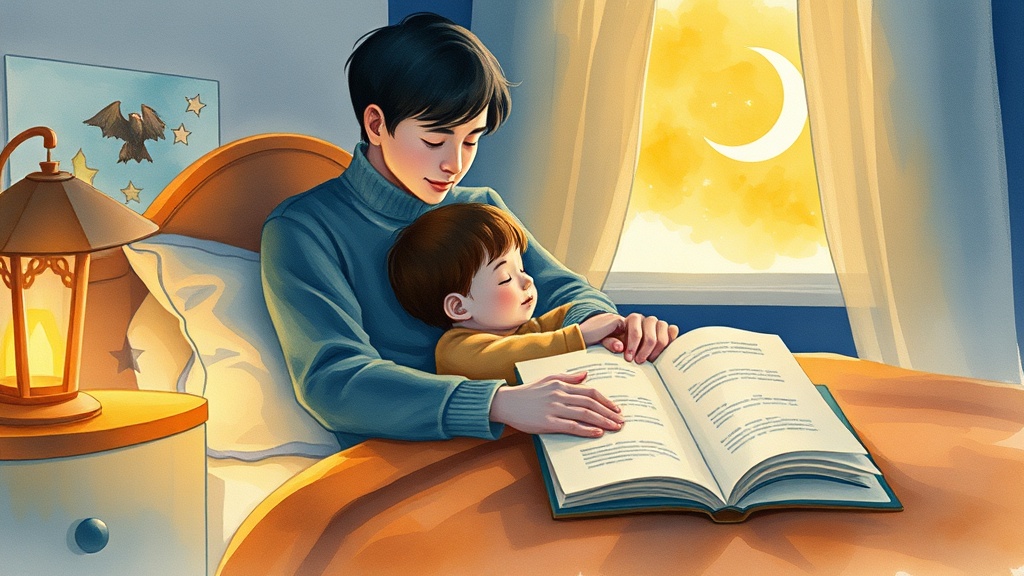
Most parents focus all their bedtime energy on the story — but the five minutes that follow can make or break how quickly your child actually settles. Here's how to use the "story-to-sleep" transition to your advantage.
Most bedtime conversations focus on finding the right story — the right length, the right theme, the right voice. And those things genuinely matter. But if you've ever closed the book, kissed your child goodnight, and then spent the next forty-five minutes answering calls of "I need water" and "Can you check for monsters?", you'll know that the story itself is only half the equation. What happens in the five minutes after the final page can be the difference between a child who drifts off peacefully and one who winds right back up again. The good news? A few small, intentional changes to your post-story routine can make a remarkable difference — starting tonight.
Why the Transition Out of a Story Is So Hard
Stories are stimulating, even calming ones. A good bedtime tale activates a child's imagination, sparks curiosity, and often triggers a flood of questions and feelings. That's one of the reasons we love them — but it's also why snapping the book shut and saying "right, sleep time!" rarely works.
From a developmental perspective, young children aged 2–7 have very little control over their emotional brakes. When their imagination is fired up, it doesn't simply switch off on command. Older children (ages 8–10) have more regulatory capacity, but they're also more likely to lie in the dark thinking — replaying the story, wondering what happens next, or using it as a springboard for anxious thoughts.
The transition out of a story needs to be treated as its own small ritual, not an abrupt stop. Think of it less like turning off a tap and more like gradually turning down a dimmer switch.
The Power of the "Story Wind-Down"
The most effective post-story routines share one thing in common: they move a child through the story's energy rather than cutting it off. Here's what that can look like in practice:
1. One closing question, not five. It's tempting to chat about everything the story brought up — especially if your child is bursting with thoughts. But multiple questions send the signal that this is conversation time, not sleep time. Instead, choose one simple, slow-paced question: "What was your favourite part?" or "How do you think the bear felt at the end?" Let them answer, reflect it back warmly ("Mmm, I loved that bit too"), and let it land. Then gently close the loop: "Let's think about that as you fall asleep."
2. A consistent "landing phrase." Many families find it helpful to have a short, consistent phrase that signals the story is over and sleep is beginning. Something like "Time to let your dreams take over now" or "The story's finished — your imagination can carry it from here." Used consistently, this phrase becomes a genuine sleep cue. Children's brains are pattern-recognition machines; a predictable signal that always means the same thing becomes deeply reassuring over time.
3. A body-based settling moment. After a story, gently shifting your child's attention from their mind to their body can help interrupt the imaginative whirr. A slow back-rub while you count to ten, asking them to wiggle their toes and then let them go still, or simply placing your hand on their back for thirty quiet seconds — these small physical anchors help the nervous system down-shift. You don't need to stay long. The intention is the transition, not an extended presence.
What to Do When Your Child Keeps the Story Going
Some children are master story-extenders. They'll ask what happens next, invent sequel plots, or suddenly have very important observations about the main character's motivations. Sound familiar?
This is actually a sign of healthy engagement — their minds are active and creative. But it doesn't mean bedtime should be pushed back indefinitely.
A gentle strategy is the "tomorrow idea" approach: keep a small notebook (or even just a scrap of paper) on the bedside table. When your child has a thought they don't want to lose — a question, an idea for what happens next — encourage them to tell you, and you write it down. "Great idea — I've got it, it's safe, we can talk about it tomorrow." This honours their creativity without feeding the delay, and teaches them that their thoughts don't disappear just because the lights are off.
If your child uses story-extending as an anxiety strategy (it's a common one — keeping a parent close, keeping the mind busy), it's worth addressing that separately and warmly. Often, ensuring the next night's story is something they're genuinely excited about can ease that anxiety — knowing something good is coming helps children let go of the present moment. This is one of the reasons personalised stories, like those in the Dreamtime app, can be particularly effective: when a child knows tomorrow's story will feature them, their interests, and their name, the anticipation itself becomes soothing.
Adjusting the Post-Story Routine by Age
No single approach works across every age, so it helps to tailor your wind-down.
Ages 2–4: Keep it sensory and simple. A song, a gentle stroke of the hair, or whispering one thing you love about them works beautifully. They need your calm presence more than words.
Ages 5–7: This is the golden age of the closing question. Children this age love to feel heard and reflected. One warm exchange followed by a firm, loving "sleep now" is usually enough — consistency is everything.
Ages 8–10: Give them a little more ownership. Ask them to close their eyes and imagine one scene from the story, almost like a directed visualisation. "Picture yourself in that forest — what does it smell like? What can you hear?" This channels their active minds into something restful rather than trying to shut them down entirely.
When Nothing Seems to Work
If your child consistently struggles to settle after stories — regardless of what you try — it's worth looking at the bigger routine picture. Is the story happening early enough that there's still genuine wind-down time before lights out? Is the room environment working against you (too bright, too stimulating)? Are screens involved anywhere in the hour before bed?
Sometimes the post-story struggle is actually a signal about something earlier in the routine, not the story itself. Small adjustments upstream — moving the story fifteen minutes earlier, dimming lights before you begin, or swapping an energetic story for something slower-paced — can make the transition significantly smoother.
A Gentle Ending for Both of You
The bedtime routine is one of the quieter gifts of early parenthood — a daily pause that belongs entirely to you and your child. When the story-to-sleep transition works well, it doesn't just help your child settle; it gives the evening a sense of completion for you too. A moment that feels finished, warm, and good.
You don't need to get it perfect every night. Children are remarkably forgiving of imperfect routines when the underlying feeling is one of safety and love. But with a little intention in those final five minutes — a closing phrase, a body-based anchor, one gentle question — you may find that the hardest part of bedtime quietly stops being hard at all.
Give your child a new story every night
Dreamtime creates personalised bedtime stories with beautiful illustrations, tailored to your child, every single night.
Start your free trial →