How to Teach Your Child to Get Ready for Bed Independently (Without Nagging)
Dreamtime
9 October 2026
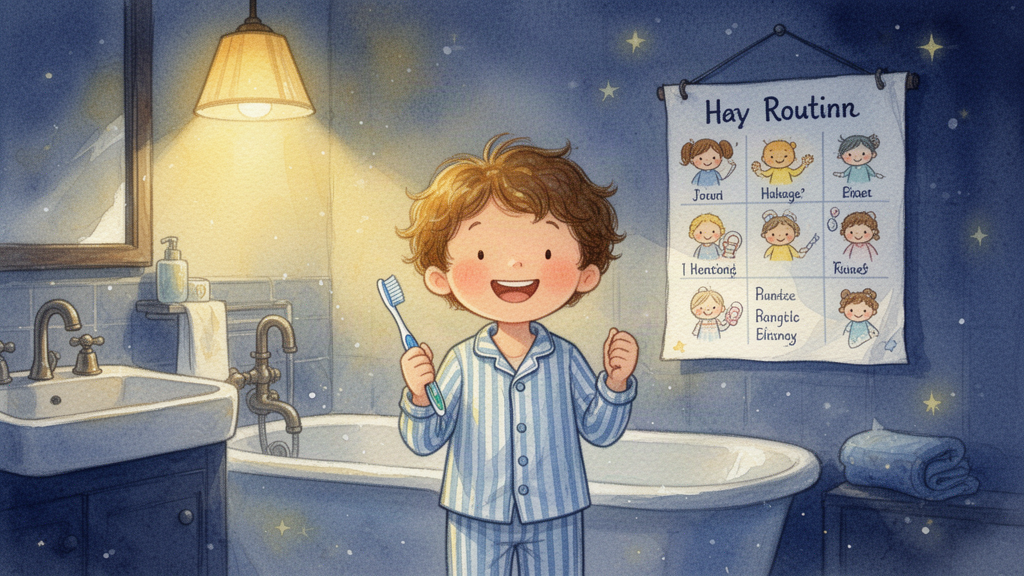
Tired of repeating "teeth, pyjamas, toilet" every single night? Learn how to build your child's bedtime independence step by step, with visual routines, simple choices and age-by-age expectations that turn nagging into confidence.
If you have ever heard yourself say "teeth, pyjamas, toilet" for the fifteenth time in one evening, you are far from alone. Many parents end up as the permanent narrator of bedtime, reminding, prompting and sometimes pleading their way through every step. The good news is that children are often more capable than we expect, and with the right set-up, they can take ownership of getting ready for bed. Teaching independence at bedtime does not just save your voice. It builds confidence, reduces power struggles and makes the whole evening feel calmer for everyone.
Why Bedtime Independence Matters
When you do every step for your child, they never get the chance to feel competent. When they do the steps themselves, even imperfectly, they get a small daily hit of pride. That sense of "I can do this" is a big deal for children aged 2 to 10, and it tends to spill over into other parts of life, from getting dressed for school to trying new things.
Independence also takes the heat out of bedtime. Much of the resistance parents see is really a child pushing back against being told what to do. When the routine belongs to the child, there is less to argue about. You move from being the bedtime boss to being the bedtime coach.
What to Expect at Each Age
Realistic expectations make all the difference. Here is a rough guide:
- Ages 2 to 3: Your child can help rather than lead. They can put their dirty clothes in the basket, choose between two pairs of pyjamas, and hold their own toothbrush (you will still need to finish the job).
- Ages 4 to 5: Most children can put on pyjamas with a little help, wash their hands and face, and attempt brushing before you check. They still need gentle reminders about the order of things.
- Ages 6 to 7: Children can usually manage the full sequence with a visual checklist: toilet, wash, teeth, pyjamas, tidy. A quick parent check at the end is still helpful.
- Ages 8 to 10: Most children can run the whole routine alone. Your role shifts to occasional spot-checks and, of course, storytime together.
Every child is different, so treat these as starting points rather than targets.
Build a Visual Routine They Can Own
Children find it much easier to follow a picture than a spoken instruction. A simple visual routine chart takes the nagging out of your voice and puts it on the wall.
- Break the routine into four to six steps. For example: toilet, pyjamas, wash face, brush teeth, choose a book or story, lights out.
- Use pictures or photos. For younger children, take photos of them doing each step. For older children, a simple written checklist works well.
- Let them help make it. Drawing the pictures or choosing the colours gives them a sense of ownership from the start.
- Put it where they will see it. Bathroom doors and bedroom walls both work well.
- Let the chart do the reminding. When your child asks what comes next, reply with "What does your chart say?"
That last line is a quiet superpower. It hands the authority to the chart, so you are no longer the one issuing orders.
Offer Small Choices Within Fixed Steps
The steps themselves are not up for negotiation, but how your child completes them can be. Choices give children a feeling of control without letting the routine fall apart.
- "Do you want to brush your teeth first or put your pyjamas on first?"
- "Which pyjamas tonight, the stripy ones or the star ones?"
- "Shall we use the blue toothbrush or the green one?"
Keep choices to two options, and always make sure both lead to the same outcome. This is especially helpful for strong-willed children who dig in their heels when told what to do.
Make Time and Praise Your Allies
Independence needs room to breathe. A child who is rushed will hand the job straight back to you, because it is faster. Start the routine ten minutes earlier than you think you need to, so there is space for slow fingers and wobbly buttons.
When your child does a step on their own, notice it with specific praise: "You put your pyjamas on all by yourself and the buttons are even in the right holes!" This works far better than a general "good job", because it tells them exactly what they did well. Avoid redoing their work in front of them. If the pyjamas are on back to front, let it go. Confidence matters more than perfection.
A reward that works particularly well is something the routine naturally leads to. If your child finishes getting ready independently, they earn the best part of the night: story time. Many families find that framing the story as the destination, rather than a bribe, helps children move through the steps with purpose. With Dreamtime, for example, each night's personalised story is ready and waiting once your child is tucked in, with their name, age and interests woven into the adventure, so "getting ready" becomes the path to something they genuinely look forward to.
Troubleshooting Common Hiccups
They dawdle or get distracted. Try a gentle timer, or turn it into a game: "Can you beat the song?" Play one favourite song and see if they can finish brushing before it ends.
They revert when tired. Regression is normal after a big day or an illness. Offer extra help without comment and return to independence the next night.
They do it well for one parent but not the other. Share the visual chart and the exact wording you use, so both grown-ups respond in the same way.
Siblings at different stages. Let the older child be the "routine helper" if they enjoy it, but avoid making them responsible for a sibling's progress.
A Gentle Reminder
Independence is not built in a week. Some nights your child will sail through the routine, and others you will be back to hand-holding. That is completely normal. Keep the chart up, keep your tone calm and keep celebrating the small wins. Over time, the nagging fades, and what is left is a child who knows what to do, feels proud of doing it and arrives at storytime relaxed and ready to dream.
Give your child a new story every night
Dreamtime creates personalised bedtime stories with beautiful illustrations, tailored to your child, every single night.
Start your free trial →