Space Bedtime Stories for 5 Year Olds: Adventures Among the Stars
Dreamtime
26 April 2026
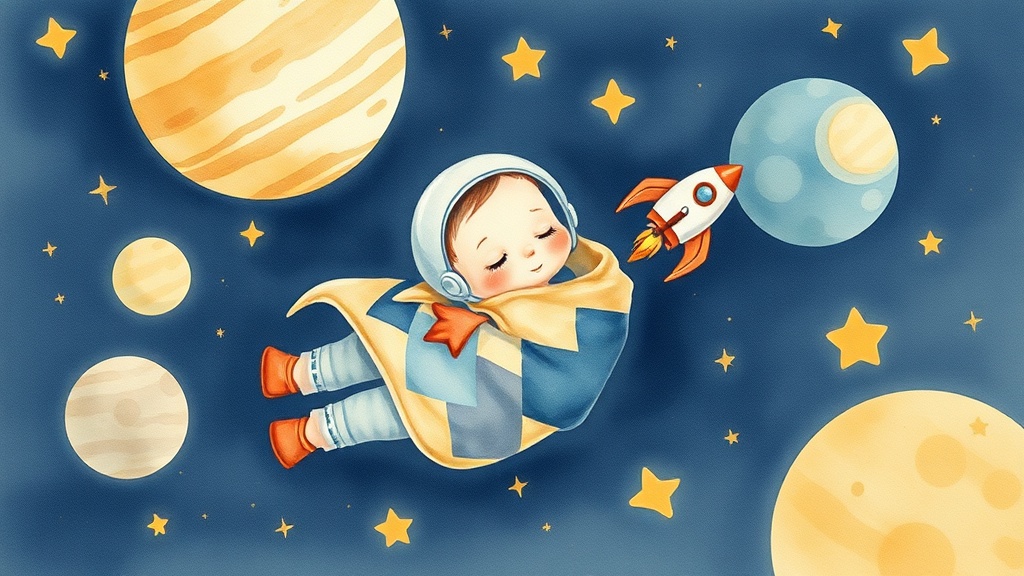
Looking for the perfect bedtime story for your 5 year old about space? From friendly astronauts to curious little robots on faraway planets, space stories have a magical way of capturing young imaginations — and helping little ones drift off to sleep. Here's everything you need to know about making stargazing storytime a nightly tradition.
There's something about space that makes five-year-olds go wide-eyed with wonder. The planets, the stars, the idea that there are whole worlds out there spinning quietly in the dark — it captures something deep in the imagination of a child who's just beginning to understand how enormous and extraordinary the universe really is. If you've been searching for a bedtime story for your 5 year old about space, you're in good company. Space stories are one of the most popular bedtime requests for this age group, and it's not hard to see why. They're exciting, calming, and quietly enormous — perfect for little minds winding down at the end of a long day.
Why Space Stories Work So Well at Bedtime
At five years old, children are in a golden window of imagination. They're old enough to follow a proper story with a beginning, middle, and end, but young enough that a rocket ship powered by stardust feels completely plausible. Space stories tap directly into that sweet spot.
There's also something genuinely soothing about the imagery of space. Darkness, stillness, the slow drift of planets — these aren't just beautiful, they're naturally sleep-inducing. A well-told space story guides a child through an exciting adventure and then brings them gently back to rest, mirroring the arc of a good bedtime routine. The hero lands safely. The stars keep watch. Everything is calm.
Psychologists who study children's sleep have long noted that stories with a clear sense of resolution — where things feel settled and safe at the end — help children transition into sleep more smoothly. A story about a little astronaut who explores the rings of Saturn and then tucks into her cosy rocket pod to drift back home? That's practically a lullaby.
What Makes a Great Space Story for a 5 Year Old
Not all space stories are created equal, and for bedtime in particular, the tone matters as much as the content. Here's what tends to work well for this age group:
A relatable main character. Five-year-olds connect best with characters who feel like them — curious, sometimes a bit nervous, full of questions. A child astronaut, a friendly alien who needs help finding their planet, or a little robot exploring an unknown moon all give your child someone to root for and relate to.
A manageable sense of adventure. Space can feel vast and a little overwhelming, so the best bedtime stories for this age keep the adventure contained and purposeful. One mission. One planet. One problem to solve. This gives the story focus and stops it from feeling chaotic — which is the last thing you want at 7:30pm.
Sensory detail that's gentle, not overwhelming. The best space stories for bedtime are rich in calm, beautiful imagery: the soft glow of distant stars, the quietness of floating in zero gravity, the way Earth looks like a tiny blue marble from far away. These images invite a child to close their eyes and picture them — which is exactly what you want.
A satisfying, peaceful ending. Whatever the adventure, the story should come home. The spaceship docks. The astronaut curls up in her sleeping bag, watching the stars through the porthole. All is well.
Simple Space Story Ideas to Tell Tonight
If you want to try your hand at an improvised space story, here are a few starter ideas to get you going:
- The Lost Star: A small star has wandered away from its constellation and your child's character must travel through the galaxy to help it find its way home before morning.
- The Moon's Birthday: The Moon is turning one million years old and has invited all the planets to a party — but one of the planets has got lost, and only a brave young astronaut can find them in time.
- Bedtime on Planet Zog: An alien child on a distant planet is struggling to fall asleep, and your child has been sent from Earth to share the secret of bedtime routines. (A lovely one for children who are resistant to sleep themselves.)
- The Quiet Side of Saturn: An astronaut explorer discovers that the rings of Saturn are actually made of tiny sleeping moons, and she must travel through them as quietly as possible so she doesn't wake them up.
Each of these can be expanded or compressed depending on how quickly your child is drifting off — a useful skill for any parent to develop.
How to Make Space Stories Feel Personal
One of the most powerful things you can do with any bedtime story is make your child the hero. When a five-year-old hears their own name — when they are the one floating past Jupiter, they are the brave astronaut making first contact with a friendly alien — the story lands differently. It becomes something that belongs to them.
You don't need to be a professional storyteller to do this. Simply swap in your child's name, reference their favourite things (does your little one love dinosaurs? Perhaps they discover a planet full of them), and let their personality drive the plot. A shy child might find courage through their character's journey. A bold, energetic child might be the captain of the whole mission.
If coming up with fresh, personalised stories every night sounds like a lot of work — especially after a long day — apps like Dreamtime can help. Dreamtime generates a brand-new personalised bedtime story every night, tailored to your child's name, age, and interests, complete with watercolour illustrations and narration. It's a lovely option for parents who want that personalised magic without having to conjure it from scratch at 8pm.
Growing With Space Stories: Ages 2 to 10
Space stories don't have a fixed age — they grow with your child. For two and three-year-olds, keep it very simple: a friendly rocket, a round moon, a wave goodnight to the stars. For five-year-olds, you can introduce a proper quest, a gentle problem to solve, a cast of characters. By eight or nine, children can handle real facts woven into the fiction — actual planet names, real distances, genuine science tucked into the story like treasure.
This makes space one of the most sustainable bedtime story themes there is. You can return to it again and again across years of bedtimes, and it will always have something new to offer.
A Final Thought: Let Bedtime Be an Adventure
Bedtime doesn't have to feel like a battle. With the right story, it can be the part of the day your child looks forward to most — a quiet ritual of imagination before sleep takes over. Space stories, with their sense of wonder and their natural drift towards stillness, are one of the loveliest ways to make that happen.
So tonight, when the lights go down and small eyes are fighting to stay open, try sending your little one on a journey among the stars. They'll be asleep before the rocket lands — and they'll be dreaming of constellations long after.
Give your child a new story every night
Dreamtime creates personalised bedtime stories with beautiful illustrations, tailored to your child, every single night.
Start your free trial →