Should You Take Away Bedtime Stories as a Punishment? What to Do Instead After a Hard Day
Dreamtime
21 October 2026
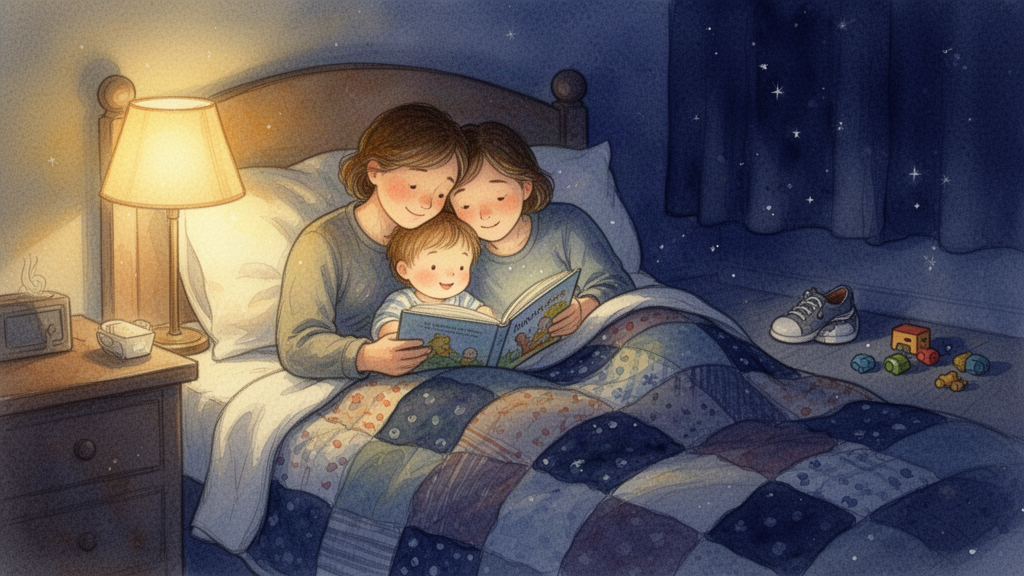
It's tempting to say "no story tonight" after a day of bad behaviour. But is it a good idea? Here's why bedtime stories work best as a connection, not a consequence, and what to try instead.
It has been one of those days. There was a meltdown in the supermarket, a shoe thrown across the kitchen, and a flat refusal to get in the bath. By the time bedtime arrives, you are running on fumes, and the words slip out before you can stop them: "Right, no story tonight." If you have ever said it, you are in very good company. Taking away a treat is one of the most natural parenting reflexes there is. But when the treat is the bedtime story, it is worth pausing to ask whether it actually helps.
Why Taking Away Storytime Often Backfires
On paper, the logic seems sound. Your child enjoys stories, so removing one should make a point. In practice, bedtime is a poor place to apply consequences, for a few reasons.
Bedtime is when children are most emotionally fragile. Tiredness lowers a child's ability to regulate their feelings. A consequence delivered at 7pm, when their reserves are empty, is far more likely to spark a meltdown than a lesson.
The consequence is disconnected from the behaviour. Children aged 2 to 7 learn best when the result of an action follows it quickly and makes obvious sense. A missed story at night for something that happened at lunchtime is hard for a young child to link together. What they absorb is simply: "I am sad, and I am being sent to bed alone."
You lose the very thing that helps. Stories are one of the most reliable ways to calm a child's body and mind before sleep. Removing them can leave your child wound up, upset and less likely to settle, which makes the next day harder too.
It can colour how they feel about bedtime. If storytime becomes something that can be snatched away, it stops being a safe, predictable comfort. Children who already find bedtime tricky may begin to associate it with worry or shame.
Connection Is Not a Reward
Many parents worry that reading a story after bad behaviour sends the message that it doesn't matter. It doesn't, as long as you separate two ideas: accountability and connection.
Your child can be held accountable for what happened during the day, and still be tucked in with love. In fact, children who feel secure and connected at night are more open to talking about what went wrong, and more willing to do better tomorrow. Think of bedtime as the moment you repair the day, not the moment you finish punishing it.
This is especially true for children who already feel they have "been bad". A calm story and a cuddle tell them something powerful: you are loved even when your behaviour is difficult.
What to Do Instead
You can still respond to difficult behaviour without touching storytime. Here are some practical alternatives.
Deal with it closer to the moment. If a consequence is needed, make it brief, relevant and immediate. Losing ten minutes of tablet time after a tablet-related argument makes far more sense to a child than losing a story hours later.
Use a natural consequence. If toys were thrown, the toys go on a high shelf for the afternoon. If someone refused to get dressed, you leave later and miss the park. These feel fair, and they stay in the daytime where they belong.
Shorten the story, don't cancel it. If you are genuinely depleted, or your child needs a clear signal that today was tough, a shorter story is a gentle compromise. You can say, "It's been a hard day for both of us, so we'll have one short story and a big cuddle." The routine survives, and so does your relationship.
Name it, then move on. Try one calm sentence before the story: "Today was tricky when you threw your shoe. Tomorrow we'll try again." Then close the topic. No lecture, no lengthy interrogation. Tired children can't absorb either.
Take a breath before you decide. If you feel yourself reaching for "no story", give yourself thirty seconds. Ask: Is this for them, or is this because I'm frustrated? There is no shame in the answer being the second one. Parents are human, and a pause is often all it takes.
Let the Story Do Some Gentle Work
Here is the helpful twist: a story can be one of your best tools for talking about behaviour, without a lecture in sight. Children take in difficult ideas far more easily through a character than through direct instruction.
If your child has been struggling with sharing, anger or listening, choose a story where a character faces something similar and finds a way through. You do not need to point out the parallel. The message lands on its own, in the safety of a sleepy, cosy moment.
This is where a personalised story can help. With Dreamtime, you can create a bedtime story featuring your child's name and interests, and gently weave in the theme of the day, whether that is a character who learns to calm big feelings or one who makes up with a friend after a squabble. Because every story is new each night, you can respond to what is actually happening in your child's world, rather than hoping a book off the shelf happens to fit.
A Quick Note on Rewards
The same thinking applies in reverse. Offering a story as a prize for good behaviour ("If you tidy up, you can have a story") can turn something nourishing into a bargaining chip. Try to keep storytime as a fixed, dependable part of the evening, as certain as the toothbrush. Predictability is what makes it soothing.
Keeping Bedtime Safe, Even After Hard Days
No child behaves perfectly, and no parent responds perfectly. The aim is not to avoid every tough moment but to protect the ritual that helps you both come back together at the end of the day.
So the next time a rough day ends with a tired, tearful child, try keeping the story. Read it slowly, lower your voice, and let the day soften. Tomorrow is a fresh start, and the story you share tonight is part of what makes that possible.
Give your child a new story every night
Dreamtime creates personalised bedtime stories with beautiful illustrations, tailored to your child, every single night.
Start your free trial →