Reading Alone in Bed: How to Start a Independent Reading Habit Without Losing Your Special Story Time
Dreamtime
29 October 2026
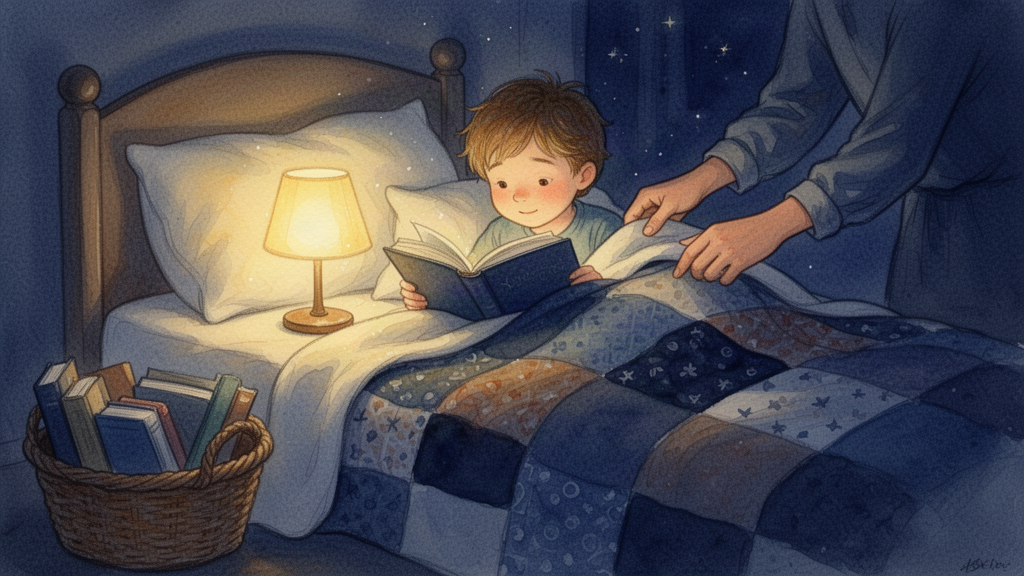
Your child has started saying "I can read it myself!" and part of you is proud while part of you is a little wistful. Here is how to introduce solo reading at bedtime, set sensible boundaries, and keep the closeness of shared stories alive.
One evening, usually somewhere between the ages of five and eight, your child pushes the book away and announces, "I can do it myself." It is a proud moment, and it can also sting a little. The story time you have treasured for years suddenly seems to have an expiry date.
The good news is that it does not have to. Independent reading in bed is one of the loveliest sleep habits a child can develop, and it can sit comfortably alongside the stories you share together. Here is how to introduce it well, keep bedtime calm, and protect the connection you have built.
Why Reading Alone at Bedtime Is Worth Encouraging
Reading quietly before sleep gives a child's busy mind a gentle, screen-free place to land. It lowers stimulation, builds reading stamina, and gives children a sense of ownership over their evening. For a child who is working hard at school to decode words, choosing a book and reading it for pleasure, with no one correcting them, can do wonders for confidence.
It also helps with something many parents struggle with: the stretch of time between "story over" and "actually asleep". A child who has a quiet, enjoyable thing to do in bed is far less likely to call out for water, a hug or one more question.
The aim is not to hand over bedtime reading entirely. Think of it as adding a new layer to the routine rather than swapping one thing for another.
Start With a "Both" Routine, Not an "Instead" Routine
The most common mistake is treating solo reading as a graduation that replaces your story. Children often feel this as a loss, even when they asked for independence. A smoother approach is to keep both.
Try a simple two-part pattern:
- Shared story first. You read, or listen together, for 10 to 15 minutes. This is the cuddly, connecting part.
- Solo reading second. You say goodnight, switch the main light off, and your child has 10 to 15 minutes of their own reading with a small lamp on.
This gives your child the independence they are craving while keeping the closeness they still need. Many children want the shared story far longer than they let on, and having it guaranteed means they are not clinging to it out of worry that it will vanish.
Set Up the Space So Reading Feels Special
A little preparation makes solo reading feel like a treat rather than a chore.
- A proper reading light. A warm, dim bedside lamp or clip-on book light is ideal. Avoid bright white light, which can make it harder to feel drowsy.
- A small book basket by the bed. Three or four books is plenty. Too many choices invites dithering, which eats into the reading time.
- Comfortable positioning. Propped up on pillows is better than lying flat, which tires the eyes and arms quickly.
- A clear start and end. Some families use a small sand timer or a simple "lamp off when the timer finishes" rule so that you are not the one policing it.
Let your child choose what they read, even if it is a comic, a joke book or the same favourite for the fifteenth time. Reading for pleasure matters far more than reading something "improving".
Handle the "Just One More Chapter" Pull
Once a child discovers a book they love, lights-out can become a standoff. A few strategies keep things peaceful:
- Agree the rule in daytime, not at bedtime. Calm conversations about limits go much better at 4pm than at 8pm.
- Use a natural stopping point. "Finish the page you are on" or "finish this chapter" is easier for children to accept than an abrupt stop.
- Offer a bookmark ritual. Choosing a special bookmark and placing it carefully gives a sense of closure, and a promise that the story will still be there tomorrow.
- Be consistent. If the limit moves every night, your child will test it every night. A reliable end time brings the nightly bargaining down quickly.
If your child is genuinely too tired to enjoy reading, or is rubbing their eyes and losing their place, that is a sign the solo window should be shorter, or that the whole routine needs to begin a little earlier.
Keep the Connection Alive
Independent reading should never feel like being sent away. Small gestures keep the warmth in place:
- Tuck-in first. Do the cuddle, the goodnight chat and the lights before the solo reading begins, so closeness is not squeezed out.
- Ask one gentle question the next day. "What happened in your book last night?" shows interest without turning it into a quiz.
- Swap reading roles now and then. Let your child read a page or two aloud to you, or take turns, especially at weekends.
- Keep one night for being read to. Many families keep Friday or Sunday as a "Mum or Dad reads" night, which gives children something comforting to look forward to.
Where Dreamtime Can Fit In
Dreamtime can work nicely as the shared half of this routine. Each night it creates a brand-new story with your child's name and interests woven in, complete with watercolour illustrations and narration. You can listen or read it together as the cuddly first part of bedtime, then leave your child with their own book afterwards. Because the narration is there if you are tired, the shared story never has to be the thing that slips when evenings get busy.
A Gentle Reminder
Wanting to read alone is a sign your child is growing, not a sign they need you less. The children who feel most secure about independence are usually the ones who know the closeness is not going anywhere. Keep the shared story, add the quiet reading time, and let your child enjoy both. Before long, you may find them reading aloud to a teddy, a younger sibling or you, and that is a bedtime moment worth waiting for.
Give your child a new story every night
Dreamtime creates personalised bedtime stories with beautiful illustrations, tailored to your child, every single night.
Start your free trial →