Starting From Scratch: How to Build a Bedtime Routine When Your Child Has Never Had One
Dreamtime
19 October 2026
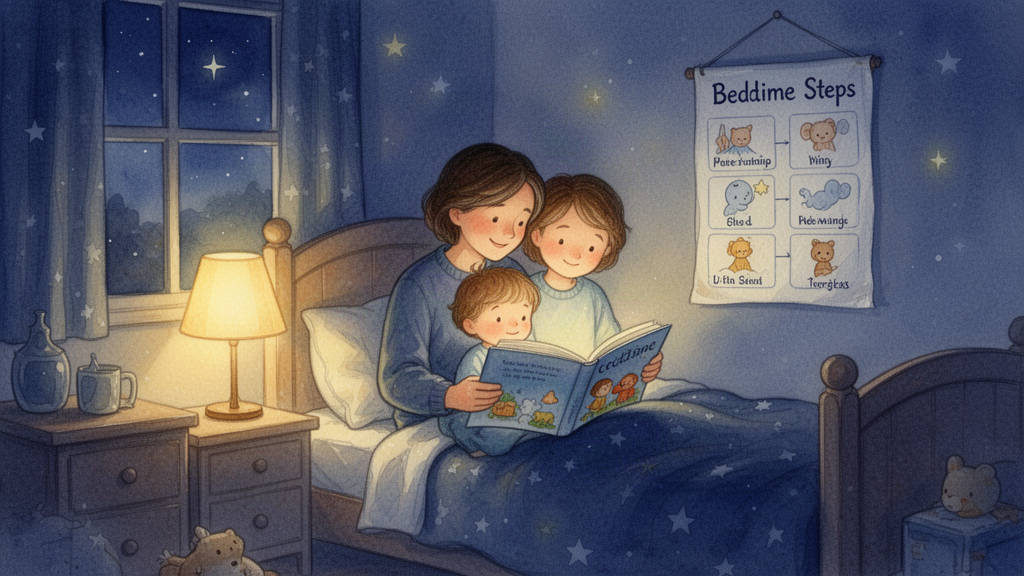
Never had a bedtime routine and wondering if it's too late? It isn't. Here is a gentle, week-by-week plan for introducing a bedtime routine to a toddler, preschooler or school-age child who has never had one.
If your child has always fallen asleep wherever and whenever it happened, on the sofa, in the car, in your arms in front of the telly, you might feel like you've missed the boat on bedtime routines. You haven't. Plenty of families come to routines late: after a new baby, a house move, a change in work patterns, or simply because life got busy and things drifted. The good news is that children are remarkably adaptable, and a routine can be introduced at two, five or nine years old. It just helps to go about it in the right way.
This guide walks you through how to build a bedtime routine from a standing start, without overhauling your whole evening overnight.
Why It's Never Too Late to Start
A bedtime routine works because it is predictable. When the same few things happen in the same order each night, a child's brain learns to read them as signals: the day is ending, sleep is coming. That predictability lowers anxiety, which makes it easier to settle, and it helps regulate the body's internal clock over time.
None of that depends on your child having had a routine from babyhood. A child who has never had one is simply starting with a blank page, and that can actually be an advantage. There are no old habits to unpick, no "but we always do it this way" to argue with. You get to design something that suits your family.
Start Small: Three Steps Is Plenty
The most common mistake is building an ambitious, forty-five-minute routine on night one. Children (and tired parents) tend to rebel against anything that feels like a big change. Instead, start with just three simple steps:
- Something practical, such as a bath, pyjamas or brushing teeth.
- Something calm and connected, such as a story, a cuddle or a quiet chat.
- A consistent goodnight, a phrase, song or gesture that always signals "that's it for today".
That's a complete routine. You can add to it later, but these three anchors give your child a clear beginning, middle and end. Aim for 20 to 30 minutes in total for younger children, and perhaps a little longer for school-age kids who enjoy more chat time.
Introduce It in Stages Over Two to Three Weeks
Rather than switching everything on at once, phase the routine in. A gentle approach might look like this:
Week one: pick the anchor. Choose the one step you most want to keep, usually the story or cuddle, and do it at roughly the same time every night. Don't worry about perfection with anything else. The goal is simply for your child to associate that moment with winding down.
Week two: add the practical steps. Layer in pyjamas and teeth, always in the same order. Use simple language: "Pyjamas, teeth, story, goodnight." Saying the sequence out loud helps children learn it, and many love to recite it back to you.
Week three: fine-tune the timing. Once the order feels familiar, nudge bedtime earlier or later in 10 to 15 minute steps until it suits your child's age and natural rhythm. Moving too quickly can lead to a child lying awake and getting frustrated.
Expect some pushback in the first few nights. That's normal and doesn't mean it isn't working. Children test new boundaries, and consistency is what shows them the routine is here to stay.
Get Your Child Involved From the Start
Children are far more likely to cooperate with a routine they've had a hand in shaping. Offer small, genuine choices within the structure: which pyjamas, which toothbrush, which of two stories, whether to brush teeth before or after the bath. The order stays fixed, but the child gets a sense of control.
A simple picture chart can work wonders for toddlers and preschoolers. Draw or print one image for each step and let your child tick or move a sticker along as you go. For older children, a written checklist on the bedroom door does the same job and nudges them towards doing things independently.
Make the Story the Heart of the Routine
If there's one step worth protecting above the rest, it's the bedtime story. It slows the pace, brings you close together, and gives your child something to look forward to rather than something to resist. For a child who has never had a routine, the story often becomes the hook that makes the whole thing feel welcoming rather than like a rule.
It helps if the story feels like it belongs to them. Children who see their own name, interests and world in a tale tend to settle more willingly and ask for it again. If you'd like a little help with that, Dreamtime creates a brand-new personalised story every night, tailored to your child's name, age and interests, with watercolour illustrations and gentle narration for the evenings when you're stretched. There's a free 7-story trial if you'd like to see whether it fits into your new routine. Of course, a well-loved library book or a story you make up yourselves does the job beautifully too. What matters is that it happens, calmly, at the same point every night.
Troubleshooting the Early Days
"We skipped it last night." Don't worry. Pick it up again the next evening without fuss. A routine is built on most nights, not every night.
"My child keeps getting out of bed." Stay calm and boring. Walk them back with minimal chat and no new negotiations. Predictable responses are what teach them the routine is non-negotiable.
"Evenings are chaotic with other children." Anchor the routine to something you can always do, even a shortened version. A ten-minute version done consistently beats a perfect one done rarely.
"We're away or off-schedule." Keep the middle and end of the routine the same, the story and goodnight phrase, and let the rest flex. Those familiar pieces travel with you.
Be Patient With Yourself, Too
Building a routine from nothing is a bit like learning a new dance: awkward at first, then surprisingly natural. Most families notice a real shift within two to three weeks, with quicker settling, fewer protests, and evenings that feel calmer for everyone. Keep it simple, keep it consistent, and let the warmth of that last quiet half hour do the work. It really is never too late to start.
Give your child a new story every night
Dreamtime creates personalised bedtime stories with beautiful illustrations, tailored to your child, every single night.
Start your free trial →