How to Help Your Child Stop Asking to Sleep in Your Bed Every Night
Dreamtime
13 September 2026
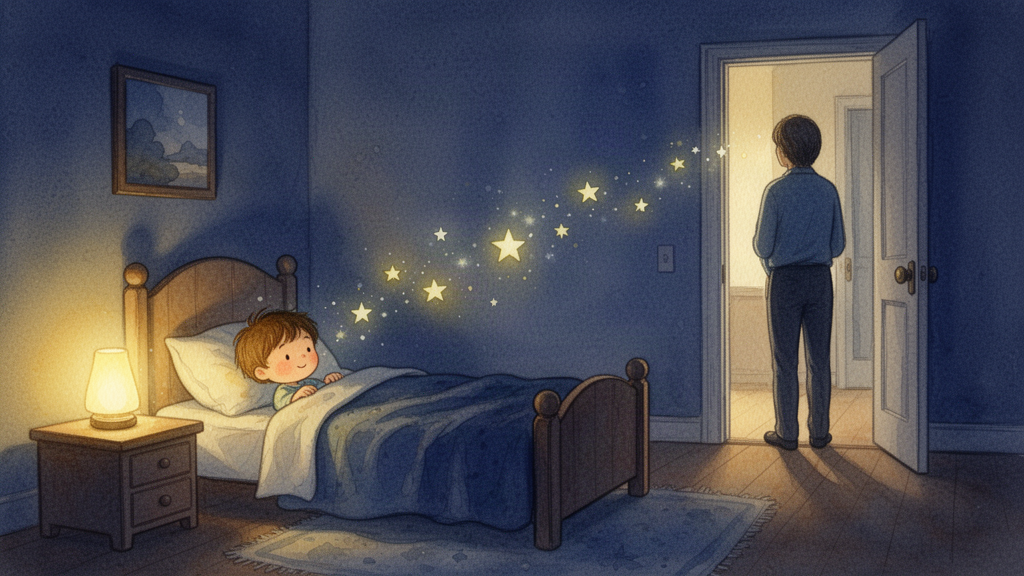
Nightly visits to your bed can wear down even the most patient parent. Here's why children ask to co-sleep, and a practical, gentle plan to help them feel confident sleeping in their own space again.
It's 2am. A small figure appears at your bedside, blanket trailing, insisting they "just can't sleep" without you. Maybe you let them climb in because it's easier than a drawn-out argument in the dark. Maybe you walk them back to their room three, four, five times a night. Either way, you're exhausted, and you're wondering if this is ever going to change.
The good news is that most children who repeatedly ask to sleep in their parents' bed aren't doing it out of stubbornness. It's usually a mix of habit, comfort-seeking, and a developing brain that hasn't yet learned to self-soothe through the night. That means it's very changeable, with the right approach and a bit of patience.
Why Children Ask to Sleep in Your Bed
Understanding the root cause makes it much easier to respond calmly instead of with frustration.
Separation anxiety. Especially common in children aged 2 to 5, this is a normal developmental stage where being apart from a parent, even by a bedroom door, feels genuinely distressing.
Learned association. If your child fell asleep in your bed even a handful of times, especially during illness, travel, or a stressful period, their brain quickly links "falling asleep" with "being next to Mum or Dad." Once that association forms, it takes deliberate, consistent effort to shift it.
Night waking and re-settling difficulty. All children wake briefly between sleep cycles. Children who've only ever fallen asleep next to a parent often can't get themselves back to sleep alone when they wake at 1am, so they come find you.
A bid for connection. Sometimes it's less about sleep and more about a busy day that left little one-on-one time. Bedtime becomes the moment they finally have your full attention, and they don't want to let it go.
Fear. Nightmares, monsters under the bed, or general nighttime anxiety can make their own room feel unsafe by comparison to yours.
Knowing which of these is driving the behaviour (it's often more than one) helps you choose the right response.
Build a Bedtime Routine That Front-Loads Connection
If your child is seeking closeness, give it to them generously before lights out rather than rationing it and then dealing with the fallout at 2am. A predictable, unhurried routine, bath, pyjamas, teeth, a story, a cuddle, signals to their nervous system that connection has happened and it's now safe to separate.
This is where a rich storytime moment matters more than people realise. A story where your child is the hero, facing something brave and coming out the other side safe and sound, does quiet emotional work. It reassures them, in a low-pressure way, that being separate from you can still feel secure. Apps like Dreamtime, which generate a new personalised story every night featuring your child's name and interests, can help make this part of the routine something they genuinely look forward to, rather than another five minutes to stall through.
Use the "Sleeping Fairy" or Ticket System
For children aged around 3 to 7, a simple reward-based system works well because it gives them a sense of control and achievement.
- Give your child 2 to 3 "bedtime passes" (paper tickets, a sticker chart, or a small toy that acts as a token) they can use if they genuinely need you in the night.
- Explain clearly, during the day when everyone's calm, that using a pass means you'll walk them back to their own bed once, calmly and quietly, with no chat.
- Unused passes in the morning earn a small reward: a sticker, a note in their diary, or extra story time the next night.
This works because it reframes the goal from "never come to your bed" (which feels punitive) to "here's a tool to help you manage the night," which feels empowering.
Walk, Don't Carry, and Keep It Boring
When your child does appear at your bedside, the response matters as much as the routine leading up to it.
- Get up and walk them back yourself rather than letting them climb in "just this once." Consistency here is everything; children learn fast when a boundary sometimes bends.
- Keep the return trip low-key. Dim lights, minimal talking, no negotiating, no story reruns. The goal is to make their own bed the boring, unremarkable option and your bed the more exciting one to avoid, not the reverse.
- Reassure briefly: "You're safe, I'm just down the hall, see you in the morning." Then leave.
- If they're very anxious, sit briefly on the floor of their room (not on the bed) until they resettle, then gradually move your sitting spot closer to the door over successive nights.
Address the Root Cause During the Day
Bedtime behaviour is often a night-time echo of daytime needs.
- If separation anxiety seems to be the driver, practise short, low-stakes separations during the day: another room, a grandparent's house, a few hours at nursery, praising their independence each time.
- If it's about connection, carve out 10 to 15 minutes of undivided, phone-down attention earlier in the evening so bedtime doesn't have to carry the full weight of their need to be seen.
- If fear is the issue, tackle it directly and gently: a torch check of the room together, a "brave badge" they wear to bed, or a story that specifically features a character overcoming a nighttime worry.
A Note on Timeframes and Setbacks
Most families see meaningful change within 1 to 3 weeks of consistent effort, though illness, house moves, new siblings, or big life changes can trigger temporary regressions. That's normal, not failure. Simply return to the routine and passes system rather than starting from scratch or abandoning it altogether.
It's also worth saying: there's no universal "right" answer here. Plenty of families co-sleep happily and it works well for them. This guide is for the parents who want a change because the current pattern isn't working for their family's sleep or sanity, not because co-sleeping itself is wrong.
Change of any established bedtime habit takes patience, and there will be nights that test yours. But with a warm, connection-rich routine, a clear and consistent boundary, and daytime support for whatever's driving the behaviour underneath, most children do learn to feel safe and settled in their own bed. And on the nights it feels hardest, remember: you're not just teaching them to sleep alone, you're teaching them that they're capable of feeling safe even when you're not right there, which is a gift that lasts far beyond the toddler years.
Give your child a new story every night
Dreamtime creates personalised bedtime stories with beautiful illustrations, tailored to your child, every single night.
Start your free trial →