How to Handle Bedtime When Your Child Has a Nightmare: A Parent's Gentle Guide
Dreamtime
27 June 2026
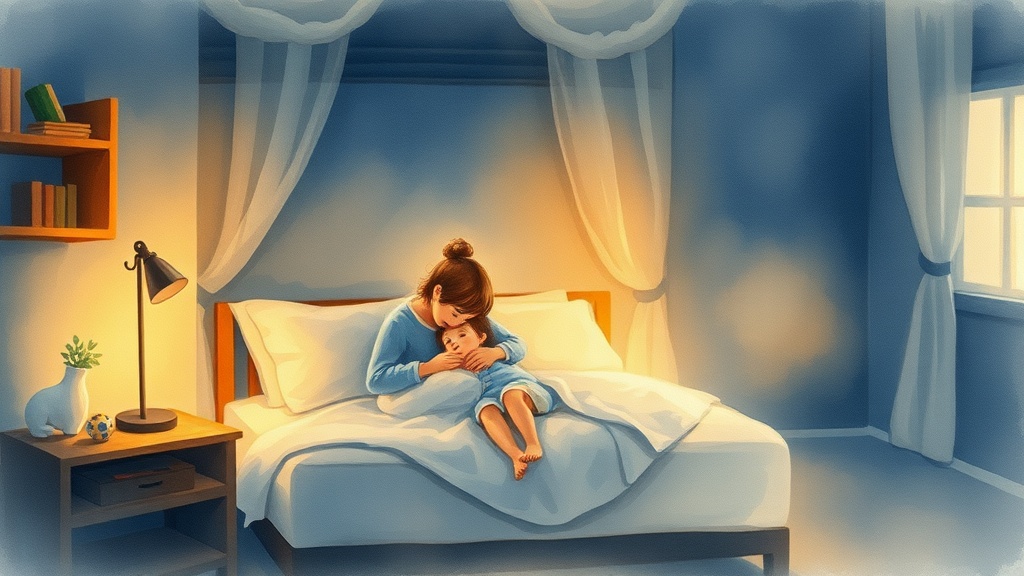
Nightmares can leave your child — and you — shaken in the middle of the night. Here's what's actually happening in your child's brain, and the gentle, practical steps you can take to help them feel safe, calm, and ready to sleep again.
It's 2am. A cry cuts through the silence, and you're already out of bed before you're fully awake. Your child is sitting up, eyes wide, heart hammering — caught somewhere between a dream and the relief of seeing your face. Nightmares are one of the most common sleep challenges for children aged 2–10, and while they're entirely normal, that doesn't make them any less distressing — for your child or for you. The good news is that with the right approach in the moment and a few thoughtful changes to the bedtime routine, you can help your child feel genuinely safe when the lights go out.
Why Young Children Have Nightmares (It's Not a Bad Sign)
Nightmares tend to peak between the ages of 3 and 6, and there's a good developmental reason for that. This is the stage when children's imaginations are developing rapidly — they're learning to tell stories, play pretend, and think in vivid, abstract ways. That same imaginative power that makes a cardboard box a spaceship at 4pm can conjure monsters under the bed at midnight.
Nightmares occur during REM (Rapid Eye Movement) sleep, the stage where the brain processes emotions and experiences from the day. For young children, whose emotional vocabulary is still growing, a confusing day — even a good but overstimulating one — can translate into a frightening dream. Common triggers include:
- Big emotions during the day — excitement, worry, anger, or sadness that wasn't fully processed
- Overstimulation close to bedtime — screen time, rough play, or exciting content watched or heard before sleep
- Big life changes — a new sibling, starting nursery or school, moving house
- Scary or intense content — even things that seem mild can linger in a young child's mind
Understanding this helps reframe nightmares: they're not a sign something is wrong with your child. They're a sign that a young, busy brain is doing its job — processing, filing, and making sense of the world.
What to Do in the Moment
How you respond in the first few minutes after a nightmare matters. Your goal is to help your child's nervous system shift from "alarm" back to "safe" — and that happens through your calm presence more than your words.
1. Go to them quickly, but stay calm yourself. Children are extraordinarily good at reading adult emotions. If you rush in with your own anxiety showing, it can amplify theirs. Take one breath before you enter the room.
2. Acknowledge the fear without reinforcing it. Saying "It was just a dream" is well-meaning, but it can feel dismissive. Instead, try: "You had a scary dream. That sounds really frightening. I'm here." Validating the feeling helps them process it and move through it faster.
3. Keep the lights low. Flooding the room with bright light wakes the brain up further and makes returning to sleep harder. A soft lamp or nightlight is enough.
4. Use your body, not just your voice. A hand on the back, a gentle hold, or sitting beside them is often more calming than any words. Physical closeness activates the parasympathetic nervous system — the one responsible for rest and calm.
5. Don't invite them into your bed as a first response. This one is hard, because it feels kind in the moment. But if it becomes a pattern, it can make your child more anxious about their own room over time. Staying with them in their space — at least initially — helps reinforce that their room is safe.
6. Give them a simple sense of control. Older toddlers and preschoolers can be empowered by small rituals: checking under the bed together, spraying a "monster-away" bottle (just water with a drop of lavender), or tucking in a favourite toy as a "guard." It sounds simple because it is — and it works.
How to Get Them Back to Sleep
Once the immediate distress has passed, the challenge is helping your child drift off again without you needing to stay for hours.
- Keep talking minimal and quiet. Long conversations about the dream can re-engage the brain and make sleep harder to reach. A few reassuring words are enough.
- Try a simple breathing exercise. Even a 3-year-old can follow "breathe in like you're smelling flowers, breathe out like you're blowing bubbles." Do it together two or three times.
- Offer a short, calm story. A brief, gentle narrative — something quiet and positive — can redirect the brain away from the dream and towards something soft and safe. Some parents find that having a go-to soothing story ready, rather than improvising at 2am, makes this much easier. Apps like Dreamtime create personalised, calming bedtime stories tailored to your child's name and interests, which can be genuinely useful both at the start of the evening and after a nightmare unsettles things.
- Promise a check-in. "I'm going to my room, and I'll check on you in five minutes." Often, children are asleep before you come back — but the promise itself is calming.
Long-Term Strategies to Reduce Nightmares
You can't prevent nightmares entirely, but you can create conditions that make them less frequent and less intense.
Protect the hour before bed. Screens — even cartoons — can introduce imagery and stimulation that a young brain then processes during sleep. Wind-down time with calm activities (colouring, puzzles, a bath, stories) gives the brain a gentler set of material to work with.
Talk about worries during the day. Children who have a regular time to voice their fears, questions, or upsets are less likely to process those emotions purely during sleep. A five-minute chat at dinner or during the bath — "What was tricky today? What was good?" — can make a real difference.
Create a bedtime routine that feels safe and predictable. Routine is one of the most powerful anxiety-reducers for young children. When the sequence of events before sleep is familiar, the brain learns to associate it with safety. Bath, pyjamas, story, goodnight — the repetition itself is reassuring.
Consider what they're consuming. This doesn't mean wrapping children in cotton wool — age-appropriate stories about fear, danger, and being brave are genuinely healthy. But it's worth noticing patterns: if nightmares increase after certain films, programmes, or even intense days, that's useful information.
When to Seek Extra Support
Most childhood nightmares are a normal, temporary part of development. But it's worth speaking to your GP or health visitor if:
- Nightmares are happening most nights and have been for several weeks
- Your child is distressed during the day as well as at night
- They're consistently reluctant to go to bed because they're afraid of dreaming
- You notice night terrors (where they appear awake but aren't responsive) — these are different to nightmares and benefit from specific guidance
In these cases, a paediatric sleep specialist or child therapist can offer targeted support. You don't have to manage it alone.
You're Already Doing the Most Important Thing
The fact that you came running — that you showed up, calm and close, in the middle of the night — is already the most powerful thing you can do. Children who experience comfort after a nightmare don't become dependent or "clingy"; research shows they become more secure. Your presence teaches them, at the deepest level, that the world is safe and that you will always come. That's not a small thing. That's the foundation everything else is built on. Keep going — you're doing brilliantly.
Give your child a new story every night
Dreamtime creates personalised bedtime stories with beautiful illustrations, tailored to your child, every single night.
Start your free trial →