How Bedtime Stories Spark Creativity in Young Children (And Why It Matters More Than You Think)
Dreamtime
2 June 2026
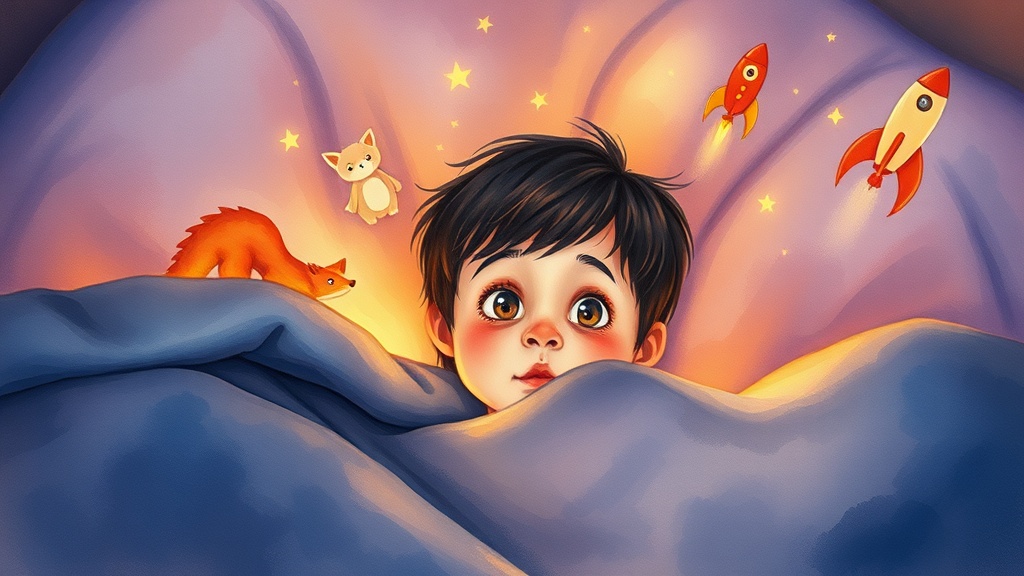
Bedtime stories aren't just a lovely way to wind down — they're one of the most powerful creativity tools a parent has. Here's what's really happening in your child's brain during storytime, and how to make the most of it.
Every night, in the quiet glow of a bedside lamp, something remarkable happens. Your child pulls the duvet up, leans into your shoulder, and their imagination switches on. We tend to think of bedtime stories as a way to wind children down — a gentle off-ramp from the busy noise of the day. And they are that. But they're also something far more powerful: a daily workout for one of the most important skills your child will ever develop. Creativity isn't a talent some children are born with and others aren't. It's a capacity that grows, and bedtime is one of the very best times to grow it.
What Creativity Actually Is (and Why It's Not Just About Art)
When we hear the word "creativity," many of us picture painting, drawing, or making up songs. But psychologists define creativity much more broadly — it's the ability to make novel connections between ideas, to imagine what doesn't yet exist, and to approach problems from unexpected angles. These are skills that matter enormously in school, in friendships, and in adult life.
Research in developmental psychology consistently shows that imaginative play and narrative thinking are at the heart of creative development in young children. When a child follows a story — tracking a character, picturing a setting, anticipating what might happen next — they are actively exercising what neuroscientists call "constructive imagination," the same mental muscle used in problem-solving, empathy, and innovation.
In short: the child who regularly loses themselves in a good story is quietly building one of the most future-proof skill sets there is.
What's Happening in Your Child's Brain During Storytime
When your child listens to a story, their brain isn't passively receiving information like a video recording it. It's doing something far more active and impressive — it's constructing the story.
Every detail you read aloud — the rustling of the enchanted forest, the colour of the dragon's scales, the way the little rabbit feels afraid but brave — your child's mind is filling in, expanding, and making uniquely their own. Brain imaging studies have shown that listening to vivid narrative activates not just the language-processing regions of the brain, but also the sensory cortex (so they literally "feel" the story) and the regions associated with lived experience and emotion.
This is why children who are read to regularly tend to show stronger empathy — they've had thousands of hours of practice inhabiting other people's perspectives. It's also why they tend to be better storytellers themselves: they've absorbed the deep grammar of narrative, the sense that stories have shape, momentum, and meaning.
For children aged 2–5, this process is especially vivid. Their brains are extraordinarily plastic, and the line between imagination and reality is beautifully blurry. A well-told story at bedtime doesn't just entertain them — it gives their developing minds a rich landscape to explore as they drift towards sleep.
How to Tell Stories in Ways That Light Up Imagination
Not all storytime is equally nourishing for creativity. Here are a few simple techniques that make a real difference:
Leave gaps on purpose. Pause before a key moment and ask, "What do you think happens next?" You don't need a long discussion — even a moment's wondering is enough to shift your child from passive listener to active creator. Children as young as three can engage meaningfully with this kind of gentle prompt.
Let your child steer occasionally. Every few nights, try handing some creative control to your child. "Tonight, you choose — should our hero be a girl or a boy? Should the adventure be in space or under the sea?" Small choices make children feel like authors, not just audiences.
Use sensory language. The more vividly you describe a scene — the smell of the bakery, the coldness of the river, the roughness of the castle wall — the more regions of the brain your child engages. You're not just telling a story; you're helping them build a richer, more textured imaginary world.
Follow their interests. A child who is mad about dinosaurs and gets a bedtime story featuring a dinosaur hero isn't just entertained — they're being shown that their own passions are worth building a world around. This is quietly profound for a child's creative confidence. (Apps like Dreamtime, which generate personalised stories tailored to each child's name, age, and interests, are particularly good at this — because the story feels like it was made just for them, children tend to engage more deeply and imaginatively.)
Don't rush the ending. In our hurry to get to "The End" and lights out, we often gallop through the final pages. But the resolution of a story — the moment where things come together — is actually when a child's brain is working hardest, synthesising everything they've imagined into a coherent whole. Slow down there.
The Creativity That Spills Over Into the Next Day
Here's something parents often notice but rarely connect to storytime: the morning after a particularly vivid bedtime story, children often play differently. They build worlds inspired by what they heard. They recruit their toys into the narrative. They tell their own versions to younger siblings or stuffed animals.
This is called "narrative transfer" — the way a story heard at night seeds imaginative play the following day. It's one of the reasons developmental experts encourage parents to talk about last night's story at breakfast, not in a quiz-the-child way, but conversationally: "I was still thinking about that brave little fox this morning. What did you think of her?" This small habit reinforces the story's imaginative residue and signals to your child that stories are worth thinking about, worth returning to, worth making part of your inner world.
Over time, children who experience this regularly begin to do it spontaneously — they become children who notice interesting things, who ask "what if" questions, who invent games with intricate rules and self-generated lore. These are the hallmarks of a richly creative mind, and they trace back, in no small part, to all those quiet evenings with a story and a warm voice.
A Simple Way to Think About It
You don't need to be a gifted storyteller to give your child these benefits. You don't need specially curated books or a perfect reading voice. What matters is consistency, warmth, and a willingness to let the story be an adventure you go on together rather than a task to get through.
Think of every bedtime story as a small gift to your child's future self — the adult who will one day solve problems creatively, connect deeply with others, and approach the world with curiosity and wonder. Those capacities are being built right now, in the gentlest way imaginable, ten pages at a time.
So tonight, when you open the book or start the story, know that you're doing something that matters far more than getting them to sleep. You're growing a creative mind — and that work is some of the most important work a parent can do.
Give your child a new story every night
Dreamtime creates personalised bedtime stories with beautiful illustrations, tailored to your child, every single night.
Start your free trial →