How Bedtime Stories Spark a Love of Reading (And What You Can Do to Nurture It)
Dreamtime
18 May 2026
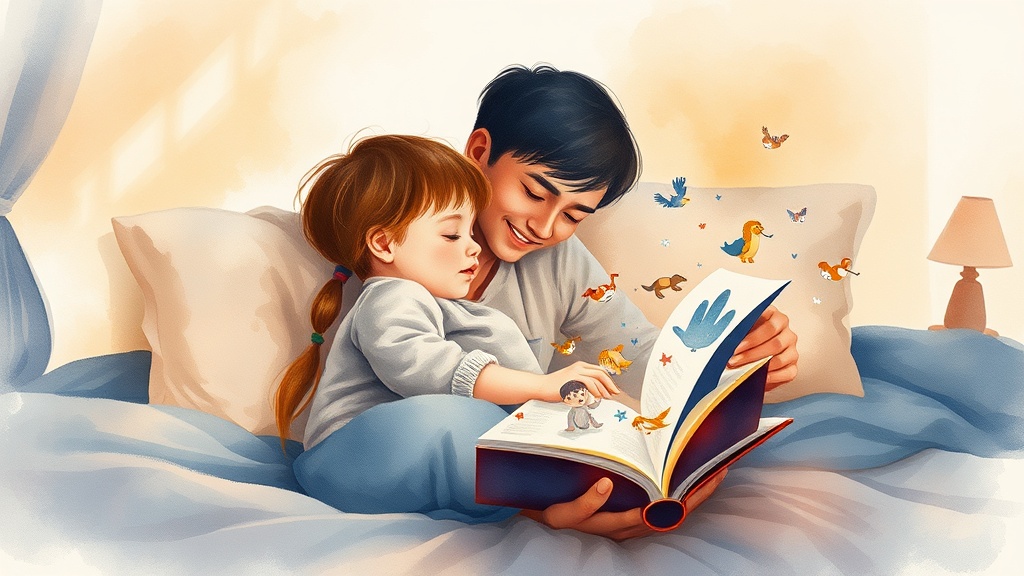
Bedtime stories do far more than send children off to sleep — they quietly plant the seeds of a lifelong reading habit. Here's what the research shows, and how you can make the most of those precious story minutes every night.
Every parent who has ever watched their child's eyes go wide at a plot twist, or heard them whisper "again, again!" at the final page, has witnessed something quietly extraordinary. That nightly ritual of settling in together with a story isn't just a sleep cue — it's one of the most powerful things you can do to raise a reader. Long before children can decode a single word on a page, bedtime stories are building the neural pathways, vocabulary, and sheer enthusiasm that make reading feel like a gift rather than a chore. The good news? You don't need to be a teacher, a librarian, or even a particularly confident reader yourself. You just need to show up, night after night, and open the first page.
Why Bedtime Is the Best Time for Building Reading Love
There's a reason literacy experts consistently point to the bedtime story as the single most impactful home literacy activity. At the end of the day, a child's guard is down. They're snuggled up, they're calm, and they're in the presence of someone they trust completely. That emotional safety creates the perfect conditions for learning — not the structured, sit-up-straight kind, but the deep, warm, associative kind that lasts a lifetime.
When a child connects books with comfort, closeness, and pleasure, they build what psychologists call a positive reading identity. This is the inner sense that "I am someone who enjoys stories" — and research consistently shows it's one of the strongest predictors of whether a child will choose to read independently as they grow older. Academic reading skills matter, of course. But the child who wants to read will always outpace the child who can but doesn't.
The bedtime slot also has a neurological advantage. The brain consolidates memories during sleep, meaning the words, ideas, and stories your child hears just before drifting off are more likely to be retained and woven into their understanding of the world.
What's Actually Happening in Your Child's Brain During Story Time
When you read aloud to a child, far more is going on than passive listening. Language comprehension, imagination, memory, and emotional processing are all firing at once.
Vocabulary grows in context. Children learn new words most effectively when they encounter them in meaningful, emotionally engaging situations — not flashcard drills. A bedtime story might introduce words like luminous, peculiar, or trembling wrapped in vivid narrative, making them far more memorable than a definition ever could. Studies suggest that children who are read to regularly hear millions more words per year than those who aren't, and that gap has measurable effects on school readiness.
Story structure becomes intuitive. Even toddlers, with enough exposure to stories, begin to internalise that narratives have a beginning, a middle, and an end — that characters want something, face an obstacle, and find a way through. This "story grammar" is a foundational literacy skill that later helps children both comprehend what they read and organise their own writing.
Empathy and emotional intelligence develop. Following a character through joy, fear, loss, and triumph teaches children to hold another perspective in mind. This is reading and social-emotional learning happening simultaneously, with no lesson plan required.
Practical Ways to Make Story Time Richer Every Night
You don't need to overhaul your evenings. Small, consistent habits are what make the difference.
Let your child choose. Even toddlers who pick the same book seventeen nights in a row are doing important work — repetition deepens comprehension and builds confidence. Resist the urge to veto their choices (within reason) and trust that their instincts about what they need are usually sound.
Think aloud as you read. Pausing to say "I wonder why she did that?" or "What do you think will happen next?" turns passive listening into active thinking. You're modelling the internal dialogue that skilled readers have automatically — and making the story a conversation rather than a performance.
Follow their lead with questions. There's no need to quiz or test. If your child spontaneously says "that's like my friend Mia!" or "I'd be scared too," run with it. Those connections between the story world and their real world are exactly the kind of deep processing that builds both comprehension and love of reading.
Mix up formats. Picture books, chapter books read in instalments, poetry, non-fiction about dinosaurs or space or whatever obsession is current — variety keeps the experience fresh and shows children that "reading" is a huge and endlessly interesting world.
Let them see you reading. Children are exquisite mimics. If they regularly see you absorbed in a book, they absorb the message that reading is something grown-ups do for pleasure — not just something they're made to do at school.
What to Do When You're Running Low on Ideas (or Energy)
Every parent knows the feeling: it's 7:45 pm, you've already read that particular picture book three times this week, and your creative reserves are at zero. This is completely normal, and it's worth having a few strategies in your back pocket.
Audiobooks and narrated stories are a wonderful tool on tired nights — children still gain enormous benefit from hearing stories read expressively, even when it's not your voice doing the reading. Apps like Dreamtime take this a step further by generating a brand-new personalised bedtime story every night, tailored to your child's name, age, and interests, complete with watercolour illustrations and narration. On the nights when your storytelling spark has flickered out, having that resource means the bedtime story habit never has to break.
It's also worth keeping a small stack of "emergency books" — titles you know your child loves and that you can read on autopilot — for evenings when choice paralysis or tiredness threatens to derail the routine entirely.
Building a Story-Loving Home Beyond Bedtime
The bedtime story is your anchor, but the love of reading it cultivates can ripple out into the whole day.
Visit your library regularly and treat it as an adventure rather than an errand. Let children browse freely. Most libraries also offer free storytime sessions for young children, which add a lovely social dimension.
Give books as gifts — and make a small ritual of it. A new book for a birthday, a holiday, or even a random Tuesday treats reading as something worth celebrating.
Talk about stories outside of reading time. "Remember what happened to the rabbit in that book?" at the dinner table reinforces that stories live beyond their pages, and that the characters and worlds you explore at bedtime are worth thinking about.
Never make reading a punishment — or its absence a reward. "No bedtime story tonight" might feel like an effective consequence in the moment, but it sends a message about stories being something to be earned rather than enjoyed.
A Final Word
The parents who raise readers are rarely the ones who had the perfect system or the most impressive home library. They're the ones who showed up, night after night, even when the book was boring and the child was wriggly and they could barely keep their own eyes open. That consistency — that quiet, repeated message that stories matter and you matter — is what leaves the deepest mark. So settle in, open the page, and know that this small, ordinary moment is doing something quite remarkable.
Give your child a new story every night
Dreamtime creates personalised bedtime stories with beautiful illustrations, tailored to your child, every single night.
Start your free trial →