How Bedtime Stories Help Children Process Fear (And Which Kinds Work Best)
Dreamtime
5 June 2026
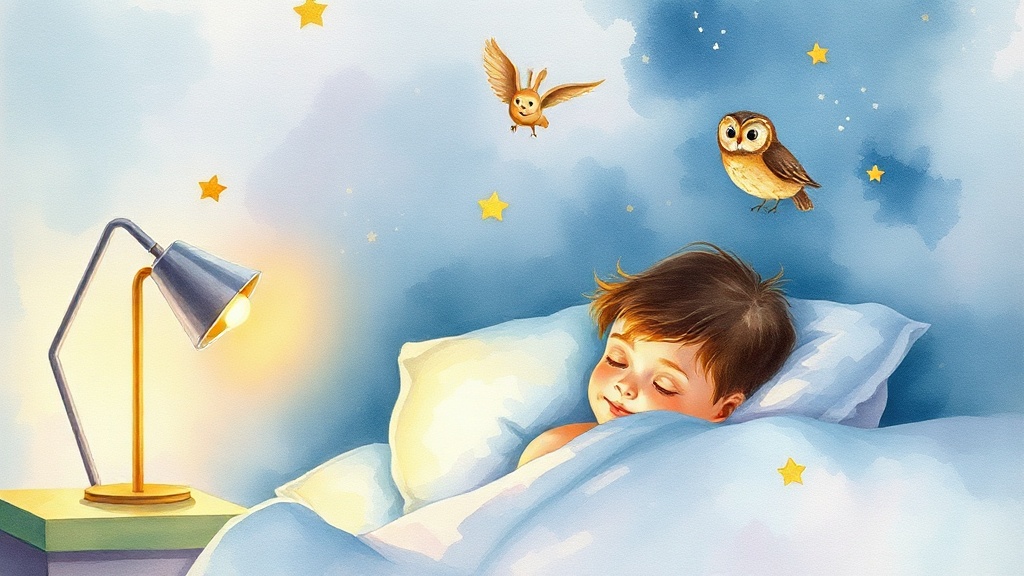
Many children harbour worries they can't quite put into words — and bedtime is often when those fears surface. Discover how the right bedtime stories can help young children safely explore and process their fears, and what to look for when choosing them.
The lights go out, the house goes quiet — and suddenly your child remembers everything they were too busy to worry about during the day. Monsters under the bed, the new teacher starting next week, the dog that barked at them in the park. For young children, bedtime is a peculiar emotional crossroads: they're tired, their guard is down, and their imagination is running at full speed. Fear at bedtime is almost universal, but the good news is that one of the most powerful tools for soothing it has been right there in your hands all along — a story.
Why Fear Spikes at Bedtime
It might seem like your child is inventing reasons to stay awake, but their fears are completely real to them. During the day, activity, noise, and distraction keep anxious thoughts at bay. At night, with nothing to focus on, the brain fills the silence with worry.
This is especially true for children aged 2–8, whose brains are still developing the ability to distinguish between imagined threats and real ones. The amygdala — the brain's fear centre — is highly active in young children, while the prefrontal cortex (responsible for rational thinking) won't be fully developed until their mid-twenties. In short, your child isn't being dramatic. Their fear is neurologically genuine.
Common bedtime fears by age tend to follow a pattern:
- Ages 2–3: Separation from parents, loud noises, unfamiliar faces
- Ages 4–6: Monsters, the dark, imaginary creatures
- Ages 7–10: Real-world worries — school, friendships, illness, death
Understanding why your child is afraid is the first step. The second is knowing how to help them process it — and stories turn out to be surprisingly powerful medicine.
How Stories Help Children Safely Explore Fear
Psychologists have long recognised that narrative is one of the most effective tools humans have for processing difficult emotions. Stories create what's sometimes called "safe distance" — a child can explore feelings of fear, loss, or uncertainty through a character without the raw exposure of confronting those feelings directly.
When a child hears a story about a small rabbit who is afraid of the dark but finds their way home anyway, something important happens. They identify with the rabbit, feel the fear alongside them, and then — crucially — experience the resolution. The brain rehearses both the emotion and the recovery from it. Over time, this emotional rehearsal builds genuine resilience.
This is why children often ask for stories featuring characters in peril, even when they're already anxious. Far from making things worse, those stories are doing important psychological work. They're helping your child practise being brave.
What Makes a Story Genuinely Helpful (Versus One That Backfires)
Not all stories are created equal when it comes to fear. A few principles make the difference between a story that soothes and one that sends your child spiralling.
1. The character should face something real, then overcome it The most effective stories for anxious children involve a relatable protagonist who encounters a genuine challenge — not one that magically disappears, but one they actively work through. This models problem-solving and courage rather than avoidance.
2. The resolution should be warm, not dismissive Endings that say, in effect, "there was nothing to be afraid of after all" can inadvertently invalidate a child's feelings. The better ending acknowledges that the thing was scary, and the character faced it anyway. That's a much more useful message.
3. Avoid overly stimulating content in the hour before sleep There's a difference between a story that features manageable tension and one that is genuinely frightening. Loud, chaotic, or horror-adjacent content raises cortisol levels and can make it harder to fall asleep. Aim for stories with gentle stakes and calm, reassuring pacing as the plot resolves.
4. Personalisation makes stories land harder Research into narrative therapy suggests that children engage more deeply — and benefit more — when they can see themselves in a story. A tale about their name, their interests, and a situation that mirrors something they're actually going through is far more effective than a generic one. This is part of why apps like Dreamtime — which generate nightly personalised stories tailored to each child's name, age, and interests — can be such a useful tool for parents navigating a child's specific fears.
Practical Ways to Use Storytime to Address Your Child's Fears
You don't need to be a child psychologist to make storytime therapeutic. Here are some simple, practical approaches that genuinely help:
Talk about the story after — not during Let the story do its work first. After it ends, you might gently ask: "How do you think the rabbit felt when the lights went out?" This opens a conversation about emotion without putting your child on the spot about their own feelings.
Let your child choose the themes If your child keeps asking for stories about getting lost, or stories about starting school, take note. They're telling you where their anxiety lives. Lean into those themes rather than steering away from them.
Create a "brave character" they return to Children benefit enormously from a consistent protagonist they can grow attached to over time. When they already love and trust the character, they're more willing to follow them into uncomfortable emotional territory.
Follow up during the day Bedtime isn't always the best moment for a long conversation about fear — everyone is tired. But if a story sparked something the night before, revisit it over breakfast. "Remember how Leo felt scared about the new place? Have you ever felt like that?" Daytime conversations, seeded by bedtime stories, are often where the real breakthroughs happen.
Normalise fear explicitly It sounds simple, but telling your child "everyone feels scared sometimes — even grown-ups" is genuinely reassuring. Pair it with a quick story about a time you were afraid and what helped you, and you've modelled both vulnerability and resilience in one breath.
A Note on When to Seek More Support
For most children, bedtime fears are a normal and temporary part of development. Consistent, warm bedtime routines — including storytime — are usually enough to help them through.
However, if your child's fears are severe, persistent, or significantly disrupting their sleep or daily life, it's worth speaking to your GP or a child psychologist. Signs to watch for include regular nightmares that leave them distressed for long periods, a consistent inability to sleep alone that doesn't improve over weeks, or fears that are affecting their behaviour during the day. There's no shame in asking for help — it's exactly what good parents do.
The Story Isn't Just a Bedtime Ritual — It's a Gift
It's easy to think of the bedtime story as a box to tick before the real business of sleep begins. But for a child lying in the dark with a busy, worried mind, a story is something much more than that. It's proof that the world is navigable. That hard things can be faced. That someone — even a small rabbit, or a child who shares their name — can be afraid and brave at the same time.
You don't need the perfect story every night. You just need to show up, tell one, and listen to what it brings to the surface. That alone is more powerful than you might think.
Give your child a new story every night
Dreamtime creates personalised bedtime stories with beautiful illustrations — tailored to your child, every single night.
Start your free trial →