How to Help Your Child Transition to Sleeping Alone (A Gentle, Step-by-Step Guide)
Dreamtime
1 July 2026
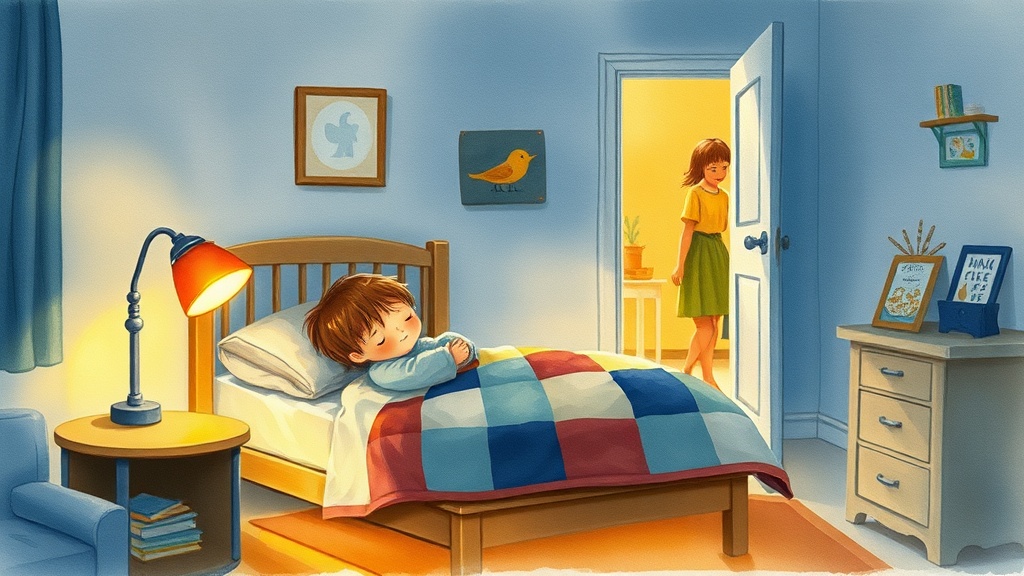
Many children struggle to fall asleep without a parent close by — and that's completely normal. This gentle, step-by-step guide helps you support your child's growing independence at bedtime without tears, battles, or guilt.
If you've spent the last year — or the last five — lying next to your child until they drift off, you're in very good company. Most parents of young children have been there: the slow shuffle towards the door, the held breath, the creak of the floorboard at entirely the wrong moment. Co-sleeping and parental presence at bedtime are deeply natural responses to a child's need for comfort and security. But at some point, many families reach a moment where everyone — child included — would benefit from a little more independence. If that moment has arrived for you, this guide is here to help you navigate it with warmth, patience, and a realistic plan.
Why Children Struggle to Sleep Alone (And Why It's Not a Problem to Fix)
First, a reassurance: a child who wants you nearby at bedtime is not being manipulative, spoiled, or badly behaved. They are being human. For young children, sleep feels like separation — from you, from the warmth of the day, from everything familiar. Their nervous systems are genuinely not yet wired to self-soothe the way adults can.
Research in developmental psychology consistently shows that children who feel securely attached to their caregivers are more likely to develop independence — not less. In other words, responding to your child's need for comfort now is an investment in their long-term confidence, not a step backwards.
That said, there are real reasons why a family might want to gently shift the pattern: a new baby arriving, a child starting school, a parent returning to work, or simply everyone being exhausted. All of these are valid. The key is moving at a pace that feels safe and manageable for your child — not rushing, and not forcing.
The "Gradual Retreat" Method: Small Steps, Big Results
One of the most effective and least distressing approaches for young children is sometimes called the gradual retreat, or "chair method." Rather than making a sudden change, you slowly — over days or weeks — increase the physical distance between yourself and your child at bedtime.
Here's how it typically works:
- Start beside the bed. Sit next to your child as they fall asleep, but resist lying down with them. You're present, but slightly less involved.
- Move to a chair. After a few nights, shift to a chair beside the bed. You're still in the room, but no longer the physical anchor.
- Move the chair back. Gradually edge the chair towards the door over several nights — a foot or two at a time.
- Sit in the doorway. You're visible, but outside the room. Your child can see you; you can see them.
- Step just out of sight. You're close — right outside — but your child is falling asleep without visual contact.
The whole process might take two weeks or four weeks depending on your child's age and temperament. That's completely fine. Slower is almost always more sustainable than faster.
Building a Bedtime Routine That Does Some of the Work for You
One of the most powerful tools for helping a child settle independently is a consistent, predictable bedtime routine. When children know exactly what comes next, the routine itself becomes a source of security — it's not just you they're relying on, but the familiar sequence of events.
A good routine for children aged 2–10 might look something like this:
- Bath or wash — warm water helps lower body temperature and signals sleep
- Pyjamas and teeth — the practical stuff, done the same way every night
- A quiet wind-down activity — a simple puzzle, colouring, or gentle conversation
- Story time — the emotional anchor of most children's bedtimes
- A short, consistent goodbye — the same words, the same kiss, every single night
That last point matters more than most parents realise. A reliable, loving send-off — "I love you, sleep tight, I'll see you in the morning" — gives children something to hold onto as they drift off. When the words are the same every night, they carry weight. They become a kind of promise.
Making the Story the Star (So You Don't Have to Be)
One of the trickiest parts of stepping back from bedtime is that your child may feel the loss of your closeness most acutely during story time. The story is often the warm, connected part of the evening — the bit they look forward to most. If you're physically withdrawing, the story itself needs to carry more of that emotional load.
This is where the quality of the story really matters. A story that features your child by name, that includes their favourite characters and interests, that feels made just for them — that kind of story holds a child's attention and imagination in a way that a generic tale simply can't. Apps like Dreamtime create a brand-new personalised story every night, tailored to your child's name, age, and interests, with watercolour illustrations and narration — so even if you're sitting a little further away, the story itself is pulling them gently into sleep. It won't replace you, but it will support the transition beautifully.
What to Do When It Doesn't Go to Plan
Some nights will be harder than others. Your child will call out, come to find you, or simply refuse. This is normal — and it's not evidence that the approach isn't working. It's evidence that your child is human, and that change takes time.
A few principles to hold onto:
- Stay calm and consistent. Each time you respond with patience rather than frustration, you reinforce that bedtime is safe — even if it's different.
- Don't punish regression. If your child had a difficult day — a big emotion, a social upset at nursery, a new experience — they may need more closeness for a night or two. That's not failure; that's attunement.
- Celebrate progress, not perfection. Notice and name the wins: "You stayed in your room last night — I'm really proud of you." Children thrive on specific, genuine praise.
- Keep expectations age-appropriate. A two-year-old and a seven-year-old have very different capacities for self-settling. Be honest with yourself about what's realistic for your child right now.
If after several consistent weeks there's been no progress at all, it may be worth speaking to your health visitor or GP — occasionally sleep difficulties in children are linked to anxiety, sensory sensitivities, or other factors worth exploring.
A Gentle Reminder for the Parents in the Thick of It
Helping your child learn to sleep independently is one of the quieter, more invisible acts of parenting — not dramatic, not instantly rewarded, and often happening at the end of the day when you're already running on empty. It requires patience that can be very hard to find at 9pm when you've been needed by small people all day long.
But you don't have to do it perfectly. You just have to keep showing up — calmly, consistently, and with kindness. Your child doesn't need you to be flawless at this. They need to know that you're steady, that bedtime is safe, and that morning always comes.
And it will. Even the longest bedtimes eventually end — and one day, sooner than you'll expect, your child will walk into their room, climb into bed, and fall asleep without needing you to be there at all. When that night comes, you might even feel a small, bittersweet pang. That's normal too.
Give your child a new story every night
Dreamtime creates personalised bedtime stories with beautiful illustrations, tailored to your child, every single night.
Start your free trial →