How to Help Your Child Separate Fantasy from Reality (Without Squashing Their Imagination)
Dreamtime
26 June 2026
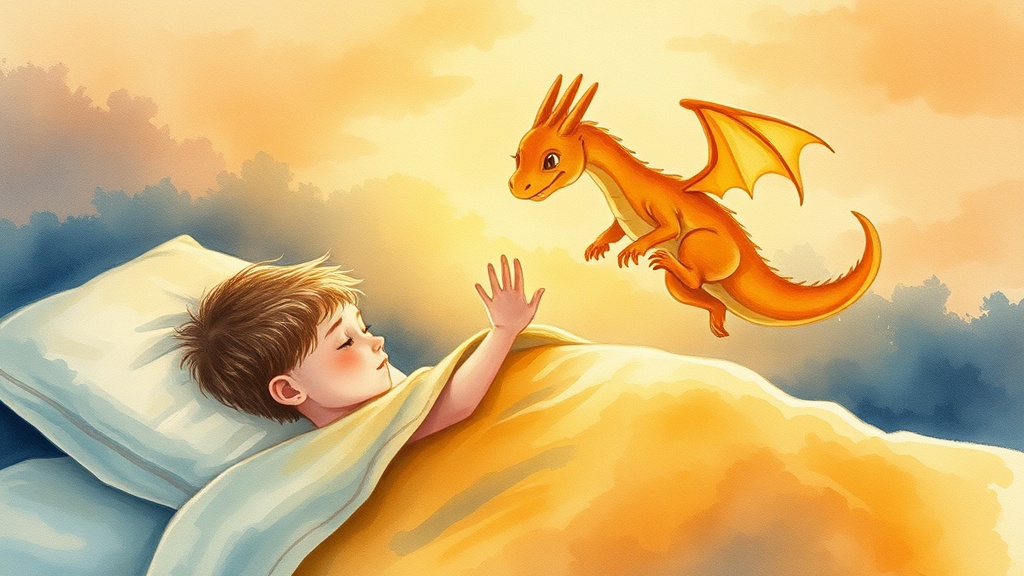
Young children live in a beautifully blurry world where dragons might be real and toys definitely have feelings. Here's how to gently guide them toward understanding what's real — without dimming the magic that makes childhood so special.
There's a moment almost every parent recognises. Your four-year-old bursts into tears because they're absolutely certain there's a monster under the bed — or, just as often, begs you to leave a snack out for the dragon they made friends with in tonight's story. Young children don't live in the same version of reality adults do, and that's not a flaw. It's one of the most extraordinary things about early childhood. But as they grow, learning to tell the difference between what's real and what's imagined is a crucial developmental skill — one that shapes everything from emotional regulation to how they handle fear at night. The good news? You can help them build that skill without taking a single drop of wonder out of their world.
Why Young Children Blur Fantasy and Reality (It's Completely Normal)
Before you worry that your child is confused or struggling, it helps to understand what's actually going on in their brain. Up until around age seven, most children are genuinely unable to reliably distinguish between fantasy and reality in the way adults do. This isn't naivety — it's how their developing minds are wired.
Psychologists call this magical thinking, and it peaks between the ages of three and six. During this window, children's brains are making sense of a vast, overwhelming world using the most powerful tool they have: imagination. When they decide that their stuffed rabbit is sad, or that a witch might visit at night, they're not being irrational. They're doing exactly what their brains are built to do.
By around age seven or eight, most children have developed enough cognitive maturity to make clearer distinctions — though plenty of nine and ten-year-olds still choose to believe in magical things, which is a different (and lovely) thing entirely.
Understanding this timeline matters because it changes how you respond. A frightened three-year-old who thinks monsters are real needs a different kind of reassurance than a seven-year-old who's picked up a scary idea from a friend.
How Bedtime Makes the Line Even Blurrier
Bedtime is when this fantasy-reality blur tends to be at its most intense — and there are good reasons for that. When the lights go down and the day's distractions disappear, the imaginative mind has room to roam. This is why children's fears so often surface at night, and why bedtime stories feel so vivid and real to young children.
It's also why the type of stories and content your child encounters before sleep matters. Dark, frightening, or confusing storylines — even in seemingly "mild" media — can linger in a young child's mind and become entangled with their own anxious thoughts. Equally, a story that ends with warmth, resolution, and safety can become a genuine emotional anchor.
When children hear stories where characters face challenges and come through them, it gives them a quiet inner script to draw on. The brave girl found her way home. The worried bear discovered there was nothing to fear. These narrative patterns build emotional frameworks that children carry into their own experiences of the world.
Practical Ways to Help Your Child Understand What's Real and What's Not
The goal isn't to shut fantasy down — it's to give your child the language and the confidence to navigate both worlds.
Talk about it openly and without dismissal. When your child tells you something fantastical, resist the urge to immediately correct them. Instead, ask curious questions: "That's such an interesting idea — what do you think would happen if that were true?" This validates their thinking while gently inviting them to examine it.
Use the language of stories. Phrases like "In the story, the dragon could fly — but in our world, what do we know about dragons?" help children practise the mental shift between story-world and real-world without shame or embarrassment.
Name the difference between pretend fears and real ones. When your child is frightened, acknowledge the feeling first: "It sounds like your brain is imagining something scary." Then gently help them check in with reality: "Let's look together. What can we actually see?" This teaches them to self-regulate without dismissing their experience.
Lean into imaginative play with a structure. When children play make-believe with clear "let's pretend" framing, they're actually practising the very skill of toggling between fantasy and reality. Encourage this kind of play — it's doing important developmental work.
Be honest about the magical things that matter to your family. Whether you celebrate Father Christmas, the Tooth Fairy, or Easter traditions, it's okay to allow those shared family myths to exist. When the time comes that your child starts to question them, follow their lead honestly. Children tend to handle these revelations far better than parents expect — especially when the conversation is handled with warmth rather than abruptness.
When to Take a Closer Look
For most children, blurred fantasy-reality boundaries are completely age-appropriate and resolve naturally. But there are some signs that it's worth a conversation with your GP or health visitor:
- Persistent fears that don't respond to reassurance and are significantly affecting sleep or daily life
- Difficulty distinguishing between fantasy and reality in a way that seems to be getting more pronounced rather than less as your child gets older
- Distress that feels disproportionate or that your child cannot be helped out of
If any of these feel familiar, trust your instincts and reach out for support. You know your child best.
How Stories Can Be Part of the Solution
One of the most effective tools for helping children navigate the fantasy-reality divide is also the simplest: stories that feel safe, familiar, and personally meaningful. When a child hears a story where they are the main character — facing a worry, solving a problem, or exploring something new — it creates a uniquely powerful kind of emotional rehearsal.
This is exactly what Dreamtime is designed to do. Each night, it creates a brand-new personalised bedtime story tailored to your child's name, age, and interests, with watercolour illustrations and gentle narration. Stories that feel close to home — where the hero is recognisable, the world is warm, and the ending is always safe — help children process big feelings without ever feeling overwhelmed. It's one small way to make sure the last thing your child's imagination encounters before sleep is something that leaves them feeling calm, capable, and ready to rest.
Raising Children Who Carry Both Worlds Well
The children who grow up to be the most creative, emotionally intelligent, and resilient adults are often those who were never forced to abandon imagination — but were gently taught how to hold it alongside reality. They learned that stories are powerful because they're not real. That pretending is a skill, not a confusion. And that the world is big enough to hold both dragons and school runs.
Your child is doing exactly what they're meant to do when they blur those lines. Your job isn't to correct that — it's to walk alongside them as they slowly, naturally, find their footing in both worlds. And to make sure that when bedtime comes, the last thing they hear sends them off feeling safe, loved, and full of wonder.
Give your child a new story every night
Dreamtime creates personalised bedtime stories with beautiful illustrations, tailored to your child, every single night.
Start your free trial →