How to Help Your Child Learn to Tell Time Using Bedtime as Your Secret Tool
Dreamtime
19 August 2026
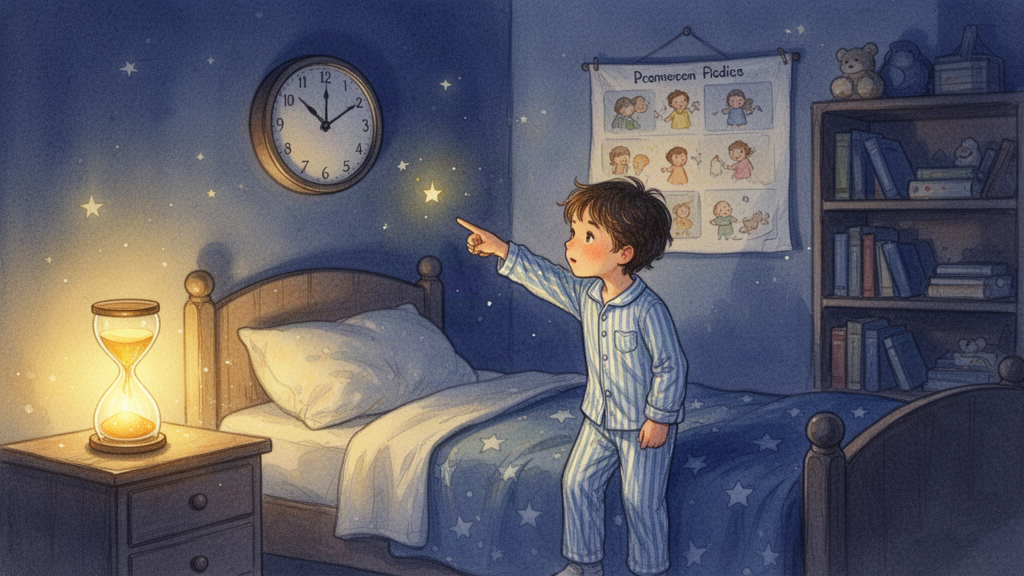
Bedtime is the perfect low-pressure moment to teach children about time — from understanding "10 minutes" to reading a clock. Here's how to weave simple, playful time-telling lessons into your existing routine without adding a single extra minute to bedtime.
If your four-year-old thinks "five more minutes" means anything from thirty seconds to half an hour, you're not alone. Time is one of the trickiest abstract concepts for young children to grasp — and yet it's woven into almost everything we ask of them, especially at bedtime. "It's nearly time for bed." "You can read for ten more minutes." "We'll do this again tomorrow night." The good news is that bedtime, with its predictable rhythm and calm pace, is actually one of the best places to help time-telling click for your child — no flashcards required.
Why Bedtime Is a Natural Classroom for Time Concepts
Children learn abstract ideas best when they're anchored to real, repeated experiences rather than abstract explanations. Time is exactly this kind of concept — it's invisible, and words like "later," "soon," and "in five minutes" mean nothing until a child has lived through enough of them to build a mental model.
Bedtime happens at (roughly) the same time every night, follows the same sequence of steps, and involves plenty of natural opportunities to talk about duration and sequence: "First bath, then teeth, then story." This built-in structure makes it easier for children to absorb time concepts almost by osmosis, simply because they're experiencing the same pattern night after night.
Start With Sequence, Not Numbers
Before a child can understand clocks or minutes, they need to understand that time moves in a predictable order. This is called sequencing, and it's the real foundation of time-telling.
- Narrate the order out loud. "Bath is first, then pyjamas, then two stories, then lights out." Repeating this sequence nightly helps children internalise that time has a beginning, middle, and end.
- Use visual schedules. A simple picture chart on the wall — bath, book, teeth, bed — lets younger children (ages 2–4) "read" the sequence themselves and predict what's coming next.
- Ask prediction questions. "What do we do after teeth?" This gently exercises their ability to think ahead in time, which is a precursor skill to actually telling it.
Teach Duration With Real, Felt Examples
Once sequencing is solid (usually by age 4 or 5), you can start introducing duration — how long things actually take.
- Use a visual timer. A sand timer or a simple countdown timer on a clock face helps children see time passing rather than just hearing a number. "When all the sand is at the bottom, it's time to put the book down" is far more meaningful than "five more minutes."
- Anchor minutes to familiar activities. "A story takes about ten minutes to read — that's how long it takes to brush your teeth, wash your face, and get into pyjamas." Comparing new time units to known routines builds intuition.
- Count together. For children around 5–6, counting seconds together ("one Mississippi, two Mississippi...") while doing something short, like putting on socks, gives them a felt sense of how long a minute actually is.
Introduce the Clock Itself (When They're Ready)
Most children begin to grasp analogue clocks between ages 5 and 7, though this varies widely. Bedtime offers a low-stakes way to introduce clock reading without it feeling like a lesson.
- Point to the clock at the same moments each night. "Look, the big hand is on the 12 and the little hand is on the 7 — that means it's 7 o'clock, story time!" Repetition at the same time each night builds recognition.
- Use a clock with hands, not just digital numbers. Analogue clocks make the passage of time visually obvious in a way digital displays don't — children can see the hands move and understand time as something continuous rather than a set of numbers that jump.
- Make a paper clock together. A simple paper plate clock with movable hands, kept by the bed, lets your child "set" the time for tomorrow's wake-up or tonight's lights-out as a playful, hands-on activity.
- Celebrate small wins. When your child correctly reads "It's 7 o'clock!" for the first time, treat it like the milestone it is. Confidence matters more than speed here.
Turn Waiting Into Practice, Not Punishment
One of the trickiest parts of bedtime and time-telling combined is the dreaded "just five more minutes" negotiation. Rather than treating this as a battle, use it as practice:
- Instead of a vague answer, show them: "We have two more minutes — let's watch the timer together."
- Give them ownership: let your child set the timer themselves. Children are far more cooperative with limits they've had a hand in creating.
- Keep consistent language. Using the same phrases night after night ("in ten minutes," "when the little hand reaches the 6") reinforces the vocabulary of time far more than one-off explanations.
Stories can help here too. A calm, unhurried bedtime story that has a clear beginning, middle, and end mirrors the very structure you're trying to teach — sequence, duration, and resolution — all wrapped up in something your child already loves. This is one of the quieter benefits of a consistent story routine: with Dreamtime, each night's personalised story is a fresh adventure featuring your child by name, but it still follows that same comforting shape night after night, giving them a gentle, repeated experience of stories (and time) moving from start to finish.
A Gentle Reminder
Learning to tell time is a slow-build skill, often not fully mastered until age 7 or 8, and that's completely normal. There's no need to rush it or turn bedtime into a lesson plan. The real magic is in the repetition — the same steps, the same words, the same warm wind-down each night. Simply by living inside a predictable routine, your child is already learning far more about time than any worksheet could teach them. Keep narrating the sequence, keep pointing at the clock, and trust that the understanding will click when they're ready. In the meantime, enjoy the ten minutes of story — however long that actually feels to a five-year-old negotiating for "just one more."
Give your child a new story every night
Dreamtime creates personalised bedtime stories with beautiful illustrations, tailored to your child, every single night.
Start your free trial →