How to Help Your Child Choose Between Two Bedtime Stories (Without the Meltdown)
Dreamtime
5 August 2026
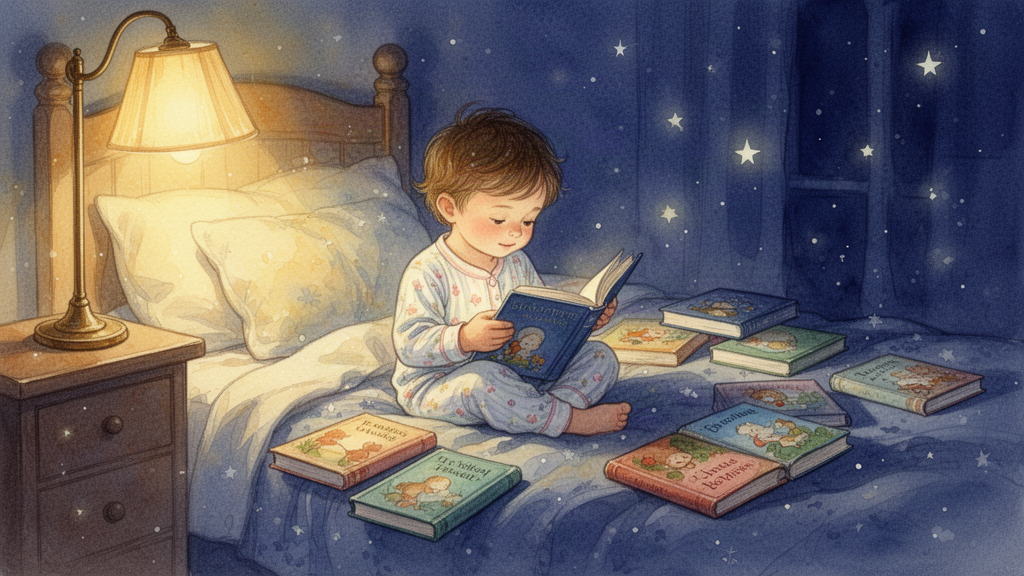
When "just pick one" turns into tears, the problem usually isn't the books — it's the decision itself. Here's why choosing at bedtime is so hard for young children, and simple strategies to make it easy, fast, and even fun.
"Just pick one!" It's a phrase uttered by exhausted parents every night around the world, usually followed by a small person clutching four books to their chest, unable to let go of any of them, and the whole bedtime routine grinding to a halt. If this scene feels painfully familiar, you're not alone — and more importantly, it's not a sign that your child is being difficult on purpose. Choosing between books is a genuinely hard task for a young brain, and understanding why can help you turn this nightly flashpoint into a smooth, even enjoyable, part of the routine.
Why This Decision Feels So Big to a Small Child
To an adult, picking a bedtime story feels trivial. To a two, four, or six-year-old, it can feel enormous. Young children are still developing the cognitive skills needed for decision-making — the part of the brain responsible for weighing options, the prefrontal cortex, doesn't fully mature until adulthood. When a toddler or preschooler is asked to choose between two beloved books, they're not just picking a story; they're grappling with the fear of "losing" the one they don't choose.
There's also the exhaustion factor. Bedtime often comes at the end of a long day of decisions your child has already had to make — what to wear, what to eat, whether to share the swing at the park. By 7pm, their capacity for more choices is often running on empty, which is exactly when we ask them to make one more.
Understanding this doesn't mean you have to abandon the concept of choice altogether. It means adjusting how you offer it.
Limit the Options (Two Is Almost Always Better Than Ten)
One of the simplest fixes is to reduce the number of choices on offer. A child faced with an entire shelf of books is far more likely to freeze or spiral than one offered a choice of two. This is sometimes called "the paradox of choice" — more options don't make decisions easier, they make them harder, even for adults.
Try this: before your child even enters the room, select two or three books yourself. Present them as the only options. "Would you like the dinosaur story or the one about the little boat tonight?" This still gives your child a sense of control and autonomy — which is often what they're really after — without overwhelming them.
Use a Rotation System
If your child struggles every night regardless of how many books you offer, consider taking the decision out of their hands altogether some nights, using a predictable system they can see coming. A few ideas:
- A story jar: write the names of five or six favourite books on slips of paper and let your child pull one out at random. The randomness removes the pressure of choosing, but they still get to be involved in the process.
- Days of the week: assign certain books or types of stories to certain nights. "Tuesday is animal story night" removes the decision entirely while still keeping things varied.
- Take turns: on odd nights, your child chooses; on even nights, you do. This also gives you a chance to reintroduce old favourites or new books they might not pick themselves.
Predictability is soothing for young children, and knowing that a choice — or lack of one — is coming can prevent the nightly negotiation before it starts.
Set a Timer for the Decision
For children old enough to understand the concept of time (generally from about age four), a simple kitchen timer can work wonders. "You have one minute to choose" transforms an open-ended, anxiety-inducing decision into a game with a clear endpoint. Most children will rise to the small challenge, and the ticking timer creates gentle urgency without you having to be the bad guy who's rushing them.
If the timer runs out without a decision, it's fine to make a warm, matter-of-fact call yourself: "Time's up — let's go with the fox story tonight, and the other one is still here for tomorrow." The key is delivering this without frustration, so it doesn't feel like a punishment for not choosing fast enough.
Reassure Them the Other Book Isn't Gone
A lot of bedtime book meltdowns aren't really about which story is better — they're about loss. Your child may genuinely believe that if they don't pick a book tonight, they'll never get to hear it. Naming this fear out loud can diffuse it instantly: "This book isn't going anywhere. It'll be right here on the shelf tomorrow, waiting for you." For some children, physically setting the unchosen book aside somewhere visible — like on their pillow or nightstand — as "tomorrow's book" provides the reassurance they need to let go of it tonight.
When the Real Issue Is Running Out of Options Altogether
Sometimes the nightly stand-off isn't about too many choices — it's about the opposite problem. If you've read the same handful of books hundreds of times, your child may be dragging out the decision simply because none of the options feel exciting anymore. In these cases, introducing something genuinely new can solve the problem at its root.
This is one area where an app like Dreamtime can help. Because it generates a brand-new, personalised story every night — featuring your child by name, tailored to their age and current interests, complete with illustrations and narration — there's no pile of well-worn books to sort through and no repeat decision fatigue. Some families use it alongside their usual bookshelf, reserving it for nights when the "which book?" battle is in full swing, or simply as the one guaranteed-fresh option in the nightly line-up.
A Gentler Bedtime Is Within Reach
Struggling to choose a book isn't a character flaw in your child, and it doesn't mean your bedtime routine is broken. It's simply a predictable stage of development meeting the natural fatigue of a long day. With a few small adjustments — fewer options, a bit of structure, and reassurance that nothing is truly lost — most families find the nightly stand-off fades away surprisingly quickly. And on the nights when even two choices feels like one too many, it's perfectly okay to make the call yourself and get on with the best part: snuggling in together for the story.
Give your child a new story every night
Dreamtime creates personalised bedtime stories with beautiful illustrations, tailored to your child, every single night.
Start your free trial →