How to Help Your Child Deal With Bedtime Anxiety About the Next Day
Dreamtime
9 July 2026
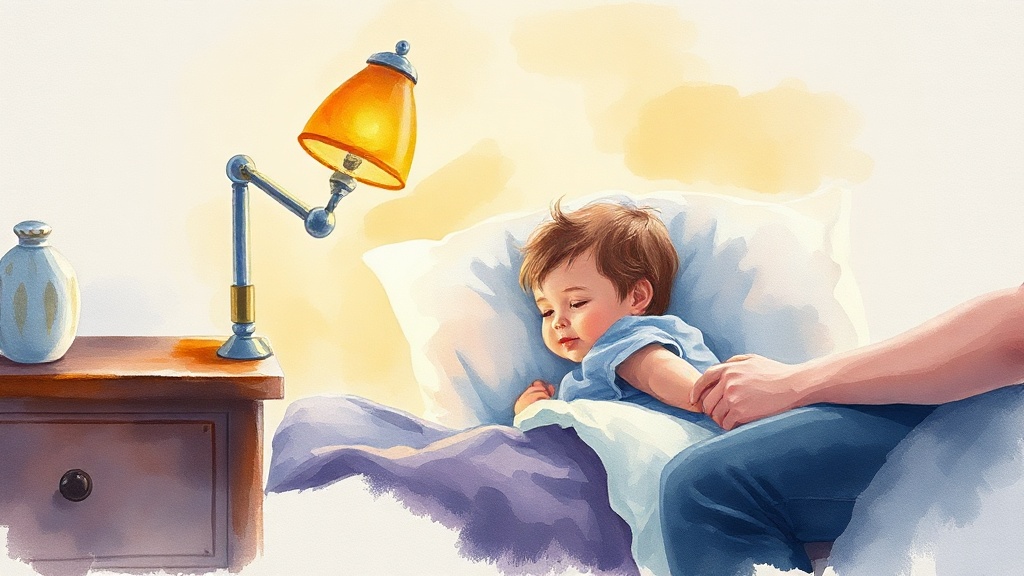
Many children lie awake worrying about what tomorrow holds — a school test, a new activity, or simply the unknown. Here's how to recognise the signs of next-day anxiety at bedtime and what you can do to help your child feel calm, safe, and ready to sleep.
It's 8:30pm and your child should be drifting off to sleep — but instead, the questions start. "What if I get the spellings wrong tomorrow?" "What if nobody wants to play with me?" "What if I don't like the new teacher?" This kind of bedtime worry is incredibly common in children aged 2–10, and it can turn an otherwise peaceful routine into an anxious spiral that keeps the whole house awake. The good news is that next-day anxiety at bedtime is very normal, and with the right approach, you can help your child move through it — not just tonight, but as a lifelong skill.
Why Bedtime Is When Worry Tends to Surface
During the day, children are busy. Play, meals, school, movement — all of that activity gives the brain plenty to focus on. But at bedtime, the noise fades, the lights go down, and suddenly there's nothing to distract them from the thoughts that have been quietly queuing up all day.
This is actually a neurological pattern that adults experience too. The brain uses quiet moments to process unresolved concerns, and for children — who have less experience managing uncertainty — those concerns can feel overwhelming in the stillness of bedtime.
It's also worth knowing that anxiety tends to peak in the evening because cortisol (the body's alerting hormone) naturally dips, leaving children feeling more emotionally vulnerable. So a worry that felt manageable at 3pm can feel enormous at 8pm. Understanding this helps you respond with patience rather than frustration.
How to Tell If It's Normal Worry or Something More
Most children go through phases of bedtime worry, particularly around transitions: starting school, moving house, a new sibling, changes in friendships. This kind of situational anxiety is healthy — it means your child is processing the world around them.
Signs that it's normal worry:
- It's linked to a specific upcoming event or change
- It settles within a few minutes of reassurance
- It doesn't significantly affect their daytime mood or behaviour
- It comes and goes in waves rather than being constant
Signs you might want to speak to your GP or a child wellbeing professional:
- The worry is intense, frequent, and doesn't respond to reassurance
- Your child is avoiding activities because of fear of what might happen
- Sleep is significantly disrupted most nights for several weeks
- They're expressing worries about unlikely or catastrophic events regularly
If in doubt, always trust your parental instinct and seek advice. But for most children, most of the time, there is a great deal you can do at home.
Four Gentle Strategies That Actually Help
1. Give worry a dedicated window — earlier in the evening
One of the most effective techniques recommended by child psychologists is a "worry time." Instead of waiting for the lights-out spiral, build a short, structured window into your early evening routine — say, after dinner but well before bed — where your child is invited to share anything on their mind. Keep it brief (five to ten minutes), use a notebook if your child enjoys writing or drawing, and then gently close the window: "We've talked about it, and now we're setting it aside for tonight."
This teaches children that their worries deserve attention — just not at midnight.
2. Validate first, problem-solve second
When your child says "I'm scared about sports day," the instinct is often to immediately reassure: "You'll be brilliant, don't worry!" But jumping to reassurance too quickly can accidentally send the message that the worry isn't worth taking seriously. Try validating first: "That sounds like it feels really big. I get nervous about new things too." Once they feel heard, they're far more receptive to gentle reassurance or practical thinking.
3. Use the "best thing, worst thing, most likely thing" framework
For children aged five and up, this simple three-step technique can be surprisingly powerful. When they share a worry, gently walk them through it together:
- "What's the worst thing that could happen?" (Let them say it out loud — named fears lose some of their power.)
- "What's the best thing that could happen?"
- "What do you think will actually happen?"
This isn't about dismissing their concern — it's about helping them build the mental habit of realistic thinking rather than catastrophising.
4. Create a calming, predictable end to the night
Anxiety thrives on unpredictability. A consistent, soothing bedtime routine acts as a signal to the nervous system that it's safe to let go. This might include a warm bath, a few minutes of quiet play, and then a story. Stories are particularly powerful here — they gently redirect the mind away from worry and into imagination, giving the brain something absorbing and pleasant to settle into.
This is one of the reasons many parents find that a fresh, engaging story each night works better than a familiar one for anxious children — a new narrative captures attention more fully, leaving less mental space for the worry loop to restart. Dreamtime creates a brand-new personalised bedtime story every night, tailored to your child's name and interests, which can be a lovely way to give an anxious mind somewhere warm and safe to land.
What to Say (and What to Avoid) at Bedtime
Words matter enormously when a child is anxious. A few phrases that help:
- "You've handled hard things before, and you can handle this too."
- "It makes sense that you feel nervous. Nervous feelings don't last forever."
- "I'll be here in the morning and we'll do it together."
Phrases that can accidentally make things worse:
- "There's nothing to worry about" — this dismisses the feeling rather than addressing it
- "Everyone feels like that, it's fine" — again, minimising rather than validating
- "Stop worrying and go to sleep" — anxiety isn't a choice, and this increases shame alongside the original worry
A steady, calm tone matters as much as the words themselves. Your regulated presence is genuinely regulating for your child's nervous system — co-regulation is real, and it works.
Building Longer-Term Resilience Around Worry
The goal isn't just to get through tonight — it's to help your child build a healthier relationship with uncertainty over time. A few habits worth nurturing:
- Talk openly about your own (age-appropriate) worries and how you handle them. Children learn emotional regulation by watching adults model it.
- Celebrate brave moments during the day. When your child does something that felt scary, name it: "You were worried about that, and you did it anyway. That's real courage."
- Read stories where characters face uncertainty and come through. Narrative is one of the most powerful tools children have for understanding their own emotional landscape — seeing a character manage worry helps children believe they can too.
- Keep the bedtime routine consistent, even when life is busy. Predictability is one of the greatest gifts you can give an anxious child.
You're Already Doing the Most Important Thing
The fact that you're thinking about this — that you're trying to understand what's happening for your child at bedtime rather than simply managing the behaviour — is already enormously meaningful. Children whose parents take their worries seriously grow into adults who trust their own emotional experiences. That's a gift that compounds over a lifetime.
Next-day anxiety at bedtime doesn't have to mean a battle every evening. With patience, the right words, and a routine that helps their mind feel safe, most children find their way through — and often faster than you might expect. Tonight, try one thing from this list. Tomorrow, you can try another. Small, consistent shifts are how lasting change actually happens.
You've got this — and so do they.
Give your child a new story every night
Dreamtime creates personalised bedtime stories with beautiful illustrations, tailored to your child, every single night.
Start your free trial →