How to Help a Child Who Is Afraid of Going to Sleep (Not Just the Dark)
Dreamtime
6 July 2026
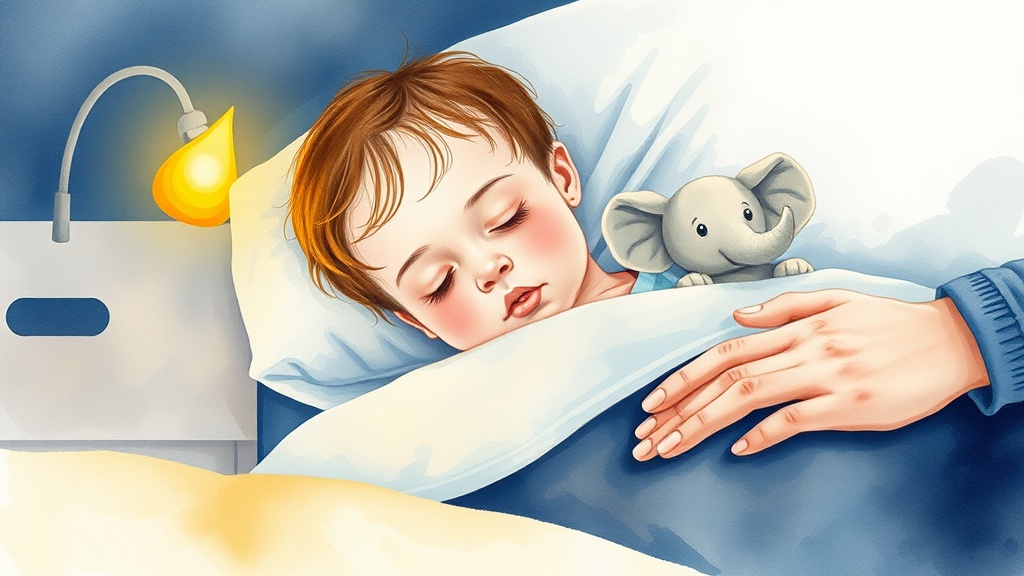
Some children aren't afraid of the dark — they're afraid of sleep itself. Here's what's really going on, and how to help your child feel safe enough to let go and drift off each night.
You've done everything right. The lights are low, the bath is done, the milk is warm. And yet your child is clinging to you at bedtime — not because they're scared of monsters under the bed, not because they want one more story, but because something about the act of falling asleep itself feels frightening to them. If this sounds familiar, you're not alone, and you're not dealing with a "badly behaved" child. Sleep anxiety — a genuine fear of going to sleep rather than just a fear of the dark — is surprisingly common in children aged 2–10, and it's one of the least talked-about bedtime struggles parents face.
What Is Sleep Anxiety, and How Is It Different from Ordinary Bedtime Resistance?
Most bedtime resistance is about not wanting to stop. Children are wired to stay alert and engaged — sleep requires them to voluntarily surrender that awareness, and for some children, that surrender feels genuinely unsafe.
Sleep anxiety is subtly different from ordinary stalling. A child who doesn't want to miss out will negotiate, ask for water, or find reasons to call you back in. A child with sleep anxiety will show signs of real distress: shallow breathing, tearfulness, clinging, or an escalating sense of panic as bedtime approaches. They may say things like "I don't want to go to sleep," "what if I don't wake up?", or simply "I don't like it" without being able to explain why.
Common triggers include:
- A developmental leap or new stage of self-awareness — around ages 4–6, many children begin to understand concepts like death and loss, which can make unconsciousness feel frightening.
- A period of anxiety or stress, such as starting school, a family change, or even something that seems minor to adults.
- Vivid dreaming or night terrors, which can make a child dread what might happen once they're asleep.
- A temperament that runs high in sensitivity or emotional intensity — these children often find the loss of control at sleep onset particularly hard.
Understanding the root cause helps you respond with empathy rather than frustration.
The Reassurance Trap (And How to Avoid It)
When your child is distressed at bedtime, your first instinct is to reassure. "You're fine, nothing bad is going to happen, I'm right here." This is natural, loving, and completely understandable — and in small doses it's helpful. But when reassurance becomes the nightly ritual your child needs in order to sleep, it can quietly reinforce the message that sleep is something to be worried about.
Think of it this way: every time you rush in to soothe a fear, you're implicitly confirming that the fear was worth having. That's not a reason to be cold or dismissive — it's a reason to be thoughtful about how you reassure.
More effective approaches include:
- Validate, then redirect. "I hear you — it can feel strange to go to sleep. Let's think about something lovely you can imagine while you drift off."
- Name the feeling without amplifying it. "That feeling is just your brain getting ready for sleep. It feels a bit wobbly sometimes, doesn't it? That's normal."
- Avoid extended check-ins that stretch goodnight into 45 minutes. A warm, confident goodbye is more reassuring than a prolonged one.
The goal is to communicate — through your tone and behaviour as much as your words — that sleep is safe, natural, and nothing to fear.
Building a Bedtime Ritual That Feels Predictable and Safe
One of the most powerful tools against sleep anxiety is predictability. When children know exactly what comes next, their nervous system can begin to settle before they even get into bed. A consistent routine signals safety.
A good wind-down ritual for an anxious child might look like this:
- A transition warning — "Ten minutes until bath time" gives the brain time to adjust.
- Warm water — a bath or even a warm flannel on the face genuinely lowers core body temperature and signals sleep to the brain.
- Low lighting — start dimming lights 30–40 minutes before sleep to support melatonin production.
- A calm, contained story time — this is crucial. Story time isn't just entertainment; it gives the child's busy mind a structured, gentle journey away from the worries of the day and toward a softer, more imaginative place. A story that features their own name and favourite things can be especially grounding — it tells them the world of sleep is a place made just for them. This is exactly what Dreamtime is designed to do: each night's story is tailored to your child, giving them something warm and familiar to carry into sleep.
- A closing ritual — the same two or three sentences every night ("I love you, you're safe, I'll see you in the morning") act as an anchor. Repetition is comfort.
Practical Techniques to Try Tonight
Beyond routine, there are specific techniques that help children manage the physical feeling of anxiety at sleep onset:
- Belly breathing. Teach your child to breathe in for four counts, hold for two, and out for four. Make it a game — "let's breathe like a sleeping bear." Even toddlers can engage with this.
- Body scanning. Ask your child to squeeze each part of their body and then let it go, starting with their toes and working up. This progressive muscle relaxation is used in adult sleep therapy for good reason — it works.
- A "worry catcher." For children aged 4 and up, try keeping a small notebook by the bed. Before sleep, they tell it (or draw) one worry. It's "caught" — they don't have to hold onto it anymore.
- A transitional object with a purpose. Rather than just a comfort toy, give the object a job: "Elephant is going to keep watch while you sleep." Giving agency, even symbolically, helps children feel less passive about the process.
- Visualisation. Guide your child to imagine a safe, happy place — a cosy burrow, a cloud kingdom, a garden — and describe it in detail together before you leave the room.
When to Seek Extra Support
Most childhood sleep anxiety responds well to the strategies above, and it often eases naturally as children grow and their understanding of the world matures. But it's worth speaking to your GP or a paediatric sleep specialist if:
- Your child's anxiety is significantly worsening over weeks rather than improving.
- The fear is generalising — they're anxious throughout the day, not just at bedtime.
- Sleep deprivation is beginning to affect their behaviour, mood, or learning.
- Your child has experienced a trauma or loss that might be driving the fear.
There's no shame in asking for help. Sleep difficulties in childhood are genuinely hard — for children and for parents — and professional support can make an enormous difference.
You're Not Failing — You're Paying Attention
The fact that you're reading this means you're already doing something important: you're taking your child's fear seriously. Sleep anxiety in young children is real, it's common, and it is absolutely something that can improve with the right support and strategies. Be patient with the process, be consistent with the routine, and — most importantly — be patient with yourself. Bedtime doesn't have to be a battle. With time, the right tools, and a whole lot of warmth, it can become the quietest, most connected part of your day.
Give your child a new story every night
Dreamtime creates personalised bedtime stories with beautiful illustrations, tailored to your child, every single night.
Start your free trial →