Do Bedtime Stories Really Help Children Sleep? What the Research Says
Dreamtime
11 May 2026
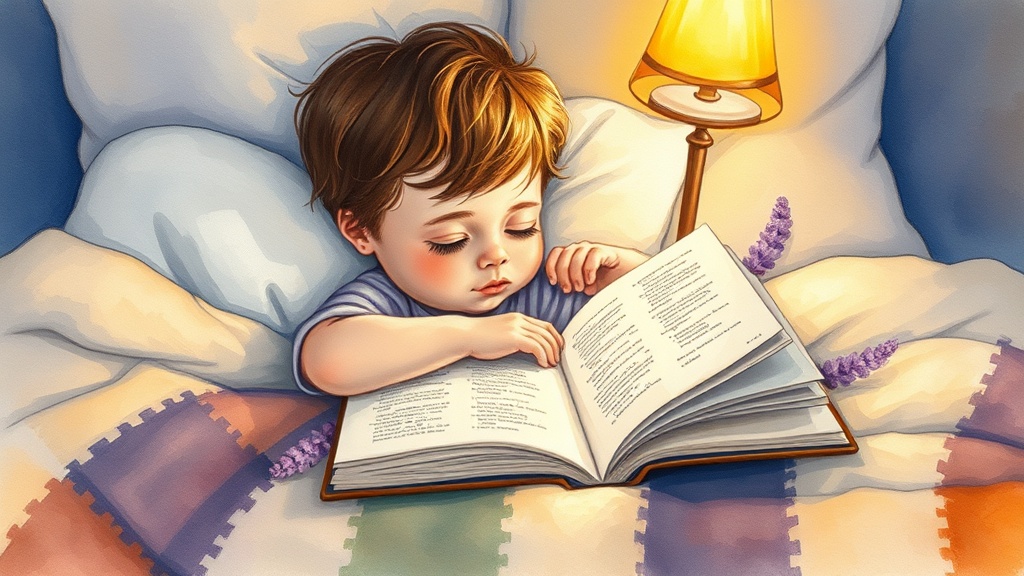
Most parents read bedtime stories out of habit or love — but it turns out there's real science behind why they work so well. From lowering cortisol levels to easing bedtime anxiety, stories do far more than fill the time before lights-out. Here's what the research actually says.
Most parents read bedtime stories because it feels like the right thing to do — a cosy ritual passed down from their own childhood. But if you've ever wondered whether it actually works, or whether you're just delaying the inevitable battle to get the lights off, you're not alone. The good news is that decades of research into children's sleep, anxiety, and brain development point in the same direction: bedtime stories genuinely help children settle, sleep better, and wake up healthier. Here's why.
What Happens in a Child's Brain at Bedtime
To understand why stories help, it's worth knowing what's happening in a young child's brain as bedtime approaches. Unlike adults, children don't have a fully developed ability to self-regulate — to consciously shift from a state of alertness and stimulation into calm. Their nervous systems are still learning how to make that transition.
In the hour before sleep, the brain ideally needs to reduce its production of cortisol (the stress and alertness hormone) and allow melatonin (the sleep hormone) to rise. But anything exciting, stimulating, or emotionally charged — a row with a sibling, a screen, even an energetic game — can spike cortisol and delay that shift.
A calm, predictable bedtime story does the opposite. The familiar rhythm of a story, a trusted voice, and a comfortable position work together as a kind of neurological signal: it's safe to slow down now. For young children especially, that signal is genuinely hard to create any other way.
The Science Behind Stories and Sleep Quality
Several strands of research support what parents instinctively feel. A 2019 study published in Sleep Medicine found that children who had a consistent pre-sleep routine — including reading — fell asleep more quickly, woke less during the night, and got more total sleep than those without one. The consistency mattered as much as the activity itself.
Separate research into shared reading has shown that it lowers physiological markers of stress in both children and caregivers. One study found that children's heart rates slowed measurably during a read-aloud session with a parent, compared with other quiet activities. The combination of close physical proximity, a parent's voice, and a predictable narrative arc appears to activate the parasympathetic nervous system — the body's rest-and-digest mode.
There's also evidence that stories help children process the emotional residue of their day. Young children don't yet have the vocabulary or cognitive tools to articulate what worried or excited them. Narrative gives them a safe container for those feelings — a character who was also scared, also lost, also made a mistake and found their way through. That emotional processing, researchers believe, is part of why sleep after a story tends to be more settled.
Why Routine Matters More Than the Story Itself
Here's something that surprises many parents: the specific story matters less than you might think. What matters most is the routine around it.
Children's brains are exquisitely sensitive to pattern. When the same sequence of events happens night after night — bath, pyjamas, story, lights out — the brain begins to associate the early steps in that chain with sleep. By the time the story starts, a well-conditioned child's brain is already beginning the process of winding down, before you've even turned the first page.
This is why consistency is the most powerful tool in your bedtime arsenal. It's also why disruptions to the routine — holidays, illness, later nights — tend to cause such disproportionate chaos. The routine isn't just habit; it's a biological cue.
If your current routine feels chaotic, starting small helps. Even a two-step sequence (story, then lights out) is enough to begin building the association. Add steps gradually, and within a few weeks most children will be responding to the routine itself as a sleep trigger.
How Stories Reduce Bedtime Anxiety in Young Children
Bedtime anxiety is one of the most common sleep challenges parents face, particularly in children aged 3–7. Fears about the dark, being alone, or simply the unfamiliarity of unconsciousness are developmentally normal — but they can make bedtime genuinely miserable for everyone.
Stories help in two distinct ways. First, they give anxious children something to focus on other than their worries. The narrative pulls attention outward, away from the internal spiral of what if thoughts that can keep a child awake. Second, stories featuring characters who face and overcome fears — even small, age-appropriate ones — give children a mental model for managing their own anxiety. Psychologists call this bibliotherapy, and there's solid evidence that it works even with very young children.
For children going through transitions — a new sibling, starting nursery, moving house — stories can be particularly powerful. A story that mirrors their experience, even loosely, can open up conversations that a direct question never would. Many parents find that their child processes a worrying event through questions about a story character long before they're ready to talk about it directly.
If your child struggles with a specific fear or anxiety at bedtime, look for stories where characters face something similar. You don't need an exact match — children are remarkably good at finding their own meaning in a narrative. Apps like Dreamtime can help here too, generating personalised stories tailored to your child's age and interests each night, which can make it easier to find something that genuinely resonates with where they are emotionally.
Making the Most of Bedtime Story Time
Knowing the science is one thing; putting it into practice is another. A few simple habits can make your bedtime story routine significantly more effective:
Start earlier than you think you need to. Most parents begin the bedtime routine too late, when their child is already overtired and cortisol is rising. Aim to have the story starting at least 20–30 minutes before your target sleep time.
Keep the environment consistent. Same place, same lamp, same level of quiet. The environment is part of the cue.
Use your voice deliberately. Slow down as the story progresses. Lower your volume slightly towards the end. Your voice is one of the most powerful sleep-inducing tools you have.
Let the story end quietly. Resist the urge to debrief or chat extensively after the story. A simple "goodnight, sleep well" is enough. Save longer conversations for earlier in the evening.
Don't panic if it's not perfect. Some nights the routine breaks down. Some nights your child is wired and the story doesn't work immediately. Consistency over weeks and months matters far more than perfection on any given night.
The Bottom Line
Bedtime stories aren't just a sweet tradition or a way to pass the time before lights-out. They're one of the most evidence-backed tools parents have for helping young children sleep well. They lower stress hormones, build sleep associations, ease anxiety, and support emotional development — all at once, and all in the space of ten to fifteen minutes.
If there's one thing to take from the research, it's this: the story you tell doesn't need to be perfect, and you don't need to be a brilliant storyteller. You just need to show up, night after night, and let the routine do its quiet, powerful work. Over time, the ritual itself becomes the gift — and the sleep that follows is the reward.
Give your child a new story every night
Dreamtime creates personalised bedtime stories with beautiful illustrations, tailored to your child, every single night.
Start your free trial →