How to Help Your Child Stop Asking for a Later Bedtime "Because I'm Not a Baby Anymore"
Dreamtime
23 September 2026
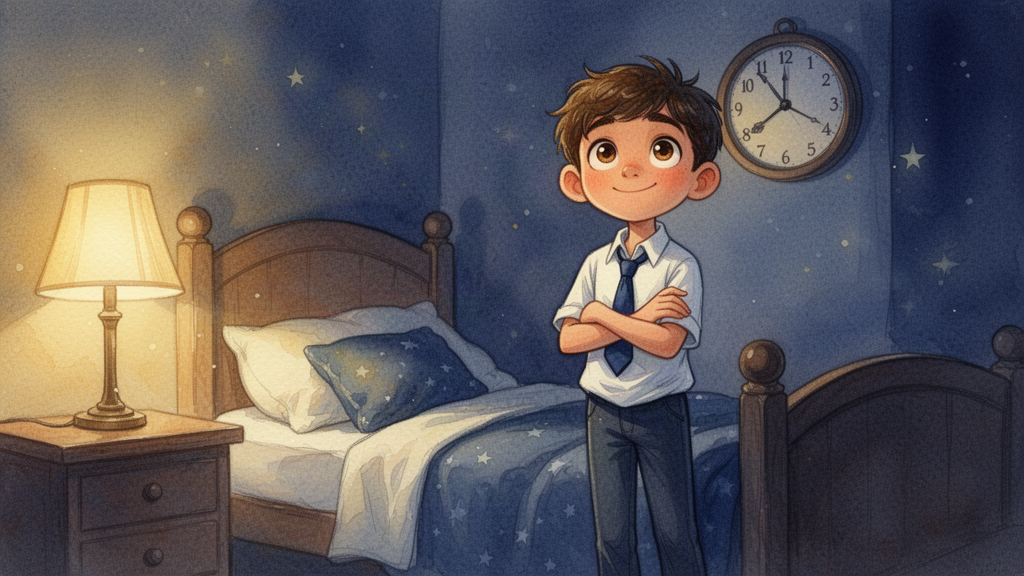
When your child starts protesting their bedtime as "babyish," it's a sign they're craving more independence, not less sleep. Here's how to navigate the "I'm too old for this bedtime" phase while still protecting the sleep they need.
It usually starts around age six or seven, sometimes earlier if there's an older sibling in the house. Your child crosses their arms, gives you the most withering look their small face can manage, and declares: "I'm not a baby anymore. Babies go to bed at seven." Suddenly the bedtime that worked perfectly well last month has become a personal insult.
This isn't really about the clock. It's about identity. Your child is telling you they feel grown up, capable, and ready for more say in their own life, and bedtime happens to be the battlefield they've chosen. The good news is that this phase, handled well, can actually become an opportunity to build a stronger, more cooperative bedtime routine rather than a nightly power struggle.
Why This Phase Happens
As children grow, they become acutely aware of hierarchies: who gets to stay up later, who gets more freedom, who's treated as "little." Bedtime is one of the most visible markers of that hierarchy in a household, especially if there's a younger sibling still napping or going down at 7pm while your child feels they've outgrown it.
This push for a later bedtime is often less about wanting more time awake and more about wanting to feel respected. Developmentally, children this age are also becoming more aware of time, fairness, and comparison ("Jake gets to stay up until 8:30!"), which makes bedtime negotiations more sophisticated and more frequent.
Recognising that the underlying need is autonomy, not necessarily extra hours awake, changes how you respond. You're not just defending a bedtime, you're addressing a feeling.
How Much Sleep Your Child Actually Needs
Before making any changes, it helps to know what's realistic. Sleep needs decrease gradually with age, but not as dramatically as kids like to believe.
- Ages 3 to 5: 10 to 13 hours per night (including any naps)
- Ages 6 to 9: 9 to 12 hours per night
- Ages 10 to 12: 9 to 11 hours per night
If your seven-year-old needs to be up at 7am for school, a 9pm bedtime is likely already at the edge of what's healthy, even if it feels "late" to them. Knowing the actual range gives you a factual anchor for the conversation, rather than an arbitrary rule that feels unfair to a child who's convinced they're different from every other kid their age.
Give Real Independence, Not Just a Later Clock
Since this is fundamentally about feeling grown up, the most effective fix is often to hand over genuine control in places where it's safe to do so, while holding firm on the actual sleep time.
Try offering choices within a fixed window:
- "Lights out is still 7:30, but you get to choose the order: bath first or pyjamas first?"
- "You can pick which two books we read tonight."
- "You're old enough now to set your own bedtime alarm and get yourself into bed when it goes off."
Small structural changes can also signal growth without shifting the actual sleep time much:
- A "big kid" reading lamp they control themselves
- Ten extra minutes of quiet reading time alone in bed before lights out
- Being in charge of picking out tomorrow's clothes as part of the wind-down routine
These concessions cost you very little in terms of sleep, but they mean a great deal to a child who's asking to be seen as more capable.
Negotiate the Schedule Like a Team, Not a Ruling
If your child is old enough to make the "not a baby" argument, they're old enough to be part of a real conversation about it, on your terms.
Sit down at a neutral time, not in the heat of a bedtime standoff, and talk through it together. You might say: "I hear that you want a later bedtime. Let's look at what time you need to wake up and figure out how much sleep your body needs to feel good tomorrow. Then we can see if there's any room to shift things."
Sometimes this ends in a genuine 15-minute adjustment, which costs you very little and gives your child a real sense of having been heard and taken seriously. Other times it ends in your child understanding, through their own reasoning rather than your decree, why the current time makes sense. Either outcome is a win, because the process itself, being included and consulted, is what actually satisfies the "I'm not a baby" feeling.
Revisit the bedtime formally every six months or so, tied to a birthday or the start of a school term. This turns bedtime changes into a predictable, earned milestone rather than something that only happens after enough nagging.
Make the Time Before Lights-Out Feel Worth Staying Up For
Part of what makes an earlier bedtime feel like a punishment is the sense that all the good stuff happens later. Counter this by making the wind-down window itself feel special and age-appropriate, so your child isn't racing the clock to escape it.
This is where storytime can do a lot of quiet work. A child who feels "too old" for a picture book about a bunny going to sleep will often feel very differently about a story where they themselves are the hero on a genuine adventure suited to their age and interests. Dreamtime creates a brand-new personalised story every night, tailored to your child's name, age, and interests, so a seven-year-old who insists they're not a baby anymore gets a story that actually reflects that, rather than something that feels leftover from toddlerhood. That small shift, from "babyish story" to "story that gets me," can take a surprising amount of heat out of the whole bedtime conversation.
The Bigger Picture
This phase is uncomfortable, but it's also a genuinely good sign. Your child is developing a sense of self, noticing unfairness, and practising the kind of reasoning and negotiation that will serve them well for life. Your job isn't to shut that down, it's to channel it somewhere safe, while quietly protecting the sleep their growing brain and body still need.
Hold the boundary on total sleep hours, but be generous with the small, symbolic wins. Over time, your child won't remember the exact minute lights went out. They'll remember feeling like their growing-up was noticed and respected, which, in the end, is really what they were asking for all along.
Give your child a new story every night
Dreamtime creates personalised bedtime stories with beautiful illustrations, tailored to your child, every single night.
Start your free trial →