How to Help Your Child Stop Asking for a Bedtime Story With a Different Ending Every Night
Dreamtime
29 September 2026
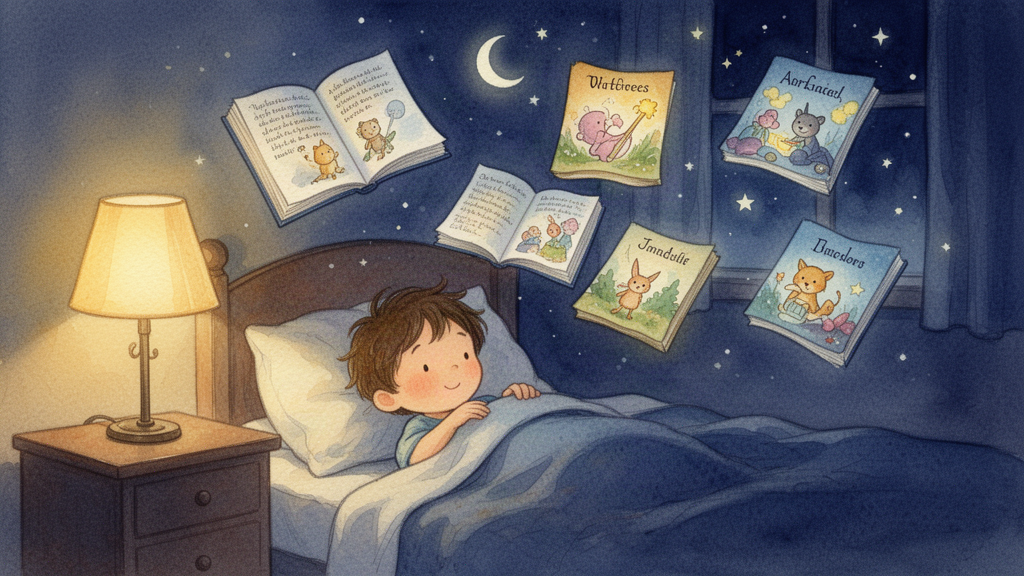
Some children can't bear to hear the same story end the same way twice, and keep asking for new endings until bedtime spirals out of control. Here's why this happens and how to give your child creative closure without losing an hour to negotiation.
Your child has heard the story a hundred times. They know exactly how it ends. And yet, right as you close the book, they say it: "But what if the ending was different?" Suddenly you're improvising a new twist at 8pm, and once you finish that version, they want another one. And another. What started as a sweet request for imagination has turned into an endless loop that's eating into precious sleep time.
If this sounds familiar, you're not dealing with a difficult child, you're dealing with a very normal (and actually quite wonderful) developmental stage. The good news is there are ways to honour your child's love of "what if" without turning story time into an open-ended writing workshop every single night.
Why Children Crave Different Endings
Between the ages of about 3 and 8, children start to grasp something big: stories don't have to happen the way they're told. This is a genuine cognitive leap. It means they understand cause and effect, they can imagine alternatives, and they're beginning to test the boundaries of "what could happen" versus "what did happen."
Asking for a different ending is often a sign of:
- Growing narrative understanding. Your child is starting to see themselves as a co-author, not just a listener.
- A need for control. Bedtime is one of the few times of day a child has real influence over what happens next, and reshaping the ending is a way to feel powerful right before they have to give up control and go to sleep.
- Unfinished emotional business. Sometimes a child asks for a different ending because the original one left them unsettled (a character got left out, or something scary almost happened) and they want to "fix" it.
- Simple delight in possibility. Many children just love the game of "what if" for its own sake. It's playful, not anxious.
Understanding which of these is driving the request helps you respond in a way that actually meets the need, rather than just buying five more minutes.
Give the Question a Home, Not a Blank Cheque
The trickiest part of this habit is that it's genuinely open-ended. There's no natural stopping point to "what if it ended differently," which is exactly why it can spiral. The fix isn't to shut the question down, it's to give it a defined space to live in.
Try saying something like: "I love that idea. Let's imagine one different ending, and then we tuck that story away for tonight." This tells your child their creativity is welcome, while also setting a clear boundary: one alternate ending, not an unlimited supply.
You can also flip the exercise back to them. Instead of you inventing five new endings on demand, ask: "What ending do you think would happen?" This turns the moment into their own storytelling practice rather than a performance you have to keep delivering.
Use a "Save It for Tomorrow" Jar
If your child's imagination tends to run past bedtime, try externalising it. Keep a small notebook or "story ideas jar" by their bed. When they come up with a new ending idea, write it down (or have them draw a quick picture) and promise to explore it tomorrow, whether that's at breakfast, in the car, or at the next bedtime.
This works because it validates the idea without requiring it to be resolved immediately. Children are often satisfied simply knowing their idea has been captured and won't be lost. It also builds a lovely little archive of your child's imagination that's fun to look back on later.
Build Alternate Endings Into the Routine, On Your Terms
Rather than letting "different endings" become a bedtime stalling tactic, you can get ahead of it by making alternate endings a planned part of story time, on a schedule you control. For example, Friday night could be "remix night," where you and your child rewrite the ending of a favourite story together as a fun weekend treat. This satisfies the itch for creative control while keeping weeknights calm and predictable.
This is where having a fresh, ready-made story each night can genuinely help. Dreamtime creates a brand-new personalised story for your child every evening, featuring their name, age, and interests, so there's naturally new material to explore instead of endlessly revising the same familiar tale. Many parents find that when the story itself changes nightly, children feel less urge to rewrite the ending of last night's book, because tonight's adventure is already something new.
Watch for Anxiety Hiding Behind the Request
Occasionally, a request for a different ending is really a request for reassurance. If your child always wants to change endings where a character is scared, lost, or alone, gently ask what feels uncomfortable about the original. You might discover they're processing a worry from their day (a friend leaving them out, a fear of getting lost) and using the story as a safe way to talk about it. In these cases, let the conversation take the lead rather than rushing to "fix" the plot. A simple, "That part felt scary, didn't it? What do you think would help the character feel braver?" can open up meaningful conversation while still gently moving toward lights out.
Keep the Magic, Keep the Boundary
The instinct to reshape a story's ending is a beautiful sign that your child is thinking deeply, imagining freely, and starting to see themselves as someone who can shape a narrative. That's worth celebrating, not shutting down. At the same time, bedtime needs an endpoint, and it's completely reasonable to give that creativity a clear, contained space rather than an unlimited nightly stage.
With a little structure, a notebook for tomorrow's ideas, and maybe a fresh story each night to explore, you can nurture your child's storytelling spark while still getting them (and yourself) to sleep at a reasonable hour. Their imagination isn't going anywhere. It'll be there again tomorrow, ready for its next adventure.
Give your child a new story every night
Dreamtime creates personalised bedtime stories with beautiful illustrations, tailored to your child, every single night.
Start your free trial →