How to Help Your Child Stop Asking to Sleep With All the Lights On in the Whole House
Dreamtime
22 September 2026
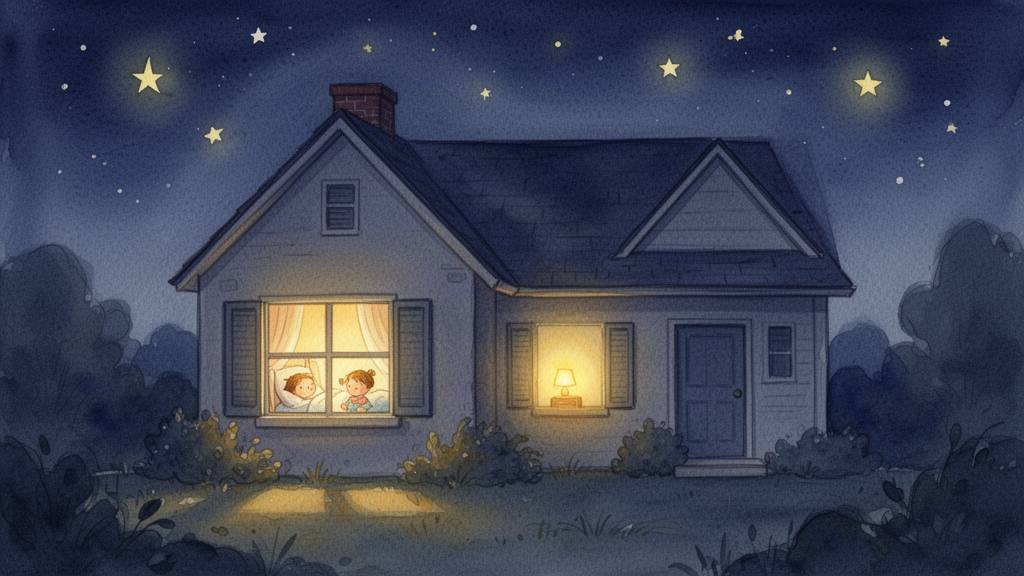
When one small nightlight isn't enough and your child insists on every hallway, bathroom and landing light blazing, it can feel like the house is turning into an airport runway. Here's why this happens and how to gradually bring the wattage back down without a fight.
You've already got the nightlight sorted. The landing light is on. But somehow that's not enough. Your child now wants the bathroom light on, the kitchen light on, maybe even the porch light glowing outside, "just in case." What started as a simple request for a bit of comfort has slowly taken over the entire ground floor, and you're left wondering how you ended up running a household that looks lit up for a party every single night.
This is more common than you'd think, and it's rarely about being dramatic or stubborn. It's usually a sign that your child's brain is working overtime to feel safe, and light has become their main tool for controlling that feeling. The good news is that with a bit of patience and a clear plan, you can help them feel secure with far less wattage.
Why One Light Is Never Enough
For a child whose imagination is in overdrive, darkness isn't just an absence of light, it's an absence of information. They can't see what's there, so their brain fills in the gaps, often with something far scarier than reality. Turning on every light is their way of eliminating every unknown space where something "could" be hiding.
There's also a habit-forming element at play. Once a child discovers that asking for one more light works, and that it delays bedtime while giving them a small sense of control, the requests tend to multiply. It's not manipulation, it's just an effective strategy they've stumbled onto, and children are remarkably good at repeating what works.
Finally, some children are simply more sensitive to their environment than others. If your child is a highly alert sleeper who notices every creak and shadow, their need for total illumination might be tied to a broader sensitivity to stimulation, not just fear of the dark specifically.
Start With a Light Audit, Not a Light Ban
Trying to switch off every light in one go is likely to backfire and create a bigger battle than the one you started with. Instead, do a "light audit" with your child during the day, when everyone is calm and nothing feels urgent.
Walk through the house together and ask which lights actually help them feel safe versus which ones have just become part of the routine. You might find they don't even care about the kitchen light, they just noticed it was on one night and now it's "always been that way." Naming each light and letting your child have a voice in the process makes them feel like a collaborator rather than someone having something taken away from them.
Give Darkness a Job to Do
Rather than removing light, reframe what darkness means. Children often fear dark spaces because they associate them with the unknown, so give those spaces a known, friendly purpose instead.
A few ways to do this:
- Let your child use a torch to "check" a dark room themselves before bed, turning fear into an empowering ritual rather than a passive worry.
- Introduce a single, dim, warm-toned light source (like a plug-in nightlight) as the one "helper light" that replaces the need for five others.
- Talk through what's actually in each dark space in concrete, boring detail. "The bathroom has the sink, the towels, and your rubber duck. That's it." Boring is reassuring.
The goal isn't to convince your child the dark is nothing to fear right away. It's to slowly replace "everything must be lit" with "one trusted light is enough."
Reduce Lights Gradually, Room by Room
Once you've done the audit, tackle one light at a time, starting with the one that matters least to your child. Give it a few nights at the new normal before moving on to the next. This slow, room-by-room approach avoids the overwhelm of a sudden change and lets your child build confidence with each small win.
It helps to name the plan out loud: "Tonight we're just turning off the kitchen light because you told me that one doesn't really bother you. Everything else stays the same." Predictability matters enormously here. Surprises undo progress fast.
Celebrate the small stuff. If your child manages a night with one fewer light on, mention it the next morning. Positive reinforcement in daylight hours, when they're not anxious, sticks far better than anything said in the heat of a bedtime negotiation.
Fill the Dark With Something Better Than Fear
A lot of the pull toward more light comes down to what's filling your child's mind as they drift off. If their last thoughts before sleep are about monsters or shadows, of course they want every light blazing. But if their mind is occupied with something warm and absorbing, the darkness matters much less.
This is where a calming bedtime story earns its keep. A story that features your child as the brave, capable hero of their own adventure can quietly shift their internal narrative from "the dark is dangerous" to "I can handle new and unfamiliar things." Dreamtime creates a fresh, personalised story every night, tailored to your child's name, age and interests, so you can specifically ask for tales about brave explorers, cosy night-time adventures, or characters who feel calm in the dark. Hearing themselves succeed in that kind of story, night after night, gently rewires what darkness represents.
A Gentle Reminder
This phase, like most bedtime phases, is temporary. Almost every child goes through a stretch where the world feels a little bigger and scarier than it did before, and turning on every light is simply their way of trying to make it feel manageable. Your patience and steady, small steps forward will do far more than any strict rule ever could. Before long, that one trusted nightlight will be plenty, and you'll get your porch light back for the porch.
Give your child a new story every night
Dreamtime creates personalised bedtime stories with beautiful illustrations, tailored to your child, every single night.
Start your free trial →