How to Help Your Child Stop Stalling by Asking for "Just Five More Minutes" of Everything at Bedtime
Dreamtime
21 September 2026
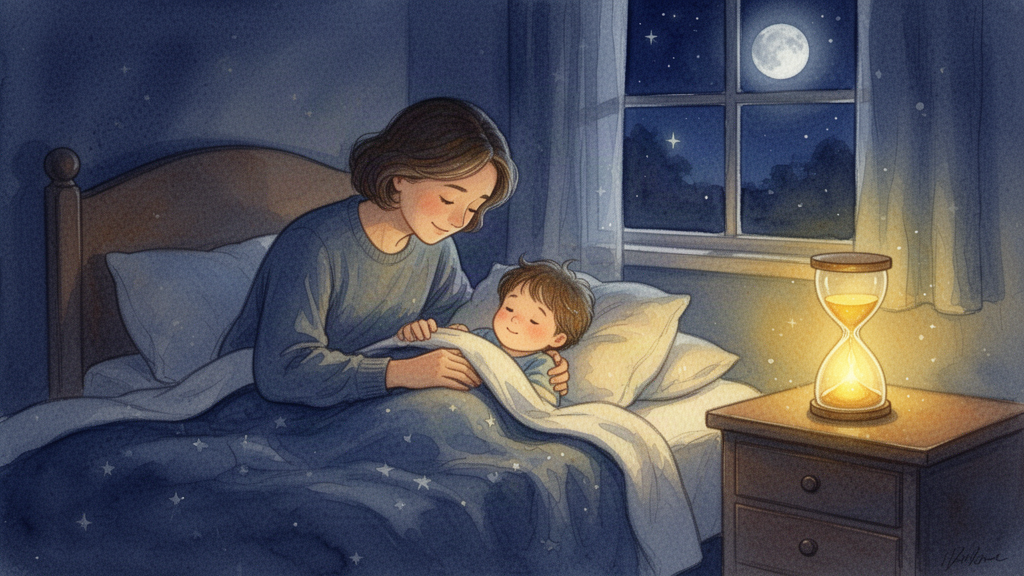
Does bedtime turn into an endless string of "just five more minutes"? Here's why children negotiate for extra time at every step of the routine, and how to set boundaries that actually hold without nightly battles.
"Five more minutes of playing." "Five more minutes of the puzzle." "Five more minutes with the lights on." If your child's bedtime has become a rolling negotiation where every single step comes with a request for a little bit longer, you are not imagining it, and you are certainly not alone. This particular flavour of stalling is one of the most common bedtime complaints parents bring up, precisely because it is so reasonable-sounding each time, and so relentless in practice.
Unlike a single dramatic meltdown, "five more minutes" stalling tends to be quiet, persistent, and easy to give in to just this once. The trouble is that "just this once" quickly becomes every single night, and bedtime creeps later and later while everyone's patience wears thinner and thinner.
Why Children Ask for "Just Five More Minutes"
For children between about 2 and 10, the request for more time is rarely about the activity itself. It is about control, transition difficulty, and a very real (if inconvenient) sense that bedtime means the fun part of the day is ending.
A few things are usually going on:
- Transitions are genuinely hard for young brains. Shifting from an engaging activity to something calmer, like winding down for sleep, requires a level of self-regulation that is still developing well into the primary school years.
- Bedtime represents loss of control. Asking for more time is one of the few levers a child has to feel some say over what happens to their evening.
- They've learned it works. If "five more minutes" has ever bought them ten, or twenty, children quickly learn that persistence pays off.
- They're testing the boundary, not the clock. Often it's less about the actual five minutes and more about seeing whether the rule holds tonight.
Understanding this helps take the sting out of it. Your child is not trying to manipulate you into exhaustion. They are doing what children do: pushing gently on the edges of a limit to see how solid it is.
Set the Boundary Before Bedtime Starts, Not During It
The biggest mistake most of us make is trying to negotiate a boundary in the moment, while tired and irritable, right when the child is asking. Boundaries set on the fly are wobbly by nature. Instead, set expectations earlier in the evening, when everyone is calmer.
Try saying, well before the bedtime routine begins: "After dinner we've got bath, story, and lights out. There won't be extra time added on tonight, so let's enjoy each bit while we're doing it." Naming the plan ahead of time gives your child something to hold onto, and it takes you out of the position of inventing rules under pressure at 7:45pm.
Give a Visual or Time-Based Warning, Not a Vague One
"Five more minutes" is a phrase children use because it sounds concrete, even though it's usually not backed by any actual timer. Turn the tables by using real, visible countdowns:
- A simple kitchen timer or sand timer they can watch tick down
- A phrase like "when this song finishes" or "after two more pages"
- A visual bedtime chart showing each step, so they can see exactly what's next and that nothing is being skipped, only sequenced
When children can see the boundary rather than just hear it, they argue with it far less, because there's less ambiguity to push against.
Hold the Line Kindly, Every Single Night
Consistency is the unglamorous secret to fixing this. If bedtime ends ten minutes later on Tuesday because you gave in, your child will absolutely try again on Wednesday, not out of naughtiness, but because it worked once.
Holding the line doesn't mean being harsh. You can be warm and firm at the same time:
"I know you want more time, and it makes sense to want that. The answer is still no more minutes tonight. Let's go finish story time together."
Naming their feeling, then repeating the boundary without extra explanation or arguing back, tends to work far better than a long justification. Over-explaining often reads to children as an opening for negotiation.
Build in "Extra Time" Where It's Actually Allowed
Part of what fuels the constant asking is that children sense there is no time in the routine that's truly theirs to enjoy without a clock ticking. Build in a small, protected pocket of unhurried time earlier in the routine, so the urge to stretch things out has somewhere legitimate to go.
This is where storytime can do a lot of quiet work. A story that is fully theirs, chosen for them, featuring them, gives children a sense of being seen and given something special, which reduces the felt need to stall for more elsewhere in the routine. Many parents using Dreamtime find that a short, personalised story, featuring their child's name, age, and current obsessions, becomes the highlight they're happy to settle into rather than stretch out. Because the story changes every night, there's also no "just one more chapter" pull the way there can be with a favourite book they know by heart.
When Stalling Signals Something Bigger
Occasionally, persistent stalling isn't really about control or habit, it's a sign of anxiety about being alone, overtiredness making self-regulation harder, or a bedtime routine that has genuinely become too long or too stimulating right before lights out. If your child's stalling is paired with real distress, not just mild grumbling, it's worth looking at the whole routine (screen time, dinner timing, activity levels) rather than just tightening the clock.
A Gentler, More Predictable Bedtime Is Within Reach
Ending the "five more minutes" cycle isn't about winning a nightly battle of wills. It's about giving your child a routine predictable enough that they don't need to fight for more time, because they already know what's coming and trust that it includes something worth looking forward to. Set the plan early, make time visible, hold your boundary with warmth, and build in a moment that feels indulgent in all the right ways. Bedtime won't become instant or magical overnight, but with consistency, those five extra minutes will stop being something your child needs to ask for at all.
Give your child a new story every night
Dreamtime creates personalised bedtime stories with beautiful illustrations, tailored to your child, every single night.
Start your free trial →