How to Help Your Child Stop Asking to Sleep With the Radio or Music On All Night
Dreamtime
26 September 2026
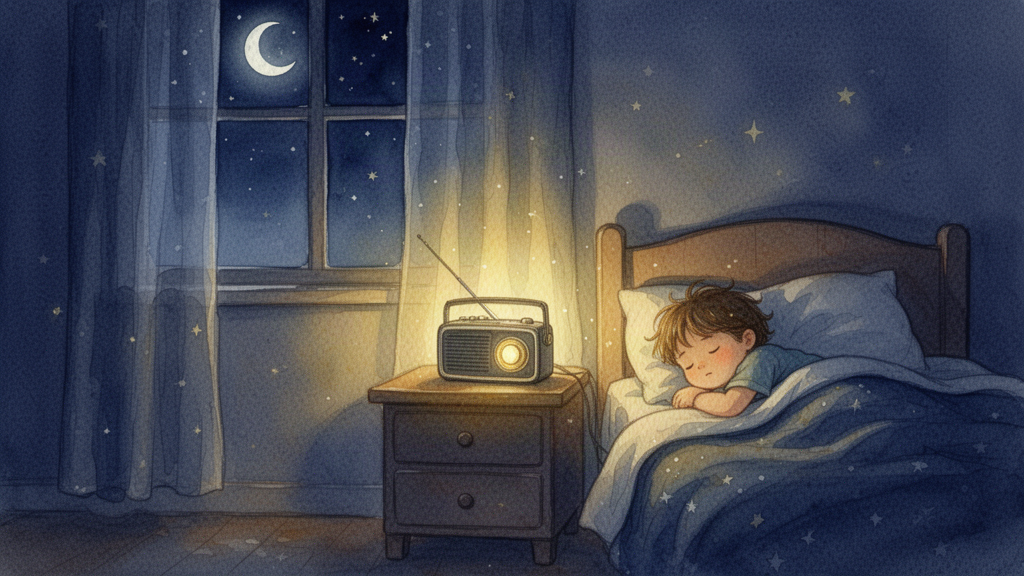
Many children insist on music or the radio playing all night to fall and stay asleep, but this habit can quietly disrupt their sleep cycles. Here's why kids reach for background sound at bedtime and how to help them fall asleep without relying on it playing all night.
If your child can't drift off unless the radio is playing, a playlist is looping, or their favourite album is set to repeat until sunrise, you're not alone. Music at bedtime is one of the most common sleep props parents reach for, and it often works beautifully in the moment. The trouble starts when your child wakes at 2am to a silent room and can't get back to sleep without it, or when "just five more songs" becomes the new bedtime negotiation. Understanding why children latch onto music as a sleep crutch, and how to gently loosen that grip, can make nights calmer for everyone.
Why Kids Fall in Love With Bedtime Music
Music is soothing for very practical, physiological reasons. A steady rhythm can slow a racing heart rate, and lyrics or melodies give an anxious brain something predictable to focus on instead of spiralling thoughts. For a lot of children, especially those who are naturally more alert or anxious at night, music fills the silence that would otherwise feel unsettling or "too quiet."
There's also a strong association element at play. If your child has fallen asleep to the same song or album for months, their brain has linked that sound with the process of drifting off. This is called a sleep association, and it works the same way as needing a dummy, a parent's hand, or a specific blanket. The music itself isn't the problem. The issue is what happens when the association is unavailable, whether that's a power cut, a change in routine, or simply waking up mid-cycle (which all children do) to find the sound has stopped.
The Difference Between Music as a Wind-Down Tool and Music as a Crutch
Not all bedtime music habits need fixing. If your child listens to a calm playlist for the first 10 to 15 minutes while settling, then falls asleep with it fading out or ending naturally, that's a healthy wind-down ritual, no different to reading a story. The problems tend to show up when:
- Music has to play continuously all night, every night, with no exceptions
- Your child wakes fully if it stops or the device dies
- They can't fall asleep anywhere (grandma's house, holidays, a sleepover) without it
- The volume or song choice has become a nightly negotiation in itself
If you recognise the second list more than the first, it's worth gently working on the habit, not because music is bad, but because total dependence on one specific external condition can make ordinary life disruptions (a dead phone battery, a different bedroom) much harder on your child than they need to be.
A Gentle Plan to Reduce the Dependence
You don't need to go cold turkey, and you shouldn't. Children (and honestly, adults) don't respond well to a beloved bedtime comfort being yanked away overnight. Instead, try a gradual fade:
1. Set a timer instead of an all-night loop. Start with a sleep timer of 30 to 45 minutes rather than continuous playback. Most children are asleep well within this window, and they'll get used to the music switching off naturally rather than being removed.
2. Shrink the timer slowly. Every few nights, reduce the timer by five or ten minutes. This slow fade means your child's brain has time to adjust without a jarring change they'll notice and resist.
3. Swap music for a voice. Many children who need music actually need sound, not specifically songs. A narrated story, calm spoken-word audio, or gentle white noise can serve the same purpose while being easier to fade out gradually, since spoken content naturally has a beginning, middle and end.
4. Talk about the "why" during the day. Explain, in simple terms, that our brains like it best when the room is quiet by the time we're properly asleep, and that you're going to help their brain get used to that, bit by bit. Involve them in choosing the timer length so it feels collaborative rather than imposed.
5. Keep a backup for wake-ups. If your child wakes at night and reaches for the music out of habit, offer a simple, low-effort alternative: a soft nightlight glow, a cuddle with their comfort toy, or a reminder that it's still sleep time. Consistency here matters more than any single tactic.
Using Story and Narration as a Middle Ground
One reason children often prefer music to silence is that it gives their mind something to hold onto while their body relaxes. A calming narrated story can do the same job, but with a natural conclusion that helps signal "this part of bedtime is over now." This is one of the reasons families using Dreamtime find it helpful during this transition: each night's personalised story, narrated gently and featuring your child by name, gives them that same soothing focus point music provides, but it naturally winds down and ends rather than looping indefinitely. Some parents use it as the wind-down step before the lights go fully out and the room goes quiet, which helps decouple "falling asleep" from "constant sound."
What to Expect as the Habit Shifts
Change won't happen in one night, and that's completely normal. Expect a few nights of mild protest as the timer shortens, especially if this has been a long-standing habit. Stay warm but consistent. Praise your child specifically for falling asleep with less music than the night before, rather than focusing on what they're losing. Most children adapt within two to three weeks when the change is gradual and predictable.
It's also worth remembering that needing comfort at bedtime isn't a flaw to fix urgently. Plenty of adults still like a podcast or white noise to fall asleep to. The goal isn't to eliminate all sleep comforts, but to help your child build a bit of flexibility so that one missing playlist doesn't derail an entire night's sleep, for them or for you.
With a little patience and a gradual approach, your child can keep the parts of their bedtime routine that feel cosy and comforting, while gaining the confidence that a quiet room isn't something to fear. That's a skill that will serve them well long after the nightly playlist has been retired.
Give your child a new story every night
Dreamtime creates personalised bedtime stories with beautiful illustrations, tailored to your child, every single night.
Start your free trial →