How to Help Your Child Stop Rushing Through Bedtime Stories to Get to "The Good Part" (Sleep)
Dreamtime
17 August 2026
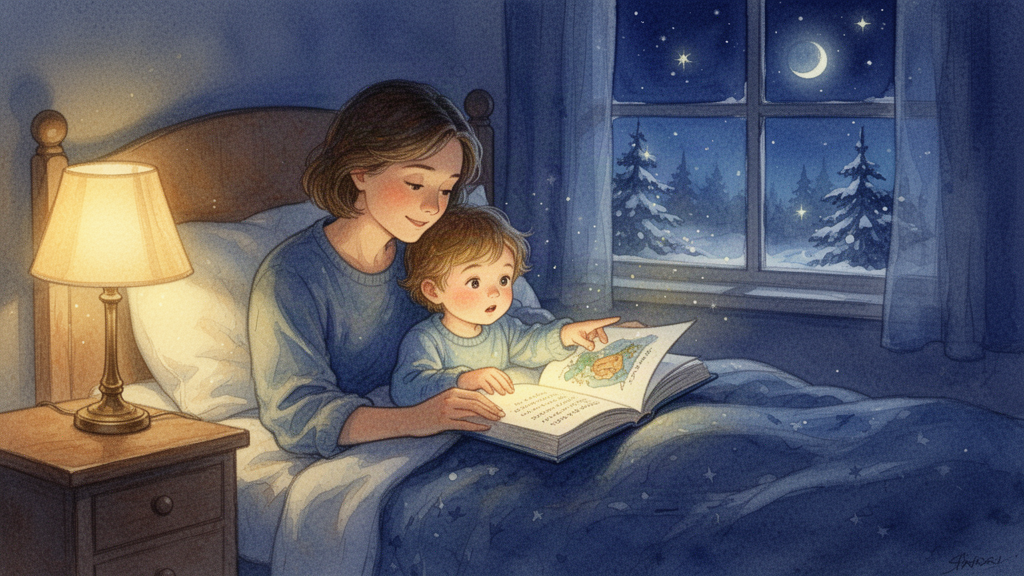
If your child skims pages, demands you "skip to the end," or treats storytime as a hurdle before sleep rather than something to savour, you're not alone. Here's why it happens and how to help your child slow down and actually enjoy the story again.
You settle in with a book, ready for a cosy few minutes together, and your child is already flipping pages ahead, saying "skip this bit" or "just get to the end." Instead of lingering over the illustrations or guessing what happens next, they seem to want the story over and done with — as if storytime is an obstacle between them and sleep, rather than the best part of the evening.
It's a strange thing for parents to encounter, because bedtime stories are supposed to be the calm, connective heart of the whole routine. When a child starts rushing through them, it can feel like something's gone wrong. But this behaviour is more common than you'd think, and it's rarely about the story itself.
Why Children Rush Through Stories
There are a few different reasons a child might want to speed through storytime, and figuring out which one applies to your family will shape how you respond.
They've learned that stories delay sleep, not enable it. If your child associates "story finishing" with "lights out," and they're not actually tired yet, they may see the story as a countdown timer rather than something enjoyable — something to get through quickly so they can... still not sleep, just lie there. Ironically, rushing the story doesn't get them anywhere faster.
They're anxious about something after the story. Some children rush because they want to get to a particular part of the routine faster — a goodnight cuddle, a parent staying a bit longer, or reassurance that the door will stay open. The story becomes a means to an end rather than something to enjoy in itself.
The story is too long or too complex for their current attention span. If a child is consistently zoning out or asking to skip ahead, it might simply be that the pacing doesn't match where they are developmentally. A restless four-year-old isn't being rude by asking to skip to the end of a fifteen-minute story — they may genuinely have run out of steam.
They already know exactly what happens. Repetition is wonderful for language development, but if a book has been read three hundred times, some children start "rushing" simply because they're bored of the plot, even if they love the ritual of storytime itself.
Slow Down the Story, Not Just the Pages
Once you have a sense of why your child is rushing, you can start gently rebuilding their appetite for a slower, richer storytime.
Ask questions as you go. Rather than reading straight through, pause on a page and ask, "What do you think is in the box?" or "How do you think she's feeling right now?" This shifts the story from something to be consumed quickly to something to be explored. Children who are prompted to wonder tend to naturally slow down.
Point out details in the illustrations. "Look, there's a little mouse hiding in the corner of every page — can you find him?" Small games like this turn pages into something worth lingering on rather than skipping past.
Let them narrate part of it. Especially with a familiar story, invite your child to tell you what happens next before you turn the page. This reframes the story as a shared, active experience rather than a passive one they're waiting to finish.
Separate the story from the "goodnight" trigger. If your child associates the end of the story with an abrupt goodbye, try building in a short, predictable buffer afterwards — a cuddle, a "three things about today," a quiet minute of chat. Once they know the story ending doesn't mean instant separation, there's less incentive to rush it.
Matching the Story to Their Attention Span
If pacing is the real issue, the fix might be simpler than you think: the story itself needs to change, not your child's behaviour.
Shorter stories with a clear beginning, middle and end tend to hold attention better for younger children than long, meandering ones. Look out for signs your current book is too long — restlessness around the same page each night, requests to skip a specific section, or your child answering questions in a way that suggests they've mentally checked out.
It's also worth varying pace within the story itself. A book that builds gently, has a moment of tension, and resolves warmly gives a young listener natural "waypoints" to stay engaged with, rather than one long flat stretch of text.
This is one area where a personalised story can genuinely help. Dreamtime creates a brand-new story every night, tailored to your child's age and attention span as well as their interests, so the length and pacing are right for where they are rather than a one-size-fits-all book. When a child hears their own name and favourite things woven into the plot, there's often far less urge to skip ahead — they want to know what happens to them, not just any character.
Make Storytime a Ritual, Not a Requirement
Finally, it helps to zoom out and think about how storytime is framed in your household. If it's positioned as "the thing we do before bed" with no particular warmth attached, children can start treating it as a chore to tick off. Small rituals — a special reading lamp, choosing a cuddly toy to "listen" too, a consistent phrase like "shall we see what happens tonight?" — signal that this is a distinct, enjoyable moment, not just a preamble to sleep.
Try, where you can, to read stories at a slightly less exhausted time than the very last five minutes before lights out. A story squeezed in when everyone is depleted and racing the clock will always feel rushed, no matter how good the book is.
A Gentle Reminder
If your child is racing through stories right now, it doesn't mean they've fallen out of love with reading — it usually means something in the routine, the pacing, or the emotional association needs a small adjustment. With a bit of patience, some well-placed questions, and stories matched to their attention span, most children rediscover the joy of slowing down and savouring the page. And when they do, you'll likely find they're not just enjoying the story more — they're drifting off more peacefully too.
Give your child a new story every night
Dreamtime creates personalised bedtime stories with beautiful illustrations, tailored to your child, every single night.
Start your free trial →