How to Help Your Child Stop Asking for a Nightlight to Be a Different Colour Every Night
Dreamtime
14 September 2026
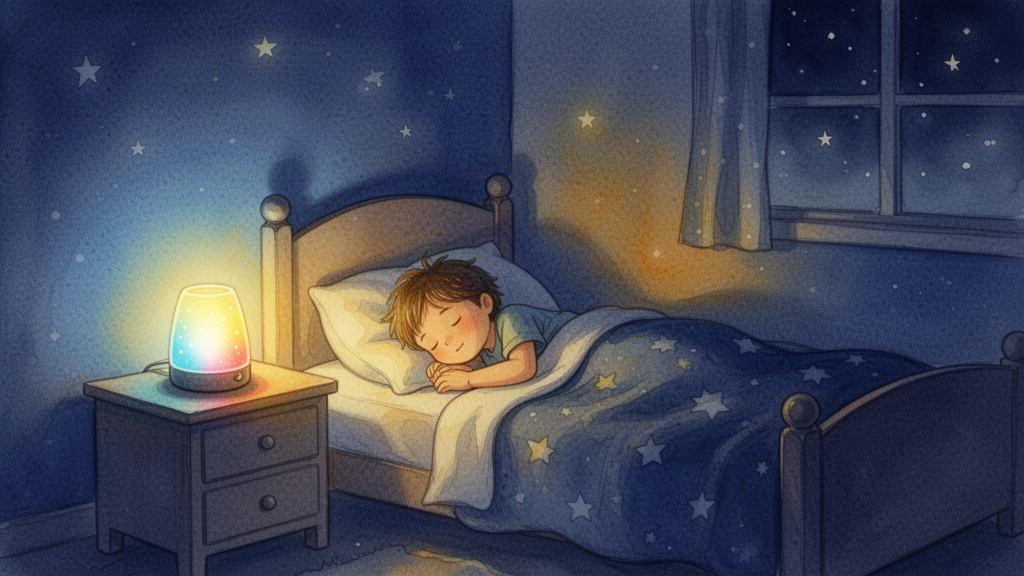
If your child suddenly needs a blue nightlight, then a red one, then insists the old colour was "wrong," you're not imagining it. This post explains why colour preferences shift at bedtime and how to set boundaries without turning it into a nightly negotiation.
It starts innocently enough. One night your child wants the nightlight on blue. The next night, blue is suddenly "too scary" and it has to be green. By the third night, you're standing in the dark scrolling through seventeen colour settings on a plastic light-up moon at 8:47pm, wondering how you got here. If this sounds familiar, you're dealing with one of the most common and most puzzling bedtime quirks: the ever-changing nightlight colour demand.
The good news is that this isn't a sign anything is wrong. It's actually a very normal part of how young children experience control, comfort, and sensory preferences at bedtime. Understanding why it happens makes it much easier to respond calmly, and to stop it from becoming a nightly renegotiation.
Why Colour Preferences Change So Often
Young children's brains are still developing the ability to sit with decisions and stick to them. A colour that felt cosy on Monday might feel unsettling on Tuesday, not because anything about the light changed, but because your child's mood, energy levels, and sensory state changed. Children aged 2 to 6 in particular are highly responsive to subtle shifts in how a colour "feels" in the moment, even if they can't explain why.
There's also a developmental piece here. Around this age, children are discovering that they have opinions and that those opinions can shape their environment. Asking for a different colour is often less about the actual shade and more about testing whether they have a say in how their world looks and feels, especially at a time of day when they otherwise have very little control.
Finally, some children are simply more sensitive to light and colour than others. A child who is more sensory-sensitive might genuinely find a warm amber light calming one night and find it strangely "too orange" the next, especially if they're overtired or overstimulated from the day.
Is This Just Stalling in Disguise?
Sometimes, yes. Bedtime stalling can wear a lot of different costumes, and "can you change the light" is a very effective one, because it requires you to get up, fiddle with a switch, and re-engage right when you were hoping to leave the room. If the colour requests come after lights-out, after the story, after the hugs, and specifically at the moment you stand up to leave, it's worth considering that the light itself may not be the real issue.
The way to tell the difference is simple: does your child settle once the colour is changed, or does a new request appear five minutes later? If it's the former, it's a genuine preference. If it's the latter, it's a stall, and it's best handled with the same calm, consistent boundaries you'd use for any other bedtime delay tactic.
How to Set a Colour Boundary Without a Fight
You don't need to eliminate your child's input entirely, that would only invite more resistance. Instead, try narrowing the choice so they still feel some ownership, but the decision has a natural endpoint.
Offer two options, not infinite ones. Instead of "what colour do you want tonight," try "do you want the blue light or the amber light?" A closed choice satisfies the need for control without opening the door to endless deliberation.
Set the colour before the story, not after. Make the nightlight decision part of the routine that happens before you start reading, so it's settled before the part of the night designed to help them relax. Changing it afterwards breaks the wind-down you've just built.
Let natural consequences do some teaching. If your child insists on a colour and then says it's wrong two minutes later, you can gently say, "We chose blue together before the story, we'll try a different one tomorrow." This isn't punitive, it's just a boundary that teaches decisions have a bit of staying power.
Consider a colour-changing light with a timer. Some children do genuinely enjoy watching colours shift gradually. A nightlight that slowly cycles through a few soft tones on its own can satisfy the desire for variety without requiring you to be involved at all.
When It's Really About Something Else
Occasionally, obsessive requests around light colour are connected to anxiety rather than preference. If your child insists a certain colour keeps monsters away, or becomes distressed rather than just fussy about the "wrong" colour, it may be worth addressing the underlying fear directly rather than the light itself. Talking through what they're worried about during the day, when emotions are calmer, often does more good than adjusting a dial at bedtime.
It also helps to keep the room's other lighting consistent. If the nightlight is the only light source and it's very bright or very saturated in colour, it can actually work against sleep. Warm, dim, low-saturation light (think soft amber or gentle white) tends to support melatonin production better than bright blues or reds, so if your child is cycling through options, it's worth gently steering them toward the warmer end of the spectrum regardless of which one they "choose."
Building a Calm, Predictable Wind-Down
Ultimately, the nightlight is just one small piece of the bedtime routine, and it tends to cause less friction when the rest of the routine feels calm and predictable. A consistent sequence, bath, pyjamas, chosen light colour, story, lights out, gives children fewer moments to introduce new negotiations, because each step already has its place.
This is one of the reasons many families lean on a story as the anchor of that routine. In the Dreamtime app, each night's story is freshly generated around your child's name, age, and interests, so the "choosing" part of bedtime gets channelled into something that naturally winds down rather than winds up. Once the story begins, there's less appetite left for renegotiating the light.
Nightlight colour swaps can feel like a small, silly battle, but they're a completely normal part of how young children explore control and comfort at the end of the day. With a little structure, a couple of choices instead of endless ones, and a calm routine around it, you can keep the peace without giving up every switch in the house to a four-year-old's evolving opinions. And most nights, that's really all it takes.
Give your child a new story every night
Dreamtime creates personalised bedtime stories with beautiful illustrations, tailored to your child, every single night.
Start your free trial →