How to Help Your Child Stop Asking for the Fan or White Noise Machine to Be Louder (Or Quieter, Or On, Or Off)
Dreamtime
17 September 2026
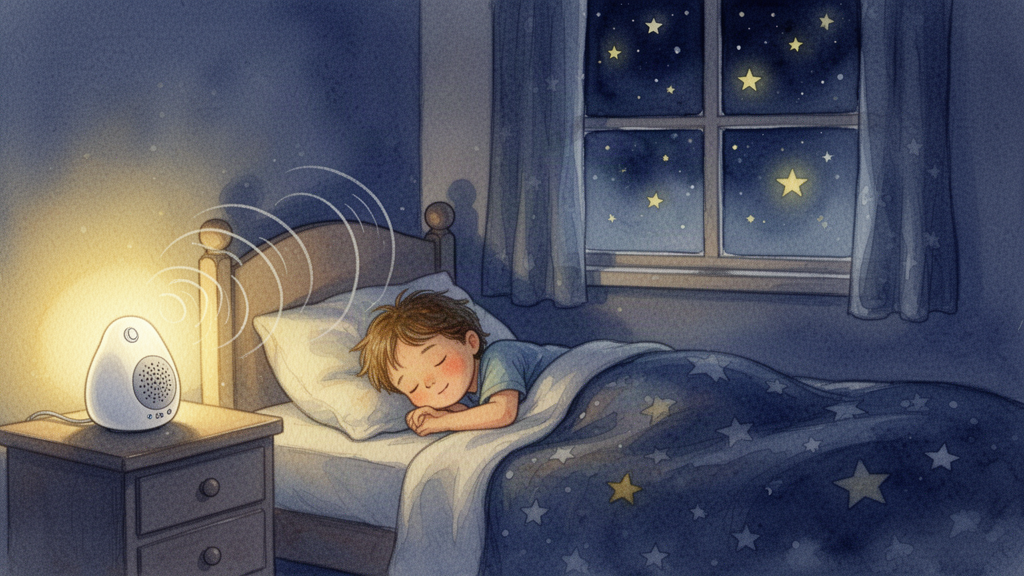
If bedtime has turned into a nightly negotiation over the fan, the white noise machine, or exactly how loud it should be, you're not alone. Here's why kids fixate on background sound at bedtime, and how to set it once and move on.
You've said goodnight, tucked in the blankets, and you're almost out the door. Then it starts: "It's too loud." You turn it down. "Now it's too quiet." You turn it up a notch. "Can you turn the fan on instead?" You switch machines. Ten minutes later, you're standing over a sound machine at 11pm adjusting a dial like you're mixing a record, wondering how a soft whooshing noise became the most contested object in the house.
If this sounds familiar, take heart: this is an extremely common phase, and it's rooted in something real about how young children experience sound and control at bedtime. The good news is that with a few adjustments, you can turn "the volume wars" into a simple, predictable part of the routine that nobody has to negotiate.
Why Background Noise Becomes Such a Big Deal
For many children, especially those aged 2 to 7, bedtime is the first time all day their brain isn't distracted by activity, siblings, or screens. Suddenly they can hear everything: the pipes, a floorboard, a car outside, their own heartbeat. White noise or a fan isn't just a nice-to-have for these kids, it's genuinely doing a job: masking the sudden quiet that can feel unsettling.
The tricky part is that children this age are still developing the ability to identify exactly what's bothering them. "Too loud" or "too quiet" is sometimes a literal complaint about volume, but just as often it's a stand-in for "I'm not ready to be alone yet" or "I want one more minute of control before you leave." The sound machine becomes the easiest, safest thing to fuss about, because asking for the actual thing they want (you, more time, reassurance) feels harder or riskier.
There's also a simpler explanation: little ears are sensitive, and preferences can genuinely shift night to night depending on how tired, wound up, or anxious a child is. A child who's overtired may want it louder to drown out their own racing thoughts. A child who's anxious about something specific may want it quieter so they can hear that the house is safe.
Set the Volume Once, During the Day
The single biggest fix is moving this decision out of the emotionally charged bedtime window entirely. Negotiating volume at 7:45pm, when everyone is tired and the stakes feel enormous to a small person, is a losing game. Instead, pick a calm moment during the day, maybe after lunch, and do a "sound test" together.
Play the white noise or fan at a few different volumes and ask your child to choose their favourite, the same way you might ask them to pick a cup colour. Mark it. Some sound machines have numbered dials; if yours doesn't, put a small sticker or piece of tape at the chosen level. Tell your child, "This is our nighttime sound, we set it once and it stays there." When they ask for changes at bedtime, you can calmly point to the mark rather than opening a debate: "That's our special nighttime spot, remember? We picked it together."
This works because it gives your child a genuine sense of ownership (they chose it) while removing the option to renegotiate every single night.
Give Them a Small, Real Choice Instead
Children this age have a strong developmental drive to exercise control, and shutting down every request can backfire into bigger battles. The trick is to redirect that need for control somewhere it won't derail the routine.
Instead of an open-ended "what do you want tonight?", offer two fixed options earlier in the routine: "Do you want the fan or the rain sounds tonight?" Let them choose during bath time or teeth-brushing, well before lights out, so the decision is settled before the emotionally charged final minutes begin. Once it's chosen, treat it as final, the same way you would with a chosen pyjama top or stuffed animal.
Address What's Underneath the Request
If the volume complaints are frequent, nightly, and accompanied by other stalling ("just one more thing") or clinginess, it's worth gently checking whether something else is going on. Ask during the day, not at bedtime, in a low-pressure way: "Sometimes at night things feel different. Is there anything that feels a bit scary or too quiet?" You might learn there's a specific sound they're masking (a sibling's snoring, a creaky radiator) or that they simply want more connection before sleep.
If it turns out to be a control or connection issue rather than a genuine sound preference, adding a few extra minutes of calm connection before the sound machine debate even starts, a cuddle, a chat about their day, a story, can reduce the fixation on the fan considerably. This is where a wind-down ritual that your child genuinely looks forward to makes a real difference. Many families find that a short, personalised story right before lights-out gives children the sense of closeness and calm they're actually seeking, so the sound machine goes back to being background noise rather than a stand-in for "don't leave yet." In the Dreamtime app, each story is built around your child's own name and interests, which gives them something to focus on and anticipate instead of the dial on the nightstand.
Keep the Routine Boringly Consistent
Consistency is quietly powerful here. If the volume, the order of steps, and the sound choice are the same every night, your child's brain learns there's nothing to negotiate, because the pattern never changes. Resist the urge to make exceptions "just this once," even when you're tired and it feels easier to fiddle with the dial to end the fuss. Each adjustment teaches your child that asking again might work, which invites tomorrow's negotiation too.
A Gentle Reminder
This phase, like most bedtime phases, tends to be temporary. Children move through periods of sound sensitivity, control-testing, and separation worries as their brains develop, and what feels like an intense nightly standoff now is unlikely to still be happening in six months. Setting the volume together during the day, offering a small fixed choice, and gently checking in on what's really going on underneath will help you move through it with far less friction. In the meantime, be patient with yourself too: you're not doing anything wrong, you're just parenting a small person whose ears, and whose need for control, are working exactly as they should.
Give your child a new story every night
Dreamtime creates personalised bedtime stories with beautiful illustrations, tailored to your child, every single night.
Start your free trial →