Why Your Child Can't Sleep Without You in the Room (And How to Gently Change That)
Dreamtime
26 May 2026
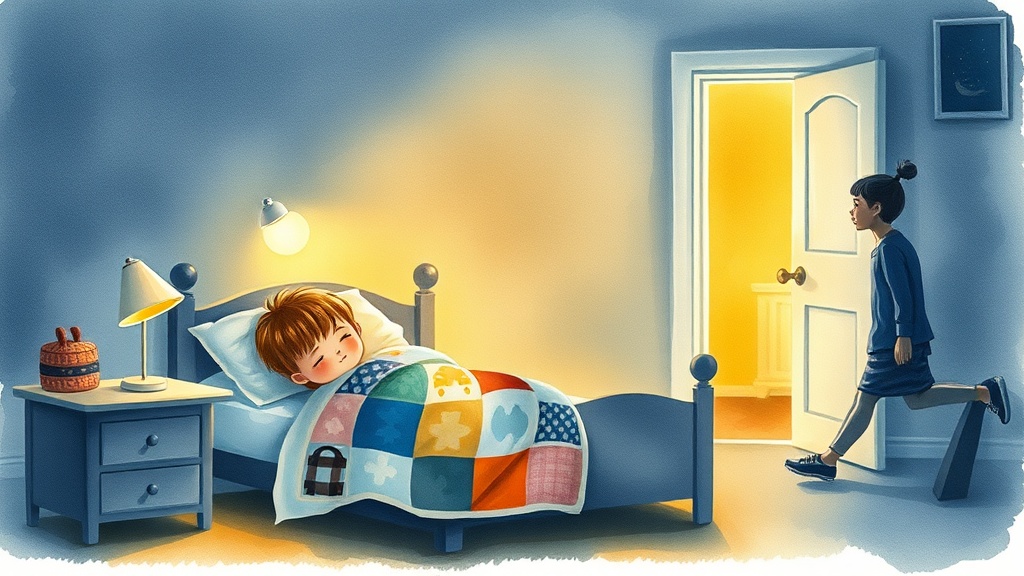
If your child needs you sitting beside them — or lying down with them — before they'll fall asleep, you're far from alone. Here's why it happens, and how to gently help your child learn to drift off independently.
If you've spent the last six months (or six years) perched on the edge of a small bed, waiting for the sound of steady breathing before you dare tiptoe out, you are in very good company. The need for a parent's physical presence at sleep time is one of the most common challenges families face — and one of the least talked about, perhaps because it can feel like a personal failing when it really isn't. It's actually rooted in some beautifully normal child development. The good news? With patience and a few gentle strategies, most children can learn to fall asleep independently — and feel proud of themselves for doing it.
Why Children Need a Parent Present to Fall Asleep
Before we look at solutions, it helps to understand what's actually going on. Young children — especially those aged two to six — have a genuine neurological need for co-regulation. This means they rely on a calm, trusted adult to help them manage their arousal levels and transition from the busy stimulation of the day into the quieter state needed for sleep.
It isn't manipulation, and it isn't a bad habit you "created." It's biology. The part of the brain responsible for self-regulation (the prefrontal cortex) isn't fully developed until the mid-twenties, which means young children literally cannot soothe themselves the way adults can — at least not without practice.
There are also common triggers that intensify this dependency:
- Developmental leaps and life changes — starting nursery, a new sibling, moving house, or a change in routine can all temporarily increase a child's need for closeness at night.
- Over-tiredness — a child who is too tired actually finds it harder to switch off, and may cling to the security of a parent's presence to do so.
- Screen time close to bedtime — exciting or stimulating content raises cortisol levels, making self-settling feel impossible.
- Inconsistency — if sometimes a parent stays and sometimes they don't, the uncertainty itself can cause anxiety and increase clingy behaviour.
Understanding the why is the first step. Now let's look at the how.
Build a Predictable Pre-Sleep Sequence
Children's brains are pattern-seeking machines. A consistent, calming sequence of events before sleep sends a powerful neurological signal: this is what happens before sleep, therefore sleep is coming. Over time, the routine itself becomes the trigger for drowsiness.
A solid pre-sleep sequence for most children looks something like this:
- Bath or wash — warm water genuinely lowers the body's core temperature in a way that promotes sleep
- Pyjamas and a small, predictable comfort ritual — this might be choosing a soft toy or saying goodnight to the room
- A calm, enjoyable story — in bed, with the lights already dimmed
- A brief, loving farewell — the same phrase or song each night works beautifully
The key is that this sequence happens in the same order, at the same time, every night. Weekends included, as much as possible. Predictability is your most powerful tool.
The Gradual Withdrawal Method (The Kindest Way to Step Back)
If your child currently needs you in the room to fall asleep, going cold turkey — simply shutting the door and walking away — tends to backfire, creating more anxiety and making the process longer and harder. A gentler approach is gradual withdrawal.
Here's how it works:
- Week one: Stay in the room as usual, but sit next to the bed rather than lying down. Offer occasional, quiet reassurance ("I'm right here, you're safe, time to sleep"), but make yourself a little less engaging.
- Week two: Move your chair to the middle of the room. Same calm, minimal responses.
- Week three: Move to the doorway.
- Week four: Step just outside the door, with it open, and check in every few minutes with a brief, quiet reassurance.
The pace is flexible — some families move faster, some slower. Follow your child's lead. The aim is to give them just enough support that they feel safe, while gradually transferring the "I can do this" feeling to them.
Narrate what you're doing in a matter-of-fact, positive way during the day: "You're getting so good at settling yourself. Tonight I'm going to sit a little further away so you can practise." Daytime conversations prime the brain for evening cooperation.
Give Them Something to 'Hold Onto' at Bedtime
One reason children need a parent present is that they need an anchor — something that makes the transition into sleep feel safe and interesting rather than scary and lonely. A physical comfort object (a soft toy, a special blanket) is the classic version of this, but there are other powerful anchors too.
A bedtime story with their name in it is particularly effective for this age group. When a child hears their own name in a story — with their own interests, their own world reflected back to them — the experience becomes deeply absorbing in a way that generic stories simply can't match. The story holds their attention just long enough for tiredness to take over. This is exactly the kind of experience that apps like Dreamtime are designed to create: a fresh, personalised story every night, narrated soothingly, so that the story itself becomes the comforting anchor — not mum or dad's physical presence.
Visualisation and breathing games are another wonderful tool. Teach your child the "balloon breath" (breathe in slowly to inflate an imaginary balloon in their tummy, breathe out to let it gently deflate). Turn it into a game during the day so it feels fun, not medicinal, when you use it at night.
What to Do When It Doesn't Go to Plan
There will be nights where none of this works — and that is completely normal. Illness, big feelings, bad dreams, and changes in routine will all temporarily unravel progress. The most important thing is not to treat a setback as failure.
On hard nights:
- Return briefly and calmly — don't make a big event of it, but don't ignore real distress either
- Keep your voice and body language calm — children co-regulate with you, so your nervous system sets the tone
- Resume the gradual approach the following night — one difficult night doesn't erase the progress you've made
Also worth noting: some children genuinely take longer than others. Temperamentally sensitive children, those who have experienced transitions or stress, and children who are naturally wired to be highly alert often need more time. That is not a reflection of your parenting.
A Note on Being Kind to Yourself
Bedtime can feel like the longest hour of the day — especially when you're tired, when you have other children, when you have work to return to, or when you've been needed by someone every minute since 7am. The fact that you're reading about how to help your child rather than simply shutting the door says a great deal about the parent you are.
Change takes time. Small steps, taken consistently, genuinely do add up to big shifts. Most families who try a gradual approach see meaningful improvement within three to four weeks — and many are delightfully surprised by how quickly their children start to feel proud of their new independence.
Sleep is coming. For both of you.
Give your child a new story every night
Dreamtime creates personalised bedtime stories with beautiful illustrations, tailored to your child, every single night.
Start your free trial →