How to Help Your Child Stop Bringing Every Toy to Bed With Them
Dreamtime
13 August 2026
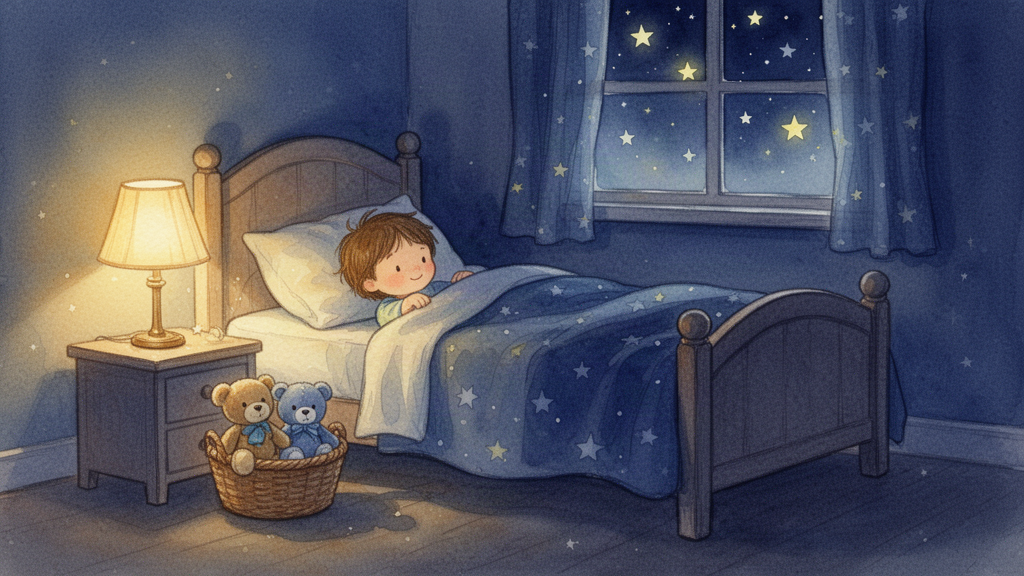
If bedtime has turned into a nightly negotiation over which stuffed animals, action figures, and random toys get to sleep in the bed, you're not alone. Here's why children do this and how to gently set limits without a fight.
It starts innocently enough with one beloved teddy bear. Then a favourite blanket joins in. Then, somehow, an entire toy box seems to migrate onto the bed each night — stuffed animals wedged under pillows, plastic dinosaurs poking into ribs, a full cast of characters that need to be "tucked in" before your child will even consider closing their eyes. If bedtime in your house has become a nightly toy-relocation project, you're dealing with something incredibly common, and there are gentle ways to bring it back under control without a battle.
Why Children Do This
For young children, the bed isn't just a place to sleep — it's the one part of the day where they have real control. Choosing which toys join them is a small act of independence, and for many kids, it's also deeply comforting. Surrounding themselves with familiar objects creates a sense of safety, especially during the vulnerable transition from awake to asleep, when the world can feel a little bigger and darker than it does in daylight.
There's also a developmental piece at play. Between ages 2 and 6, children are forming strong attachments to transitional objects — items that represent comfort and consistency when a parent isn't right there. A single teddy bear serves this purpose beautifully. The trouble starts when one comforting object turns into fifteen, and bedtime becomes less about winding down and more about elaborate toy arrangement rituals (which, conveniently, also delay lights-out).
The Difference Between Comfort and Stalling
Before setting any limits, it's worth figuring out which of these is really going on, because they call for slightly different responses.
Genuine comfort-seeking usually looks consistent — the same one or two special items every night, requested calmly, without much fuss if you can't immediately find them.
Stalling behaviour tends to look different — an ever-expanding list of "just one more" toys, sudden urgency about specific items that were never mentioned before, or a pattern where the toy hunt only ramps up right as you're trying to leave the room.
Most children do a bit of both, and that's completely normal. The goal isn't to eliminate comfort objects — it's to help your child feel secure with fewer of them, and to stop the toy negotiation from eating into sleep time.
Setting a Reasonable Limit (Together)
Rather than making a unilateral announcement at bedtime — which is exactly when kids are least receptive to new rules — have this conversation during the day, when everyone's relaxed.
- Pick a number together. Two or three is a good starting point for most children aged 3 and up. Let your child choose which ones, which gives them a sense of ownership over the decision rather than feeling like something is being taken away.
- Use a visual cue. A small basket or a marked spot on the bed for "bedtime toys" makes the limit concrete and easy for a young child to understand without much explanation.
- Make the chosen toys special. Frame it as "these are the toys who get to have sleepovers with you" rather than "you can't bring the rest." The language matters more than you'd expect.
- Do a "toy bedtime" earlier in the routine. Some parents find it helps to have children tuck in their extra toys on a shelf or in a toy bed before pyjamas go on, satisfying that nurturing instinct without it happening in their own bed.
What to Do When They Push Back
Expect some testing of the new limit, especially in the first week. A few approaches that tend to work well:
Stay warm but consistent. If your child tries to sneak a fourth or fifth toy in, a simple "I can see you love all of them — which of your two friends is coming tonight?" acknowledges the feeling while holding the boundary.
Avoid debating each toy's merits at 7pm. Save any renegotiating of the number for daytime conversations, not the moment you're trying to leave the room.
Watch for anxiety underneath the habit. If your child seems genuinely distressed rather than just testing limits, it may be worth slowing down the transition and reducing the toy count more gradually — from ten to six, then six to four, rather than jumping straight to two.
Offer a substitute for the "job" the toys are doing. Sometimes the toy pile isn't really about the toys — it's about needing something to do during the settling-down period, or feeling like sleep is a lonely, unstructured stretch of time. This is where a bit of structure at the end of the routine can help enormously. A short, calming activity — like listening to a story — gives children something to focus on that isn't a physical object, and it naturally signals that the "getting ready" phase is over and the "resting" phase has begun.
This is one of the reasons a wind-down story works so well alongside this kind of limit-setting. In the Dreamtime app, each night's story is generated fresh, personalised with your child's name and interests, and narrated with gentle watercolour illustrations — giving your child something absorbing to settle into once the toy negotiations are done, rather than a moment of empty silence where the temptation to grab "just one more thing" creeps back in.
A Gentle Reminder
Toy attachment at bedtime is developmentally normal, and in most cases, it's not something to worry about — it's something to gently manage. Children don't need zero comfort objects; they need just enough to feel secure, paired with a routine that helps them settle without an entire toy chest coming along for the ride. With a clear, kindly-held limit and a calming activity to fill that final stretch before sleep, most families find the toy pile shrinks on its own within a couple of weeks — and bedtime gets a little simpler for everyone.
Give your child a new story every night
Dreamtime creates personalised bedtime stories with beautiful illustrations, tailored to your child, every single night.
Start your free trial →