How to Help Your Child Stop Stalling at Bedtime With "Just One More Thing"
Dreamtime
6 August 2026
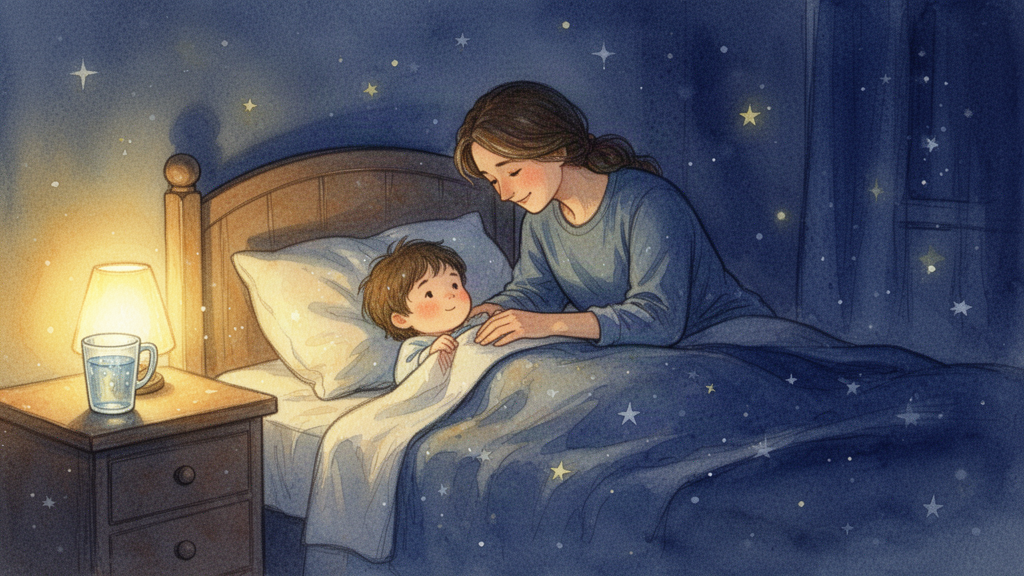
Just when you think bedtime is finally over, your child needs "one more" glass of water, hug, or trip to the toilet. Here's why this happens and how to gently close the loop without a battle every night.
You've done the bath, the pyjamas, the teeth, the story. You've said goodnight, turned off the light, and taken two steps towards the door — and that's when it starts. "I need water." "My foot itches." "Can you check for spiders?" "I forgot to tell you something." One request becomes three, becomes ten, and suddenly bedtime that should have taken twenty minutes has swallowed an hour of your evening.
If this sounds familiar, you're not doing anything wrong, and your child isn't being deliberately difficult (even though it can feel that way at 8:47pm). Bedtime stalling is one of the most common — and most exhausting — parenting challenges, and there's a good reason it happens so consistently.
Why Children Stall at Bedtime
Stalling almost always comes down to one of three things: a genuine need, a bid for connection, or anxiety about separation.
The need for connection. Bedtime is the end of the day, which means it's also the end of together-time. For a lot of children, especially younger ones, the flurry of "just one more things" is really a way of saying "I don't want this closeness to end yet." Each request buys another minute of you in the room.
Separation anxiety. Sleep requires letting go — of the day, of wakefulness, of you. For children who find separation hard, stalling is a coping mechanism. It delays the moment they have to be alone with their thoughts in a dark, quiet room.
Genuine overstimulation or under-tiredness. Sometimes stalling isn't emotional at all — it's physical. An overtired child becomes wired rather than sleepy, and a child who isn't quite tired enough will find any excuse to stay upright a little longer.
Understanding which of these is driving the behaviour on any given night makes it much easier to respond with the right kind of patience.
The "Bedtime Pass" Method
One of the most effective tools for stalling is also one of the simplest: a single bedtime pass, redeemable for one request after lights-out.
Give your child a physical token — a card, a small laminated ticket, anything tangible — and explain that they can use it once per night for one thing: a hug, a sip of water, one more question. Once it's used, it's gone until tomorrow.
This works because it gives children a sense of control (they decide when to use it) while setting a clear, visible boundary. Most children, when given the choice, become surprisingly thoughtful about which single request is really worth spending their pass on — and the endless parade of asks naturally shrinks to one.
Meet the Need Before It Becomes a Request
A lot of stalling can be headed off before it starts by building the most common requests into the routine itself, so there's no reason left to ask.
- Put a small cup of water on the nightstand as part of the wind-down routine.
- Do a "goodnight sweep" together — checking under the bed, in the wardrobe, behind the curtains — so reassurance about monsters or noises happens before lights-out, not after.
- Ask, "Is there anything on your mind before we say goodnight?" as a standard part of the routine. Giving them a designated moment to offload worries or news often stops those thoughts resurfacing five minutes later as a stalling tactic.
- Handle the toilet trip proactively, even if they insist they don't need to go.
The goal isn't to eliminate every possible need in advance (that's not realistic), but to remove the low-hanging fruit so what's left is more manageable.
Hold the Boundary Warmly, Not Harshly
Once the routine is done and the pass (if used) has been used, the key is calm, loving consistency. This is the hardest part for a lot of parents, because saying no to a child who seems genuinely upset feels unkind. But firm boundaries delivered warmly are actually what help children feel secure.
Try short, kind, repeatable phrases rather than negotiating each time:
- "I love you, it's sleep time now. I'll see you in the morning."
- "You're safe, and I'm just down the hall."
- "We've had our story and our hug. Now it's time for your body to rest."
Say it gently, say it the same way each night, and then follow through — even if that means a few nights of protest before it settles. Children stall harder when they sense the boundary might move if they push enough. Consistency, not sternness, is what closes the loop.
Make the End of the Routine Feel Complete, Not Abrupt
Stalling often spikes when the transition from "together" to "alone" happens too suddenly. A gentle glide into sleep — rather than a hard stop — gives children less reason to reach for one more delay.
This is where a satisfying final story can do a lot of quiet work. A story that wraps up warmly, mentions the child by name, and ends on a calm, settled note gives their brain a clear signal: this is the close of the day, everything is okay, sleep comes next. In our house, and for many Dreamtime families, this is exactly why a personalised story works so well as the very last thing before lights-out — because it's tailored to your child's own name, age and interests, it holds their attention fully during the story itself, and it ends in a way that feels genuinely finished, rather than something they're tempted to ask you to continue.
Pairing that kind of complete, satisfying ending with the bedtime pass and a proactive "anything on your mind?" check gives children very little reason left to stall — because their needs, their worries, and their craving for connection have all already been met before the door closes.
A Gentler Bedtime Is Within Reach
Stalling isn't a sign that bedtime has gone wrong — it's a very normal, very human response to the hardest transition of the day. With a predictable routine, a small dose of control (like a bedtime pass), needs met ahead of time, and boundaries held with warmth rather than frustration, most children settle into letting go of the day far more easily. Some nights will still test your patience, and that's okay too. Give it a couple of weeks of consistency, and you'll likely find those "just one more things" shrink from ten down to one — or disappear altogether.
Give your child a new story every night
Dreamtime creates personalised bedtime stories with beautiful illustrations, tailored to your child, every single night.
Start your free trial →