How to Help Your Child Stop Asking for a Glass of Water Every Two Minutes at Bedtime
Dreamtime
18 September 2026
That endless parade of "just one more sip" requests isn't random. Here's why kids fixate on water at bedtime and how to set up a routine that satisfies real thirst without opening the door to endless stalling.
"Can I have some water?" It sounds like such a small, reasonable request. The trouble is, it rarely stops at one. Five minutes after lights out, there's another cry for water. Then another. Before long, you've made three trips to the kitchen and bedtime has stretched an extra half hour, all over something that seems too basic to say no to.
If this sounds familiar, you're not alone, and you're not doing anything wrong. Water requests are one of the most common bedtime stalling tactics parents deal with, precisely because they're so hard to refuse. But there's a real difference between genuine thirst and a clever delay tactic, and once you understand what's driving the behaviour, you can build a routine that meets your child's actual needs while ending the nightly back-and-forth.
Why Kids Ask for Water So Often at Bedtime
There are a few overlapping reasons this happens, and it's worth figuring out which one applies to your child.
Genuine thirst. Younger children especially don't always drink enough during the day, particularly if they're busy playing and forget to stop. By bedtime, real thirst can catch up with them.
Delay and control. Bedtime often means separation from you, the end of fun, and the start of quiet, alone time. Asking for water is a low-effort, low-risk way to keep you in the room a little longer. It's rarely conscious manipulation, more an instinctive reach for connection or control over what happens next.
Habit and association. If water has become part of the after-lights-out routine even once or twice, children are quick learners. They'll repeat whatever worked before, simply because bedtime is a moment when routines get locked in fast.
Dry mouth from breathing through an open mouth or a dry room. Central heating, especially in winter, can leave a room and a child's mouth dry, making the request more physical than behavioural.
Once you know which of these is at play (and it might be a mix), you can respond in a way that actually solves the problem instead of just delaying it to tomorrow night.
Build Water Into the Routine, Not the Escape Route
The most effective fix is often the simplest: make water a fixed, expected part of the wind-down routine rather than something requested after lights are off.
Try offering a proper drink of water as one of the last steps before the final "goodnight", after teeth brushing, alongside a bathroom trip. Some parents find it helps to say the phrase out loud each night, something like, "Bath, pyjamas, teeth, water, story, sleep," so your child knows exactly where water fits and that it has already happened.
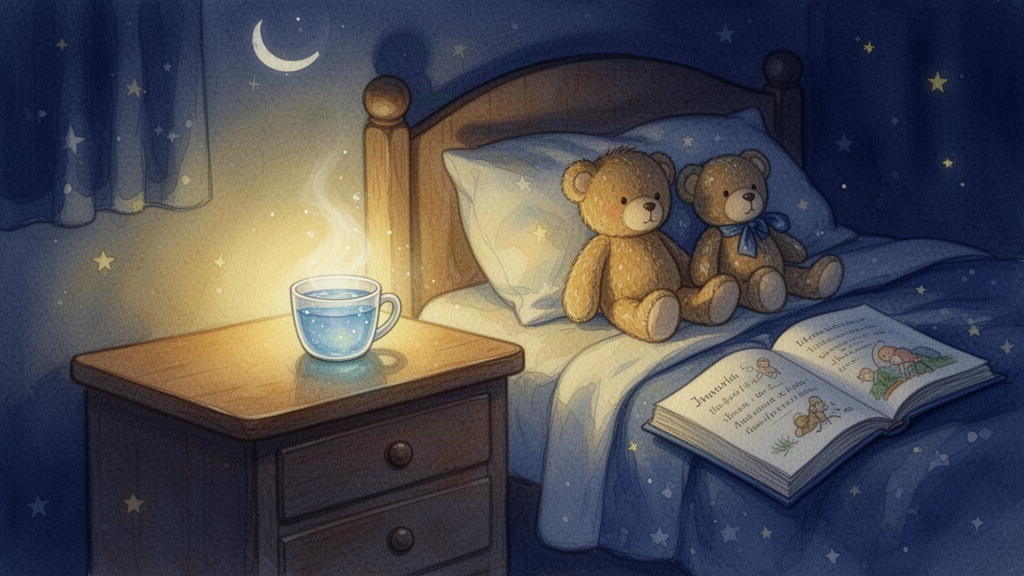
Leaving a small, spill-proof cup of water on the nightstand can also help. It removes the need to ask at all: your child can simply reach for it if they're genuinely thirsty, without needing you to get up. For many families, this single change dramatically cuts down on the calls after lights out, because the "problem" (thirst) has been pre-solved.
Respond Calmly and Consistently to Requests After Lights Out
Even with a solid routine, some nights your child will still ask. This is where consistency does more work than any clever trick.
Decide on your approach in advance and stick to it every night, not just when you have the energy. A calm, low-key response works best: "You already had water at bedtime. The cup is right there if you need more." Then leave. No lecture, no negotiation, no second trip downstairs.
The key is making the response as boring and unrewarding as possible. If getting up for water means an extra five minutes of chatting with you, cuddles, or a wander around the house, your child has every reason to keep asking. If it means a quick, calm, identical response every single time, the request naturally loses its appeal within a week or two.
Address the Underlying Need for Connection
If you suspect the water requests are really about wanting more time with you rather than thirst, it can help to front-load connection earlier in the routine so your child feels satisfied before you leave the room.
A slower, more present wind-down can make a real difference here. This is one of the reasons a dedicated story time works so well: it gives your child focused, calm attention that's harder to ask for once the lights are off. Apps like Dreamtime, which generate a brand-new personalised story every night featuring your child by name, can help make this final stretch of the evening feel special and complete in itself, so there's less unfinished business by the time you say goodnight. When a child feels truly settled and heard during the story, the urge to call you back in for "just one more thing" often fades.
You might also try naming the feeling directly: "I think you might be looking for one more cuddle, not water. Let's have a big hug before I go." Sometimes simply acknowledging the real need is enough to short-circuit the stalling tactic entirely.
When to Take a Closer Look
Occasionally, frequent thirst at night can point to something worth mentioning to your GP, particularly if it's a new pattern alongside increased thirst during the day, more frequent urination, or unexplained tiredness. This is uncommon, but it's worth ruling out if the request feels genuinely physical rather than behavioural, especially if it started suddenly and doesn't respond to routine changes.
For the vast majority of children, though, this is a completely normal phase of testing boundaries and seeking connection at the edges of the day, and it responds well to a calm, consistent approach.
A Small Battle, Easily Won
The water request might feel like a small thing to hold firm on, but it's exactly these small, repeated moments where bedtime routines are built or unravelled. With a predictable place for water in your routine, a calm and consistent response when requests come after lights out, and a little extra warmth built into the final minutes together, most families find this particular stalling tactic fades within a couple of weeks.
Bedtime doesn't need to be a negotiation. With a little structure and a lot of consistency, you can meet your child's real needs, thirst included, while helping everyone get to sleep a little sooner.
Give your child a new story every night
Dreamtime creates personalised bedtime stories with beautiful illustrations, tailored to your child, every single night.
Start your free trial →