How to Help Your Child Stop Asking for the TV or Tablet Right Before Bed
Dreamtime
16 September 2026
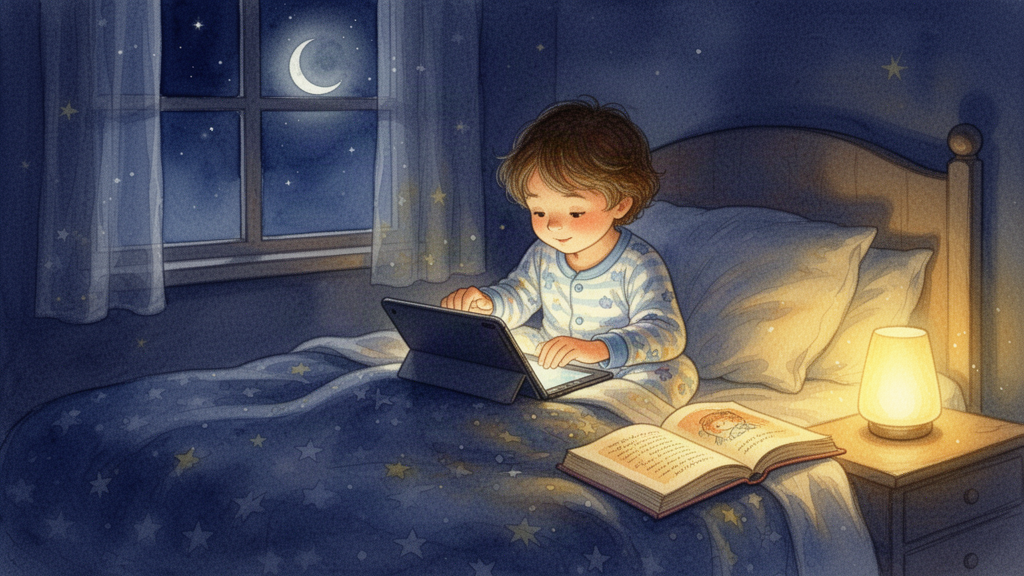
Screens creeping into the last hour before bed is one of the most common bedtime battles parents face. Here's why kids crave that final bit of screen time, and how to swap it for something just as satisfying without the meltdown.
It's 7:45pm, teeth are brushed, pyjamas are on, and then it comes: "Can I just watch one more episode?" Or "Can I play on the iPad for five minutes?" For many families, the request for screen time right before bed has become as predictable as the bedtime routine itself, and just as exhausting to navigate. If you're tired of this nightly negotiation, you're far from alone, and there are real, practical ways to shift the pattern.
Why Kids Ask for Screens Right Before Bed
Understanding the pull of screens at this particular moment makes it much easier to address without a fight.
It's the last "fun" thing before the boring part. From a child's point of view, bedtime means the end of stimulation, company, and choice. A screen offers one final burst of excitement before lights out, which is exactly why the request tends to show up at the very end of the routine, not the beginning.
Screens are genuinely soothing, in the short term. The bright light and fast-paced content give the brain a hit of dopamine. It feels calming in the moment, even though it's the opposite of what helps a child actually fall asleep afterwards.
It's a stalling tactic, whether your child realises it or not. Asking for "just five more minutes" delays the separation that comes with lights out. For children who struggle with winding down or saying goodnight, screens become a way of holding onto the day a little longer.
Habits form fast. If screen time has ever been part of the pre-bed routine, even occasionally, children remember it and will keep asking, because it worked before.
Why Screens Before Bed Actually Make Sleep Harder
It's worth explaining this to your child in simple terms, because understanding "why" can reduce arguments over time.
- Blue light delays melatonin production, the hormone that signals to the body it's time to sleep. This means a child can feel wide awake exactly when they should be getting drowsy.
- Fast-moving content overstimulates the brain, even if the show itself seems calm. Quick cuts, bright colours and sound effects keep the mind alert rather than settling it.
- Screens replace the connection-based wind-down that actually helps children feel secure enough to sleep, like a chat about the day, a cuddle, or a story.
Once you can explain this in an age-appropriate way ("your brain needs quiet, dark things to get sleepy, and screens are the opposite of that"), children as young as 4 or 5 can start to understand the "why" behind the boundary, which makes it easier to hold.
How to Break the Pre-Bed Screen Habit Gently
1. Set the cut-off earlier, not at bedtime itself. Rather than negotiating in the final ten minutes, build in a screen-free buffer of 30 to 60 minutes before the bedtime routine even starts. This removes the request from the equation entirely, because by the time pyjamas go on, screens were never on the table.
2. Give the transition a name and a signal. Something as simple as "screens go to sleep before you do" or a visual timer can help. Consistency matters more than the exact wording. Once it's a known rule rather than a nightly discussion, resistance tends to fade.
3. Replace the "one more thing" feeling with something else to look forward to. Often what your child is really asking for isn't the screen itself, it's one more enjoyable moment before the day ends. Fill that gap with something equally special: a story, a chat about their favourite part of the day, or choosing tomorrow's outfit together.
4. Make the wind-down routine genuinely appealing. If bedtime without screens feels flat compared to bedtime with them, of course children will push back. This is where a warm, immersive activity can make a real difference. Many families find that a personalised bedtime story fills the gap perfectly, giving children something to look forward to that feels just as exciting as a screen, but calms rather than stimulates. Dreamtime creates a brand-new story every night featuring your child by name, tailored to their age and interests, complete with gentle watercolour illustrations and narration, so the anticipation of "what happens tonight" replaces the pull of the tablet.
5. Hold the boundary calmly, every night. Children test boundaries most when they sense flexibility. If the screen-free rule holds even on tired, cranky nights, it stops being worth arguing about. Expect a few tough evenings as the habit resets, this is normal and temporary.
6. Watch your own habits too. Children notice if parents are scrolling or watching something in the next room during wind-down time. Where possible, make the last half hour before bed a screen-free zone for the whole household, not just the child.
What to Do If Screens Are Part of an Established Routine
If screens have been a nightly fixture for a while, don't expect an overnight fix. Try phasing it out gradually:
- Shorten the screen time window by five or ten minutes every few nights rather than cutting it cold turkey.
- Move the screen time earlier in the evening, before dinner or bath, so it's no longer directly attached to bedtime.
- Offer a clear alternative at the exact moment the screen would have appeared, so there's no empty gap for your child to protest into.
The Bigger Picture
Screens aren't the enemy, and there's no need for guilt if they've crept into your evening routine. What matters most is protecting that final stretch before sleep as a calm, connected, low-stimulation time. Once children experience how much better they feel falling asleep after a quiet wind-down instead of a screen, many stop asking altogether, not because the rule is stricter, but because the alternative genuinely feels better.
Bedtime battles over screens are common, exhausting, and completely solvable. With a little patience, a consistent buffer, and something worth looking forward to instead, most families find the nightly negotiation fades within a couple of weeks. Give it time, stay consistent, and remember that the goal isn't a perfect night, it's a slightly better one than yesterday.
Give your child a new story every night
Dreamtime creates personalised bedtime stories with beautiful illustrations, tailored to your child, every single night.
Start your free trial →