When You're the One Who's Frazzled: How to Keep Bedtime Calm When You're Stressed, Tired or Short-Tempered
Dreamtime
5 November 2026
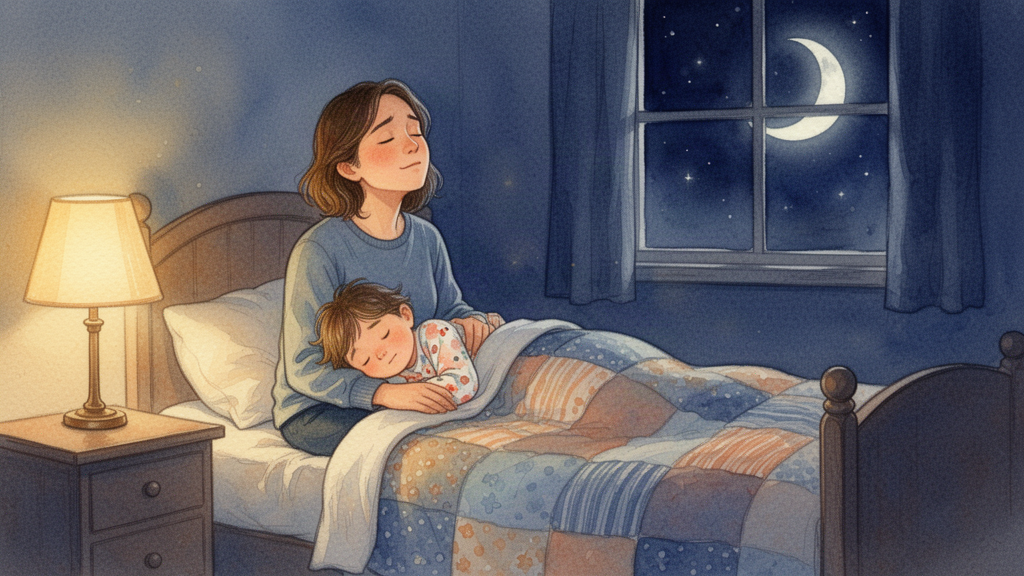
Some nights, the person who needs winding down at bedtime is you. This gentle guide explains how your mood shapes your child's evening, and offers realistic ways to reset, repair and keep bedtime calm even on your most frazzled days.
It's 7:45pm. You've been up since dawn, work ran over, dinner was a negotiation, and now your child has decided that tonight is the night they cannot possibly put on pyjamas. You hear your own voice getting sharper, and you can feel it making everything worse. If this sounds familiar, you're in very good company. Most parenting advice about bedtime focuses on the child, but some nights the person who most needs to wind down is you. The good news is that a calmer bedtime doesn't require you to be a calm person all day. It just needs a few small tools for the last hour.
Why Your Mood Travels Straight to Your Child
Young children are remarkably tuned in to the adults who care for them. Long before they can explain how they feel, they read tone of voice, facial tension, the speed of your movements and the volume of your sighs. Psychologists call this emotional co-regulation: children borrow your calm to build their own, especially when they are tired and their own self-control is running low.
At bedtime this matters more than at any other time of day. Your child is physically tired, emotionally depleted after school or nursery, and about to separate from you for the night. If they sense tension, their body can respond with alertness rather than drowsiness, which is why a rushed, snappy evening so often leads to more stalling, more tears and later sleep.
This isn't a reason to feel guilty. It's simply useful to know: you don't have to fix your child's mood at bedtime, you only have to steady your own. That is a much more achievable goal.
Build a 60-Second Reset Into the Routine
You can't always remove stress, but you can create a tiny gap between the stress and your response. Try one of these before you start the bedtime routine, or whenever you feel your patience thinning:
- The long exhale. Breathe in for four counts, out for six. A slow, extended out-breath signals your nervous system to settle, and it takes less than a minute.
- Drop your shoulders and unclench your jaw. Most of us carry stress physically without noticing. Check in with your body, then soften it.
- Change the room. Step into the bathroom or the hallway for a moment. Splash cool water on your wrists or face.
- Say it quietly to yourself. A phrase like "This is hard, and I'm doing my best" is surprisingly effective at lowering the temperature.
If your child is calling for you, it is perfectly fine to say, "I'll be there in one minute, I just need a deep breath." You are also modelling a skill they will need for life.
Simplify When You're Running on Empty
On depleted evenings, the most calming thing you can do is lower the bar. A full routine with bath, hair-washing, three books and a long chat is lovely, but it isn't compulsory every night.
Consider having a "short version" routine that you can fall back on, and let your child know it exists so it feels like a plan rather than a failure. It might look like:
- Pyjamas and teeth
- One short story, with the lights low
- A cuddle and a simple goodnight phrase
Children thrive on predictability more than on length. A shorter routine delivered calmly beats a longer one delivered through gritted teeth. You can also quietly drop non-essentials: skip the bath, lay out tomorrow's clothes in the morning instead, or let the toy tidy-up wait.
If decision-making is what drains you, remove choices. Having the story ready to go saves you the nightly "what shall we read?" debate. Some parents use Dreamtime for exactly this reason: a fresh personalised story, with narration and illustrations, is ready each night, so on your most tired evenings you can press play, sit close and simply be there without having to think of anything.
Repair Beats Perfect: What to Do When You Lose Your Temper
Even with the best tools, there will be nights when you raise your voice, hurry your child or end the evening on a sour note. This is normal, and it does not damage your child. What matters most is what happens next.
Child development research consistently shows that repair is more important than perfection. A rupture followed by a warm reconnection can actually teach children that relationships are strong enough to handle mistakes.
A simple repair looks like this:
- Get down to their level and soften your voice.
- Name what happened, briefly. "I got cross earlier and my voice was too loud."
- Take responsibility without drama. "That wasn't your fault. I was tired and I'm sorry."
- Reconnect. A hug, a hand on their back, or a gentle "I love you, even on grumpy days."
Then let it go. Avoid long explanations or asking for forgiveness, as that can put pressure on your child to comfort you. Keep it short, warm and sincere, and let the evening finish gently with a story or a quiet cuddle.
Look After the Person Doing the Bedtimes
If frazzled bedtimes are becoming a pattern, it is worth looking upstream rather than trying harder at 7:45pm. A few small shifts can make a real difference:
- Share the load where you can. Alternate nights with a partner, or ask a relative to take over once a week.
- Protect a few minutes for yourself before bedtime, even five minutes with a hot drink while the bath runs.
- Prepare earlier in the day. Pack bags, lay out clothes and decide dinner in advance so the evening has fewer pressure points.
- Lower your standards on purpose. A messy kitchen and a slightly late bedtime are small prices for a calmer evening.
- Talk to someone if stress feels constant. Your GP, health visitor or a trusted friend can help, and asking for support is a strength, not a failure.
You Don't Need to Be Calm, Just Present
Bedtime doesn't need a perfectly serene parent. It needs a parent who is willing to take a breath, keep things simple and come back together after a wobble. Your child won't remember the night the pyjamas took twenty minutes. They will remember the feeling of being held, listened to and tucked in by someone who loves them. On the hard evenings, choose the short routine, take your slow breath, and let a good story do some of the work. You're doing better than you think.
Give your child a new story every night
Dreamtime creates personalised bedtime stories with beautiful illustrations, tailored to your child, every single night.
Start your free trial →