Why Listening to Stories Is Good for Kids' Brains
Dreamtime
3 May 2026
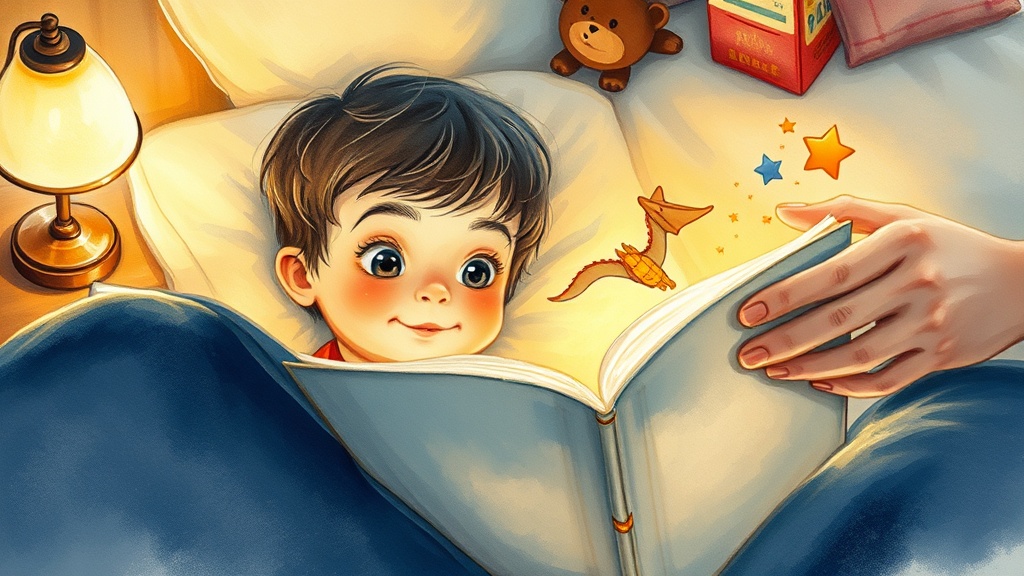
The benefits of listening to stories go far beyond a peaceful bedtime. From building vocabulary to strengthening emotional intelligence, here's what the science says about what happens in your child's brain during storytime.
Every night, when you settle in with your child and open a book — or press play on a story — something remarkable is happening inside their head. The benefits of listening to stories aren't just about winding down before sleep, although that matters too. From the moment a child hears "once upon a time," their brain lights up in ways that shape how they think, feel, speak, and understand the world. Here's what the research tells us, and why those nightly story sessions are doing so much more than you might realise.
What Happens in the Brain When Children Listen to Stories
When children listen to a story, their brains aren't passively receiving information — they're working hard. Neuroscientists call this "neural coupling," where the listener's brain activity begins to mirror that of the storyteller. Regions associated with language, sensory processing, movement, and emotion all activate at once.
For young children, this is especially powerful. The brain is at its most plastic — its most ready to form new connections — between the ages of two and seven. Stories arrive at exactly the right moment to help build the architecture that supports reading, communication, and emotional regulation for years to come.
MRI studies have shown that children who are read to regularly show stronger activity in the parts of the brain responsible for mental imagery and narrative comprehension. In plain terms: storytime builds the neural pathways children will rely on for everything from following instructions in class to understanding how other people feel.
The Language Benefits Are Bigger Than You Think
One of the most well-documented benefits of listening to stories is vocabulary growth — and the scale of it might surprise you.
Children's books, even simple ones, contain a far richer vocabulary than everyday conversation. A picture book aimed at a three-year-old will typically include words that adults rarely use in casual speech. Over weeks and months of storytime, children absorb this language naturally, without drilling or flashcards. They encounter words in context, which means they understand not just the definition but how and when to use them.
This matters beyond just "knowing more words." A strong vocabulary at age five is one of the most reliable predictors of later reading ability and academic success. Children who arrive at school with a broad vocabulary find it easier to decode unfamiliar words, comprehend written texts, and express themselves clearly.
For younger children (ages two to four), listening to stories also helps with sentence structure. They're picking up how language works — how a sentence builds, how stories have a beginning, middle, and end — long before they can read a single word themselves.
Stories Build Emotional Intelligence
Children learn about feelings the same way they learn about most things: by experiencing them. Stories offer a uniquely safe space to do exactly that.
When a child listens to a character who's scared of the dark, excited about a new friend, or sad because something didn't go to plan, they practise identifying and processing emotions. They see that difficult feelings have names, that other people (or bears, or dragons, or astronauts) feel them too, and — crucially — that things usually work out in the end.
Psychologists refer to this as "emotional scaffolding." Stories give children the language and frameworks to make sense of their inner world. Over time, this translates into better emotional regulation, more empathy, and greater resilience.
This is also why the characters in a story matter. When children see themselves reflected — a character who shares their name, their fears, their interests — the effect is even stronger. They're not just watching someone else navigate a challenge; they're rehearsing it themselves.
How Listening to Stories Supports Better Sleep
There's a reason bedtime stories have been part of human childhood for as long as there have been humans to tell them. The ritual of storytime works on multiple levels to help children settle.
First, it creates predictability. Children's nervous systems calm down when they know what comes next. A consistent bedtime routine — bath, pyjamas, story, sleep — signals to the brain that the day is ending and it's safe to rest. The story acts as a bridge between the busyness of the day and the quiet of sleep.
Second, listening (rather than watching) is far gentler on the brain at bedtime. Screens stimulate; stories soothe. A calm, narrated story lowers cortisol levels and slows the heart rate, making it physically easier for children to drift off.
Third, stories give anxious children something constructive to focus on. Rather than lying in the dark with a busy mind, they're following a narrative — and the pleasant mental images that come with it often carry gently into sleep.
If you find yourself short on time or inspiration by the end of a long day, it's worth knowing that apps like Dreamtime generate a brand-new personalised bedtime story every night — complete with narration and watercolour illustrations — so the bedtime story ritual stays consistent even when you're running on empty.
The Social Benefits Parents Often Overlook
Storytime isn't just good for the child listening — it's good for the relationship between the child and whoever is reading.
Shared stories create shared experiences. When you read together, you're not just transferring information; you're connecting. Children remember the warmth of being snuggled up, the sound of a familiar voice, the feeling of being someone's complete focus for fifteen minutes at the end of a busy day.
This connection has its own developmental value. Children who feel securely attached to their caregivers show better emotional regulation, stronger resilience, and greater confidence in social situations. Storytime is one of the simplest and most reliable ways to build that sense of closeness, night after night.
There's also something to be said for the conversations stories spark. "Why do you think she was scared?" "What would you have done?" "Have you ever felt like that?" These questions — asked naturally, in the relaxed atmosphere of bedtime — are some of the richest conversations you'll have with your child.
Making the Most of Storytime
You don't need to be a professional storyteller to give your child the full benefits of listening to stories. A few simple habits make a real difference:
- Be consistent. The same time, the same place, the same gentle routine. Consistency is what makes the magic work.
- Use your voice. Slow down, vary your tone, pause at exciting moments. Children follow your emotional cues — a calm voice is calming.
- Let them choose (sometimes). When children pick the story, their engagement goes up. Their interests are a doorway into the narrative.
- Ask open questions. Not "did you like it?" but "what was your favourite part?" or "what do you think happens next?"
- Don't rush. This is fifteen minutes well spent. The dishes can wait.
The benefits of listening to stories accumulate quietly, night after night, year after year. The child who was soothed by simple picture books at two is, at seven, a more confident reader, a more empathetic friend, and a more articulate thinker — in part because of all those bedtime stories. It's one of the most powerful things you can do for your child, and it costs nothing but a little time and a willing voice.
Give your child a new story every night
Dreamtime creates personalised bedtime stories with beautiful illustrations, tailored to your child, every single night.
Start your free trial →