The Real Benefits of Bedtime Stories (Beyond Falling Asleep)
Dreamtime
29 April 2026
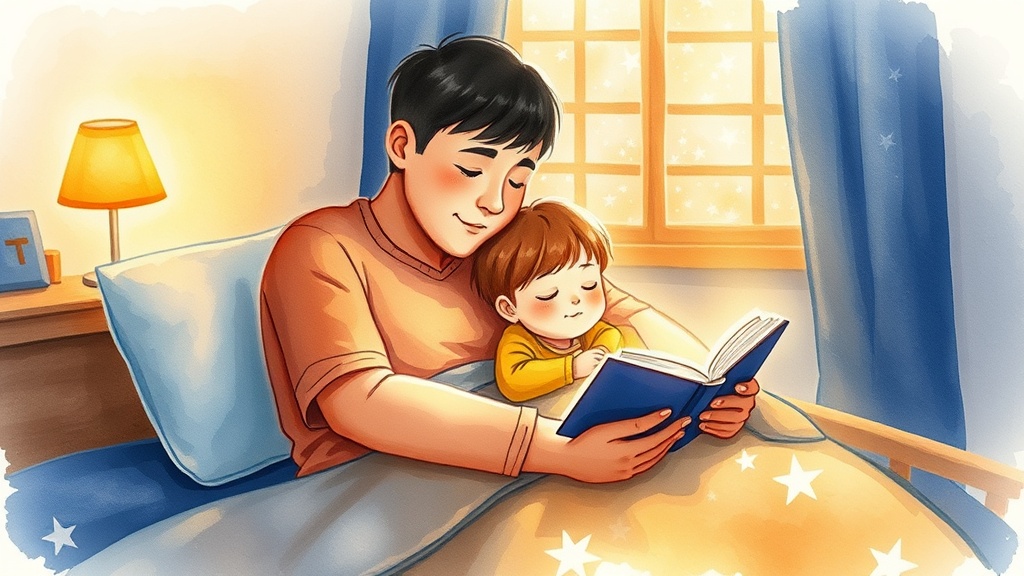
Most parents read bedtime stories to help their child wind down — but the benefits of bedtime stories go much deeper than that. From brain development to emotional resilience, here's what's really happening when you open a book at night.
Most parents read bedtime stories because it helps their child settle. The room goes quiet, the wriggling slows, and eventually — finally — little eyes close. But if you've ever wondered whether you're doing something more meaningful than just filling time before lights out, the answer is a resounding yes. The benefits of bedtime stories are remarkably wide-ranging, touching everything from your child's brain development and emotional intelligence to the depth of your relationship with them. Here's what the science — and your own lived experience — is quietly telling you every night.
The Benefits of Bedtime Stories Go Far Deeper Than Sleep
When researchers study what happens in a young child's brain during shared reading, the results are striking. Studies using brain imaging have shown that story time activates areas associated with language processing, mental imagery, and narrative comprehension — essentially giving the brain a rich workout while the body winds down.
For children aged 2–10, this matters enormously. These are the years when the brain is at its most plastic and receptive, forming connections at a pace that will never quite be matched again. A bedtime story isn't just entertainment; it's neural scaffolding.
Beyond the neuroscience, there's something more intuitive happening too. Stories give children a structure for understanding the world. They learn that things have beginnings, middles, and ends. That problems can be solved. That feelings — even big, scary ones — can be named and worked through. These are lessons no worksheet can teach quite as gently.
Language and Literacy: The Quiet Head Start
One of the most well-documented benefits of reading aloud to children is the effect on vocabulary. Children who are read to regularly encounter words they would rarely hear in everyday conversation — words like enormous, reluctant, glimmering, or peculiar. Each encounter is a small deposit into what literacy researchers call the "word bank," and by the time children start school, those with rich read-aloud histories arrive with a significant advantage.
But it's not just about vocabulary. Shared reading builds phonological awareness (the ability to hear and manipulate sounds in words), print awareness (understanding that text carries meaning), and narrative comprehension. All of these underpin learning to read independently.
A few practical ways to maximise this:
- Pause and chat. Don't rush through the story. Ask "What do you think will happen next?" or "How do you think she's feeling right now?" These moments of prediction and reflection deepen comprehension far more than passive listening.
- Let them choose. Children who have a stake in what they're reading engage more fully. Even if you've read that book forty-seven times, their enthusiasm is doing important work.
- Don't shy away from new words. If a story uses an unfamiliar word, explain it simply and move on. Repeated exposure across different stories cements understanding over time.
Emotional Intelligence: Stories as a Safe Practice Ground
Children's stories are full of characters who feel jealous, frightened, lonely, embarrassed, or overwhelmed — and who find ways through. This turns out to be enormously valuable for children who are still learning to identify and manage their own emotional landscape.
When a child watches a character navigate a difficult friendship, cope with losing something they love, or feel nervous about something new, they're not just following a plot. They're practising empathy. They're seeing that difficult feelings are normal. And they're quietly rehearsing responses they might one day draw on themselves.
This is particularly powerful at bedtime, when children are relaxed and receptive — and when the anxieties of the day often surface. A story about a character who was nervous about starting somewhere new can open a conversation about what's been worrying your child far more gently than a direct question ever could.
If your child has a particular theme or worry you'd like a story to address, Dreamtime creates personalised bedtime stories built around your child's name, age, and interests — which makes it easy to find something that genuinely resonates with where they are right now.
The Bonding Benefit: Why This Moment Really Matters
In the rush of modern family life, bedtime story time is one of the few moments in the day that is reliably slow, quiet, and close. You're not multitasking. Your phone is (ideally) elsewhere. Your child is tucked under your arm or curled beside you, and for ten or fifteen minutes, you are entirely together.
Research on attachment consistently shows that predictable, warm rituals like this are foundational to a child's sense of security. It tells them: you are worth slowing down for. This time belongs to you. Over months and years, those nightly moments accumulate into something significant — a shared world of characters and stories that belong just to your family.
Parents often look back on bedtime story years as some of the most treasured of their parenting life. It's worth being present for them.
Better Sleep — Yes, That Too
It would feel strange not to mention it. Alongside all the developmental and relational benefits, bedtime stories genuinely do help children sleep better. The ritual itself signals to the brain that sleep is coming, helping to regulate the body's internal clock. The act of listening to a calm, familiar voice slows breathing and heart rate. And a satisfying story ending provides a kind of psychological closure on the day — a full stop before sleep.
For children who struggle to switch off (and there are many), a story can be more effective than almost any other settling strategy. It gives the busy mind somewhere to go that isn't the anxious replay of the day.
If you're looking for a way to keep story time fresh — especially when you're running low on ideas by the end of a long day — Dreamtime generates a brand-new personalised story every night, complete with watercolour illustrations and narration, tailored to your child's name and interests. It won't replace the magic of reading together, but on the nights when you're exhausted and creativity has left the building, it means the ritual doesn't have to suffer.
The Simple Thing That Does So Much
Bedtime stories are one of those quietly extraordinary things that look modest from the outside. You sit down. You open a book (or press play). You read. But in that small act, you are supporting your child's brain development, building their emotional vocabulary, strengthening the bond between you, and helping them move gently toward sleep.
You don't need to do it perfectly. You don't need to do all the voices (though children tend to love it when you do). You just need to show up, night after night, and share a story.
That's enough. In fact, it's rather a lot.
Give your child a new story every night
Dreamtime creates personalised bedtime stories with beautiful illustrations, tailored to your child, every single night.
Start your free trial →