How to Help Your Child Cope With Bedtime During a Period of Illness (Yours or Theirs)
Dreamtime
13 July 2026
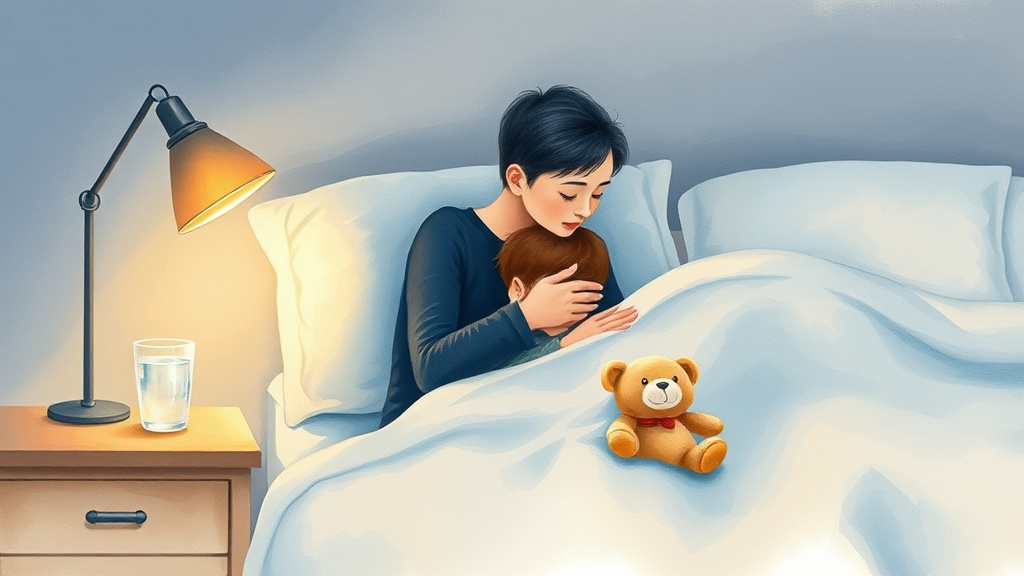
Illness throws even the most reliable bedtime routine completely off course. Whether your child is unwell or you are, here's how to keep bedtime gentle, reassuring, and workable — for everyone.
Illness has a way of arriving without notice and dismantling everything you've carefully built. The consistent routine you've spent months establishing? Gone. The child who used to drift off at 7:30 without a fuss? Now wide awake, clingy, and calling for you every twenty minutes. Whether it's your little one battling a fever or a cough, or you yourself trying to hold bedtime together while running on empty, illness is one of the most overlooked disruptors of children's sleep — and one of the least talked about. Here's how to ride it out without losing the plot entirely.
When Your Child Is Ill: Why Bedtime Gets So Hard
It's not just the physical discomfort that makes bedtime difficult for a sick child — it's the emotional upheaval that comes with feeling unwell. Young children between the ages of 2 and 10 have limited ability to understand or articulate why they feel bad, which means physical symptoms quickly become emotional ones: clinginess, tearfulness, fear, and an overwhelming need for reassurance.
A few things happen at bedtime specifically that make this worse:
- The body is more alert to threat at night. Even in healthy children, cortisol dips in the evening and the nervous system becomes more reactive. In a sick child, this is amplified.
- Separation feels more frightening. A child who is normally comfortable sleeping alone may suddenly find the idea of you leaving the room unbearable.
- Physical symptoms often worsen lying down. A blocked nose, a cough, or an earache can feel much more intense once the distractions of the day are gone.
Understanding why bedtime is harder when your child is ill helps you respond with patience rather than frustration — even on the nights when you're running on fumes yourself.
What to Do Differently During Illness
The instinct to abandon the routine entirely is understandable, but a modified version of your usual bedtime sequence can actually be deeply reassuring for a sick child. Familiarity is comforting. The trick is to keep the shape of the routine while adjusting the expectations.
Bring bedtime forward if they need it. A sick child often needs more sleep, and fighting tiredness with stimulation only makes symptoms feel worse. If they seem exhausted at 6pm, go with it.
Simplify the steps. Bath, story, sleep might become just a warm flannel wash and a quiet story. That's enough. Don't worry about skipping things — focus on what feels soothing.
Allow more physical closeness than usual. This isn't a habit you're setting for life. It's comfort during a difficult time. Sitting beside their bed, holding their hand, or letting them fall asleep next to you for a night or two will not undo months of good sleep habits. Children are remarkably resilient once they feel well again.
Keep the bedroom comfortable for illness. A slightly cooler room than usual, a humidifier if they're congested, and a dim nightlight can all help. Elevating the head of the mattress slightly with a rolled towel underneath (for older children) can ease night-time coughing.
Expect night waking. It will almost certainly happen. Having a plan — even just deciding in advance that you'll pop in, resettle quietly, and leave — means you're less likely to make tired decisions at 2am that you'll regret later.
The Role of Stories When a Child Is Under the Weather
One thing that often remains accessible even when a child feels dreadful is a story. There's something about being read to — the rhythm of a voice, the warmth of narrative — that soothes the nervous system in a way that very little else can. If your child is too unwell to sit up and play but not unwell enough to simply fall asleep, a story fills that in-between space beautifully.
On the nights when your own energy is at its lowest, narrated stories can be a genuine lifeline. Apps like Dreamtime create a brand-new personalised bedtime story every night — tailored to your child's name, age, and interests, complete with narration — so that even when you're barely holding yourself together, your child still gets a warm, engaging story that feels made just for them. It won't replace your voice on the good nights, but on the hard ones, it's a kindness to yourself as much as to them.
When You Are the One Who's Ill
This is the scenario nobody prepares you for. You're unwell — properly unwell, not just tired — and you still have to do bedtime. It's one of the more isolating experiences of parenthood, and it deserves more acknowledgement than it gets.
A few things that help:
Lower the bar, dramatically. Tonight is not the night for the elaborate routine. Pyjamas on, teeth brushed, horizontal. That is success.
Use audio to your advantage. If you genuinely cannot read aloud, an audiobook, a podcast for children, or a narrated story app means your child still has something to listen to while they settle — and you can rest beside them or in the next room.
Ask for help if you can. A partner, grandparent, neighbour, or friend doing bedtime for one night is not a failure. It's sensible. Children adjust quickly, and a single different bedtime is unlikely to leave any lasting mark.
Be honest with your child in an age-appropriate way. "Mummy isn't feeling well tonight, so we're going to have a quiet, cosy bedtime" is a perfectly reasonable explanation for a three-year-old. Children often respond to honesty with surprising gentleness — and it's a small, real lesson in empathy too.
Don't catastrophise about routine disruption. A few nights off track does not mean you're starting from scratch. Children — especially those with a well-established routine — tend to return to their normal pattern once life does.
Getting Back on Track After Illness
Once everyone is well again, the return to normal is usually quicker than parents fear. The key is to ease back rather than snap back. Expecting your child to immediately resume their pre-illness routine on the first healthy night often leads to frustration on both sides.
Give it two or three nights of gentle re-establishment. Bring back the familiar elements one by one: the bath, the teeth brushing, the story, the lights out. If they've slipped into the habit of you staying until they fall asleep, begin gradually reducing how long you stay — a little less each night. Offer plenty of reassurance that being well means being safe, and that you are always close by.
Most children are back to their usual bedtime rhythm within a week of recovering. And you will be too — probably with a new appreciation for the ordinary, uneventful bedtime you once took slightly for granted.
A Final Word
Illness is a season, not a permanent state. The routines you've built haven't vanished — they're waiting for you on the other side of this rough patch. In the meantime, be kind to yourself and to your child. Do what gets you both through the night. That, on the hard evenings, is genuinely enough.
Give your child a new story every night
Dreamtime creates personalised bedtime stories with beautiful illustrations, tailored to your child, every single night.
Start your free trial →