Tooth-Brushing at Bedtime: How to End the Battle and Make It a Calm, Happy Habit
Dreamtime
16 October 2026
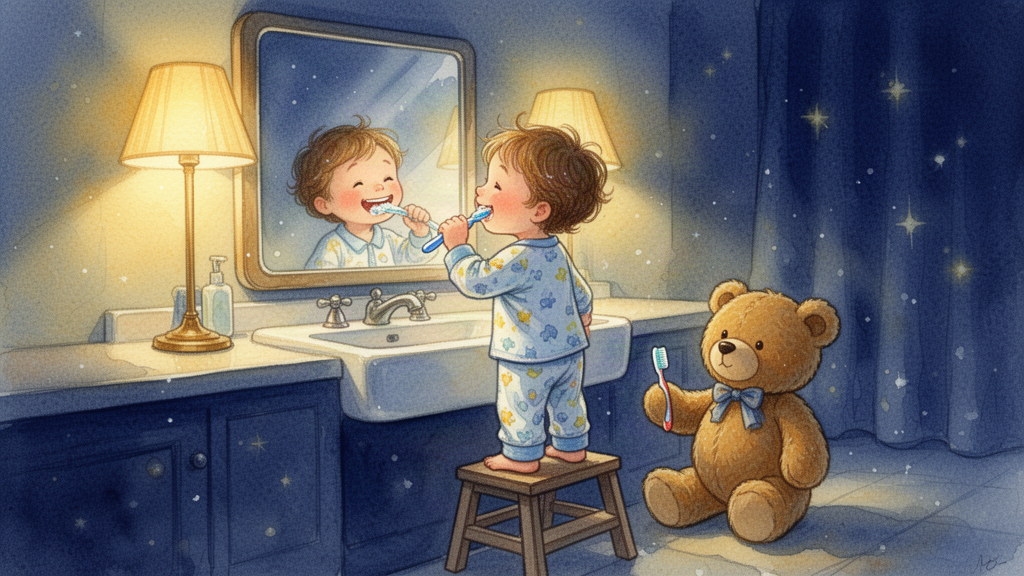
Clamped lips, wriggling bodies and a toothbrush that mysteriously vanishes: tooth-brushing is one of the most common bedtime flashpoints. Here is how to understand why children resist it and how to turn it into a calm, even enjoyable part of the wind-down.
If your evenings include a daily negotiation over the toothbrush, you are in very good company. Tooth-brushing is one of the most common bedtime battles for children aged 2 to 10, and it tends to land at exactly the wrong moment: when everyone is tired, patience is thin, and the finish line (sleep) is so close. The good news is that most brushing resistance has simple, understandable causes, and with a few small changes it can become one of the smoothest parts of your routine.
Why Children Resist Tooth-Brushing
Before reaching for a fix, it helps to understand what is actually going on. Resistance is rarely just stubbornness.
It is a transition. Brushing usually means stopping something more fun, like play, a bath, or a cuddle. Children find stopping enjoyable things hard, and the toothbrush becomes the symbol of that ending.
It is a sensory experience. Minty toothpaste can feel hot or spicy to little mouths. Bristles can tickle or feel scratchy on sensitive gums. Foam and the sensation of someone else's hand near the face can be overwhelming for some children.
It is a chance for control. Between 2 and 5 especially, children are discovering their independence. Opening or closing their mouth is one of the few things that is entirely theirs to decide.
They are tired. An overtired child has fewer coping resources. If brushing is always the last thing before lights out, it may be landing at the peak of the meltdown window.
Make It Predictable, Not Optional
Children thrive on routine, and a fixed sequence takes the debate out of brushing. When teeth come after pyjamas and before the story, every single night, there is less to negotiate because it is simply what happens next.
A few ways to make the pattern stick:
- Use a visual chart. A simple picture sequence (bath, pyjamas, teeth, story, sleep) lets your child see where brushing fits and what comes after it.
- Brush before the story, not after. Making the story the reward for finished teeth gives your child something to move towards rather than something to resist.
- Give a two-minute warning. A calm "In two minutes we're going to brush teeth" gives their brain time to shift gears.
- Stay matter-of-fact. A cheerful, unbothered tone signals that this is just what we do, not something up for debate.
Give Your Child Real (Small) Choices
Control is often the heart of the struggle, so hand over the choices that do not matter while keeping the one that does. Teeth will be brushed, but there is plenty of room to decide how.
- Let them choose between two toothbrushes or two toothpaste flavours (try a milder, non-minty option if heat is the issue).
- Ask whether they would like to brush first or have you go first.
- Let them pick the song or timer that plays while they brush.
- Offer the chance to brush in front of the mirror, sitting on your lap, or standing on a step stool.
For younger children, the "turn-taking" approach works well: they brush their own teeth first so they feel in charge, then you do a quick, gentle "check" to make sure every tooth is clean. Most dentists recommend that parents help or supervise brushing until around age 7 or 8, so this shared approach is not just a trick, it is good practice.
Turn Two Minutes Into Something Playful
Two minutes is a long time for a small child. Making it fun is not cheating, it is the most effective strategy there is.
- Play a favourite song. A two-minute track gives a built-in timer and a happy association.
- Hunt the "sugar bugs". Pretend to find tiny creatures hiding on each tooth and sweep them away. Silly voices are encouraged.
- Let a toy go first. A teddy or doll with a toothbrush "demonstrates" the technique, and your child can brush their teeth in return.
- Brush together. Children copy what they see. Brushing your own teeth beside them shows what to do and makes it feel like a shared moment rather than a chore.
- Try a sticker or star chart. For children aged 4 and up, tracking a streak of brushing nights can be a motivating, low-pressure reward.
Use Storytelling to Make Brushing Feel Magical
Stories are one of the most powerful tools in a parent's bedtime kit, and they work beautifully for tooth-brushing too. A character who bravely battles the "cavity monsters", or a little dragon who needs sparkling teeth to breathe the brightest fire, gives the task a purpose children genuinely care about.
You can invent a quick story on the spot while your child brushes ("Once upon a time, there was a girl named Maya whose teeth sparkled like tiny stars..."), or build brushing into the wider bedtime story. If you would like help, Dreamtime creates a fresh personalised story each night using your child's name, age and interests, so it is easy to weave in a gentle tooth-brushing adventure starring your child as the hero. Seeing themselves as the brave, sparkly-toothed star of the tale can shift brushing from "something I have to do" to "something I get to be good at".
When It Is Still Hard
Some children have genuine sensory sensitivities or have had an unpleasant experience with brushing. If your child gags, cries from real discomfort, or avoids brushing for weeks despite your best efforts, try:
- A softer, smaller-headed brush or a silicone finger brush.
- A different toothpaste, or a tiny smear instead of a full pea-sized amount.
- Brushing at a different time of evening, when they are less tired.
If you are worried about pain, swollen gums, or visible tooth decay, speak to your dentist. Regular check-ups also help children see the dentist as a friendly helper.
A Calmer Ending to the Day
Tooth-brushing does not have to be a nightly showdown. With a predictable sequence, a few meaningful choices, a dash of playfulness and a story to carry it along, most children come around surprisingly quickly. Be patient with yourself and your little one: habits form through gentle repetition, not perfection. Before long, the toothbrush may even become the thing they ask for, one more step on the cosy road to sleep.
Give your child a new story every night
Dreamtime creates personalised bedtime stories with beautiful illustrations, tailored to your child, every single night.
Start your free trial →