How to Help Your Child Cope With Bedtime When They're Sharing a Room With a Sibling
Dreamtime
12 July 2026
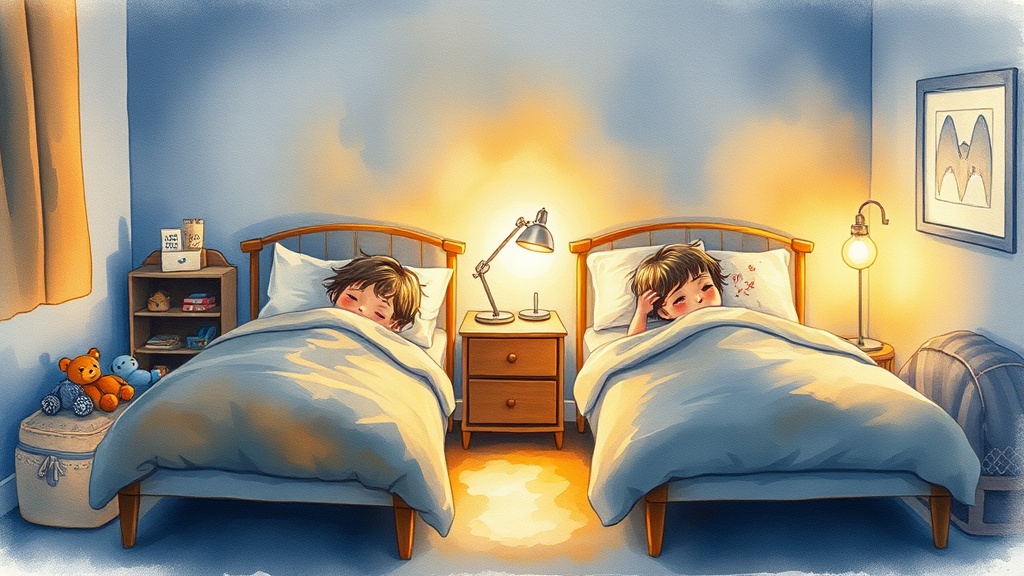
Sharing a bedroom can be wonderful for siblings — and an absolute bedtime nightmare. If one child is keeping the other awake, here's how to make room-sharing work for everyone.
There's something genuinely lovely about siblings sharing a bedroom — the whispered giggles, the comfort of not being alone in the dark, the lifelong memories made in the small hours. But if you've ever tried to get a four-year-old and a seven-year-old to fall asleep at the same time in the same room, you'll know that the reality can be a whole lot less poetic. One child is wired and wants to chat; the other is exhausted and furious. Someone starts singing. Someone else starts crying. And you're standing in the doorway wondering how a situation that looked so sweet on a lifestyle blog went so wrong, so fast. If this sounds familiar, you're in excellent company — and there is a way through.
Why Room-Sharing at Bedtime Is So Tricky
The core challenge is that children of different ages have genuinely different sleep needs. A two-year-old typically needs around 12–14 hours of sleep; a ten-year-old needs closer to 9–11. Their natural body clocks are different too, which means that what feels like the "right" bedtime for one child can feel punishingly early — or dangerously late — for the other.
Add to this the fact that children are social creatures who find it very hard to switch off when there's an interesting person nearby, and you have a recipe for chaos. It's not naughtiness. It's neuroscience. When children are together, their brains stay alert and engaged, because being with other people signals to the nervous system that now is not the time to stand down.
Understanding this takes some of the frustration out of the equation. Your children aren't trying to derail bedtime. They're just human.
Start With Separate Bedtime Routines (Even in the Same Room)
One of the most effective things you can do is give each child their own distinct bedtime routine — even if they ultimately sleep in the same space. This means staggering bedtimes where possible, particularly if there's a significant age gap.
Try settling the younger child first. Begin their routine 20–30 minutes earlier: bath, pyjamas, a quiet story, lights low. Once they're drowsy or asleep, you can give the older child a little more time — some reading in another room, a calm chat about their day, or some quiet drawing — before bringing them in to bed.
If the age gap is smaller and staggered bedtimes aren't practical, give each child a clearly defined "job" at bedtime. The older one might be in charge of choosing the night light colour; the younger one picks the background sound on a sleep machine. Responsibility creates buy-in, and buy-in creates cooperation.
Set Clear (and Kind) Expectations for the Shared Room
Children do better when they know exactly what's expected of them — and when those expectations feel fair. Before bedtime, not during it, have a calm conversation about the rules of the room at night. Keep it simple and positive:
- Quiet voices only once the lights go down.
- Staying in your own bed is the rule for both of you.
- If you need something, you come and find a grown-up — you don't wake your sibling.
Frame these as "being a good room buddy" rather than a list of things they're not allowed to do. Children are far more motivated by identity ("you're such a thoughtful room buddy") than by prohibition ("stop talking or there'll be consequences").
You might also consider a visual signal — a small lamp on a timer, or a colour-changing night light — that clearly communicates "sleep time now." When the light changes, the talking stops. This works especially well for younger children who respond to concrete cues better than abstract instructions.
Give Each Child Their Own Story — Even in a Shared Room
One of the loveliest things about bedtime, and one of the things children genuinely look forward to, is story time. But in a shared room, this can become a source of conflict. One child loves dinosaurs; the other is going through a fairy phase. One is scared by anything remotely tense; the other finds gentle stories boring.
Where possible, try to give each child a moment that feels like theirs. This doesn't have to mean two full story sessions — it might be one shared story followed by a few minutes where each child gets their own quiet, personal wind-down. If you're using an app like Dreamtime, which creates a brand-new personalised story every night tailored to each child's name, age, and interests, you can share one child's story one night and the other's the next — or use a pair of small earphones so each child can listen to their own adventure without disturbing their sibling.
The key is that each child feels seen and considered at bedtime, not just managed.
Handle the "They're Keeping Me Awake" Complaint Fairly
Even in the most harmonious households, there will be nights when one child keeps the other awake — and you'll hear about it, loudly and at length. Here's how to handle it without turning the whole thing into a courtroom drama.
First, validate both children. "I hear you, it's hard to sleep when someone's making noise" and "I know it's difficult to lie still when you're not tired yet" are both true at the same time. Resist the urge to assign blame.
Second, have a pre-agreed consequence that isn't a punishment but a natural result. If talking after lights-out is waking the other child, the talker spends ten minutes winding down in another room before trying again. If one child keeps climbing into the other's bed, they get a brief, boring return — no drama, no discussion, just a calm and consistent response.
Third, check in with each child individually from time to time — not just at bedtime, but during the day — about how the room-sharing is going. Children often have ideas for solutions that adults wouldn't think of. One child might ask for a curtain between the beds. Another might want a white noise machine. Involving them in problem-solving makes them far more invested in making it work.
When Room-Sharing Is Actually Going Well (You Might Miss the Signs)
It's easy to focus on the friction and overlook the moments when room-sharing is genuinely working. If your children are settling more quickly on nights when they've had a good day together, that's not a coincidence — familiar, loving company can be deeply soothing. If the younger child rarely wakes in the night because the older one's presence is a comfort, that's the magic of room-sharing doing its job.
Notice and name these moments. "You two were so kind to each other at bedtime tonight" reinforces the behaviour you want to see more of, and reminds both children — and you — that this arrangement has real warmth at its heart.
A Gentle Word of Encouragement
Room-sharing at bedtime is one of those parenting challenges that can feel relentless in the thick of it and strangely sweet in retrospect. The children who once drove each other (and you) to distraction at 8pm often grow up to say that sharing a room with their sibling was one of the best parts of childhood. You won't always feel that way on a Thursday night when they've been whispering for 45 minutes and nobody is asleep. But the fact that you're looking for thoughtful solutions — rather than simply giving up — says everything about the kind of parent you are. Keep going. It does get easier, and the connection your children are building in that shared room is worth every late night.
Give your child a new story every night
Dreamtime creates personalised bedtime stories with beautiful illustrations, tailored to your child, every single night.
Start your free trial →