How to Help Your Child Stop Asking for a Bedtime Story About Their Favourite Video Game Character
Dreamtime
4 October 2026
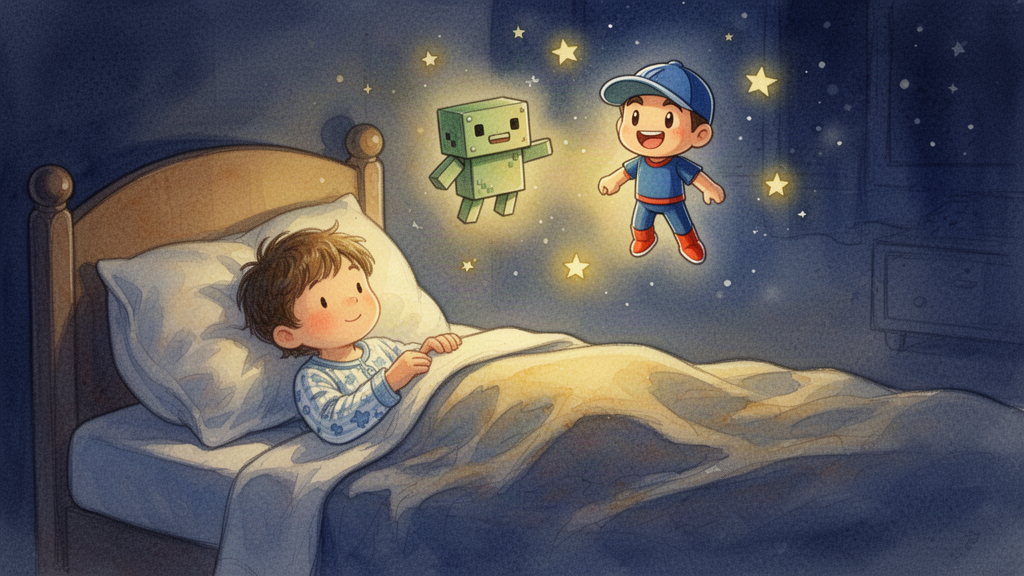
When your child only wants stories about Mario, Minecraft or Roblox, it can feel like screens have followed them into bedtime. Here's how to work with that obsession instead of against it, and turn it into something genuinely good for sleep and imagination.
It usually starts innocently enough. Your child finishes a few rounds of Mario Kart or a Minecraft building session before dinner, and by the time storytime rolls around, all they want to hear about is Luigi, Steve, or whichever Roblox avatar they've been living inside all afternoon. You might feel a flicker of worry: is this healthy? Should bedtime be a screen-free zone, even in story form? Is my child's imagination being replaced by someone else's characters?
Take a breath. Wanting to hear about a beloved game character at bedtime is less about screen addiction and more about something very normal: children process their world through story, and right now, a big part of their world is games. The good news is you can work with this interest rather than fight it, and in doing so, actually strengthen the very things you were worried screens might be weakening.
Why Kids Fixate on Game Characters at Bedtime
When a child asks for a story about Mario or Sonic or their Fortnite skin every single night, it's rarely random. Video game characters tend to have exactly the qualities that captivate young imaginations: clear goals, obstacles to overcome, special powers, and satisfying wins. Children are drawn to competence and agency, and these characters model both in a very direct way.
There's also a comfort element. Just like a favourite stuffed animal or a well-worn picture book, a familiar character is predictable and safe. Your child already knows how Mario moves, what Minecraft creatures do, what the "rules" of that world are. Asking for more stories about them is a way of extending a world they already feel confident in, into a time of day (bedtime) that can otherwise feel uncertain or boring to them.
Finally, there's identity. Many children don't just enjoy playing as these characters, they imagine themselves as capable, brave, or powerful in the same way. A bedtime story starring their favourite character is often really a story about who they want to be.
The Case for Leaning In (A Little)
It can be tempting to ban video game talk from bedtime altogether, especially if you're trying to create distance from screens before sleep. But outright banning a topic your child is genuinely passionate about often backfires, turning storytime into a negotiation rather than a cosy wind-down.
Instead, try separating the character from the screen. You can absolutely tell a story about Mario, Zelda, or a Minecraft villager without a device anywhere in the room. The character becomes a jumping-off point for imaginative, spoken storytelling, not more screen stimulation. This distinction matters: it's the glowing screen and fast-paced visuals close to bedtime that interfere with winding down, not the characters themselves.
Leaning in also gives you an opening to extend their world. If they love Minecraft's building and exploring, you can invent an original story where their favourite creature discovers a new biome, solves a puzzle, or makes a new friend, something that doesn't exist in the actual game. This keeps the comfort of familiarity while adding fresh narrative content their brain hasn't already memorised from gameplay.
How to Evolve the Story Over Time
If every single night is "tell me a Mario story" with zero variation, it's worth gently steering things forward rather than cutting them off. A few ways to do this:
Introduce a sidekick or rival. Keep the beloved character but add someone new: a lost explorer, a mischievous creature, a rival racer. This keeps the anchor your child loves while expanding the story world.
Change the setting. Put Sonic in a snowy mountain instead of a racetrack, or send a Roblox character to the bottom of the ocean. Same character, brand new adventure, which also sneaks in some geography or science facts.
Ask your child to co-write. "What do you think happens when Luigi gets lost in a cave?" turns passive listening into active imagination, and often reveals what's really on your child's mind that day.
Give the character a problem to solve that mirrors real life. A character who's nervous about a race can mirror your child's nervousness about a school test. This is a gentle, indirect way to process real feelings using beloved, familiar characters as the vehicle.
Setting Healthy Boundaries Without Killing the Joy
There's nothing wrong with enjoying a favourite character every night, but a few boundaries help keep bedtime calm rather than revved up:
- Keep the stories gentle in tone even if the game itself is fast-paced or competitive. A calm, descriptive voice matters more than the subject matter.
- Avoid storylines that are too close to actual gameplay goals ("beat the boss," "get the high score"), as these can be more exciting than soothing. Aim for slower, cosier plots: exploring, helping, discovering, resting.
- If your child gets overexcited rather than sleepy, it may help to place the game-character story earlier in the wind-down routine, followed by a calmer, character-free story or quiet activity right before lights out.
This is actually something Dreamtime was built to help with. Parents can create a personalised story featuring their child's name and interests (yes, including their favourite game-inspired themes) while keeping the tone calm, age-appropriate, and designed for sleep rather than excitement. The illustrations and narration give the familiar comfort of a beloved character world, without an actual screen or controller anywhere near bedtime.
The Bigger Picture
A child's love of a video game character at bedtime isn't a sign that imagination is being crowded out. It's actually imagination doing exactly what it's supposed to do: taking something meaningful and turning it into story, which is one of the oldest and healthiest ways humans process the world. Your job isn't to shut the door on Mario or Minecraft, it's to help your child carry that love into a slower, cosier, screen-free space where it can settle into sleep rather than rev them up for more play.
Give it time, a few creative twists, and a calm storytelling voice, and you may find that your child's favourite character becomes one of your best bedtime allies rather than a source of nightly negotiation.
Give your child a new story every night
Dreamtime creates personalised bedtime stories with beautiful illustrations, tailored to your child, every single night.
Start your free trial →