How to Choose the Right Bedtime Story Voice: Should You Do Character Voices or Not?
Dreamtime
18 August 2026
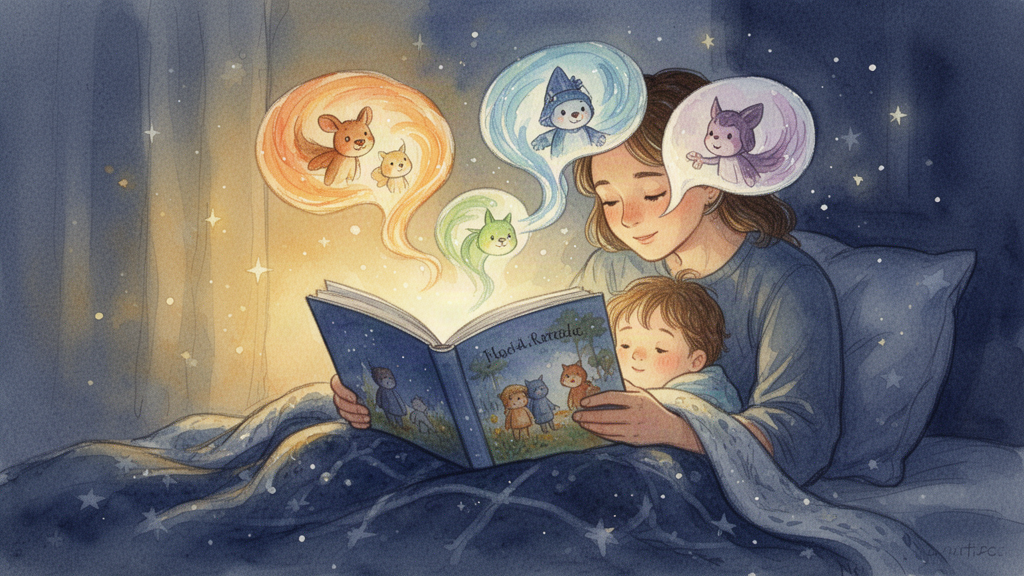
Wondering if you need to do silly voices to be a "good" storyteller at bedtime? Here's what actually matters for engagement, comprehension, and connection — plus simple ways to add variety without the performance pressure.
You're three pages into the bedtime story and your child interrupts: "No, Daddy, make the wolf sound scary!" Suddenly you're not just reading — you're performing. If you've ever felt a flicker of pressure to sound like a professional voice actor at 7pm on a Tuesday, you're not alone. Many parents worry they're "doing bedtime wrong" if they can't produce a convincing pirate growl or a squeaky mouse voice on demand. The good news: the research and the reality of storytelling are far more forgiving than you think.
Why Voices Feel Like They Matter So Much
Character voices are appealing because they make stories feel alive. A distinct voice for each character helps very young children — who are still learning to track who's speaking and why — follow the plot. For a 3-year-old, hearing the same flat tone for the bear, the girl, and the narrator can genuinely make a story harder to follow. A little vocal differentiation (higher pitch for a small animal, slower and lower for a giant) acts like a signpost: this is a new speaker, pay attention.
But here's the key nuance: it's not the quality of the performance that matters, it's the consistency and expressiveness of it. A wobbly, half-hearted troll voice that stays the same every night is more useful to your child's comprehension than an elaborate one you can only pull off once.
What the Evidence Actually Suggests Matters More
Researchers who study "dialogic reading" (the back-and-forth style of storytime that boosts language development) consistently find that these things matter more than vocal performance:
- Warmth and eye contact. Children respond to the emotional tone of a shared reading experience far more than to accents or impressions.
- Pacing and pauses. Leaving space after a question or a dramatic moment gives your child room to react, predict, or ask something — this is where a lot of the real learning happens.
- Expressiveness of emotion, not character. Sounding excited, hushed, or curious at the right moments does more for engagement than a perfect voice for every character.
- Physical closeness and routine. The predictability of snuggling up at the same time each night matters more to a sense of security than any single storytelling technique.
In other words, an "average" storyteller who is present, warm, and varies their tone with the emotion of the scene is doing just as much good as a full character-voice performer — sometimes more, because they're not distracted by the performance itself.
Simple Techniques That Work Without Any Acting Skill
If you'd still like to add a bit of texture to storytime without feeling like you need a drama degree, try these low-effort, high-impact techniques:
1. Whisper for suspense. Dropping your voice to a near-whisper during a tense or secretive moment instantly draws children in — no character voice required.
2. Slow down for magic. Reading more slowly during a wondrous moment (a door opening onto something unexpected, a wish being made) signals importance without you needing to change your voice at all.
3. Use one simple marker per character. Instead of a fully realised voice, just shift your pitch slightly up or down, or pause slightly longer before that character's lines. This is enough of a cue for most children under 6.
4. Let sound effects do the work. A quiet "creak," a soft "shh," or a comedic "boing" can add just as much delight as a voice, and they're much easier to produce consistently.
5. Ask your child to do the voices. Many children love inventing the voice for their favourite character themselves. This shifts the "performance pressure" off you entirely and turns storytime into something collaborative.
When Not Doing Voices Is Actually the Better Choice
There are moments where a plainer, steadier narration voice is the right call rather than an enthusiastic performance:
- Right before sleep. If bedtime stories are the wind-down before lights out, a calm, even voice in the final story of the night helps cue the body for sleep, rather than an animated one that revs your child back up.
- When your child is overtired or anxious. Big, exaggerated voices can occasionally overstimulate a child who's already wired or worried. A gentle, predictable tone often settles them faster.
- When you're exhausted. A story read in your normal, tired voice is still enormously valuable. Children aren't judging your performance — they're absorbing your presence, the words, and the ritual of it.
This is also where a tool like Dreamtime can take some pressure off on nights you simply don't have a voice repertoire left in you. Dreamtime creates a brand-new personalised story each night — starring your child by name — complete with gentle narration and watercolour illustrations, so the storytelling lift is done for you while you focus on the snuggling-in part. It's not a replacement for your own voice on the nights you want to read aloud yourself, but a nice option for the nights when your throat, or your imagination, needs a rest.
The Real Takeaway for Parents
Character voices are a fun bonus, not a requirement. What your child actually needs from storytime is your attention, some emotional light and shade in how you read, and the comforting rhythm of doing it together every night. If silly voices are your thing and your child loves them, keep going — they add joy and can support comprehension in younger children. But if you've never quite nailed a convincing dragon growl, rest easy: the magic of bedtime stories was never really about the voices. It's about the warm body next to them, the shared attention, and the quiet promise that this happens every single night.
Whether you read with a full cast of character voices, a single steady narrator tone, or let an app take over the narration for one night, what matters most is that the story gets told — together.
Give your child a new story every night
Dreamtime creates personalised bedtime stories with beautiful illustrations, tailored to your child, every single night.
Start your free trial →