How to Help Your Child Stop Asking for a Bedtime Story About Something They're Scared Of (Facing Fears Through Fiction)
Dreamtime
27 September 2026
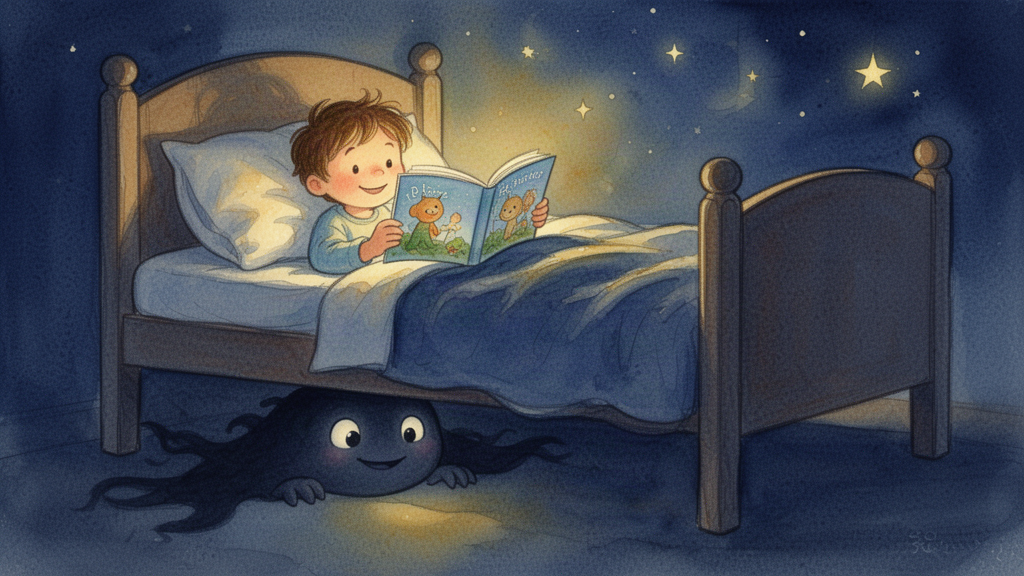
When your child keeps requesting stories about the exact thing that scares them, whether it's spiders, the dark, or the doctor, it can feel confusing. Here's why kids do this, and how to use it as a genuine tool for building courage rather than fuelling anxiety.
It's an odd moment for a lot of parents: your child is terrified of dogs, or thunderstorms, or the vacuum cleaner, and yet every single night they ask for a story about exactly that thing. You brace yourself, worried you're about to make bedtime worse, not better. But this request isn't a mistake. It's actually a sign that your child's brain is doing exactly what it's supposed to do with fear: trying to understand it, in a safe place, on their own terms.
Understanding why children gravitate towards their fears in story form, and how to handle it well, can turn a confusing bedtime moment into one of the most powerful tools you have for building real courage.
Why Children Ask for Stories About the Things That Scare Them
Children don't yet have the words or logic to process big, scary feelings the way adults do. Story gives them a workaround. When a child asks for a tale about a monster, a spider, or a trip to the dentist, they're often trying to rehearse the scary scenario in a context where they hold all the power. They can ask for the story to pause, change the ending, or hear it again and again until it feels smaller.
Psychologists call this "mastery play", the same instinct that makes toddlers repeatedly drop a spoon off a highchair or play peekaboo obsessively. Doing something scary or uncertain over and over, in a controlled way, is how children build a sense of "I can handle this." A bedtime story about the thing they fear is simply a more sophisticated version of that same instinct.
This is different from a child who is anxious and spiralling. If your child seems distressed by the story, is asking out of panic rather than curiosity, or the request is escalating their fear rather than settling it, that's a sign to change tack. But for most children, asking for the scary story is a request for help, not a warning sign.
How to Tell the Difference Between Healthy Processing and Feeding Anxiety
Before diving into "yes, let's tell that story", it helps to check in with a few signals:
- Tone of the request. Is your child curious and a bit gleeful ("tell the one where the shark is chasing them again!") or do they seem tense and repetitive in a way that isn't settling?
- What happens after the story. Healthy processing usually leaves a child calmer, more able to talk about the fear, or even joking about it. If they're more wound up or can't sleep afterwards, pull back.
- How the story ends. Children doing well with this kind of story tend to want resolution: the character overcomes the fear, escapes, or makes friends with the "scary" thing. If your child only wants the frightening part with no resolution, gently steer the story toward an ending.
Trust your instincts here. You know your child, and you'll usually feel the difference between "this is helping" and "this is looping."
How to Build a Fear-Facing Story That Actually Helps
If you decide to lean into it, a few storytelling techniques make a real difference:
Give the fear a shape and a name. Vague fears are harder to manage than specific ones. If your child is scared of "the dark," a story about a friendly nighttime creature called Shadow who just wants to say hello gives the fear a face, and faces are much less frightening than the unknown.
Make your child (or their favourite character) the hero, not the victim. The goal isn't to relive the scary moment, it's to rewrite it with your child in control. A child who is scared of dogs might hear a story where they teach a nervous puppy how to be brave, flipping the power dynamic entirely.
Always end on mastery, not fright. Whatever happens in the middle of the story, the ending should show the fear being smaller, funnier, or resolved. Kids need the emotional landing to be safe, every time.
Let them steer. Ask "what happens next?" or "what should the character do?" This keeps your child in the driver's seat of the narrative, which is exactly where their brain wants to be when processing something scary.
Use humour where it fits. A monster who is actually terrified of socks, a dragon who sneezes glitter instead of fire: injecting silliness into scary characters is one of the oldest and most effective tricks in children's storytelling, from Where the Wild Things Are to Room on the Broom.
This is where a tool like Dreamtime can take some of the pressure off. Because each story is personalised with your child's name, age, and interests, you can quietly steer a story toward whatever they're working through, a fear of the dark, a nervous first day at school, a worry about the dentist, without it feeling like a lecture. The story becomes about them specifically, facing the thing bravely, with watercolour illustrations and narration that keep it gentle rather than intense.
When to Bring in Other Tools Alongside Story
Story is a wonderful entry point, but it works best alongside other reassurance. If your child's fear is significant (a real fear of dogs after a scary encounter, for example, or anxiety about a medical procedure), pair the story with real-world preparation: a calm visit to a friend's gentle dog, or a chat with the doctor beforehand about what will happen. Story softens the ground, but it isn't the whole solution for bigger fears.
It's also worth talking to your GP or a child psychologist if a fear is significantly disrupting daily life, sleep, or school, rather than relying on bedtime stories alone.
A Gentle Reminder for Tired Parents
If your child keeps circling back to the same scary topic at bedtime, take a breath: this is a sign of a healthy, hardworking little brain trying to make sense of the world, not a parenting failure. With a bit of gentle steering, humour, and a happy ending every time, these stories can become one of the most bonding, confidence-building parts of your bedtime routine. Fear doesn't have to be the enemy of a good night's sleep. Sometimes, told the right way, it's the very thing that helps your child drift off feeling just a little bit braver than they did the night before.
Give your child a new story every night
Dreamtime creates personalised bedtime stories with beautiful illustrations, tailored to your child, every single night.
Start your free trial →