How to Choose Bedtime Stories That Actually Teach Problem-Solving Skills
Dreamtime
23 August 2026
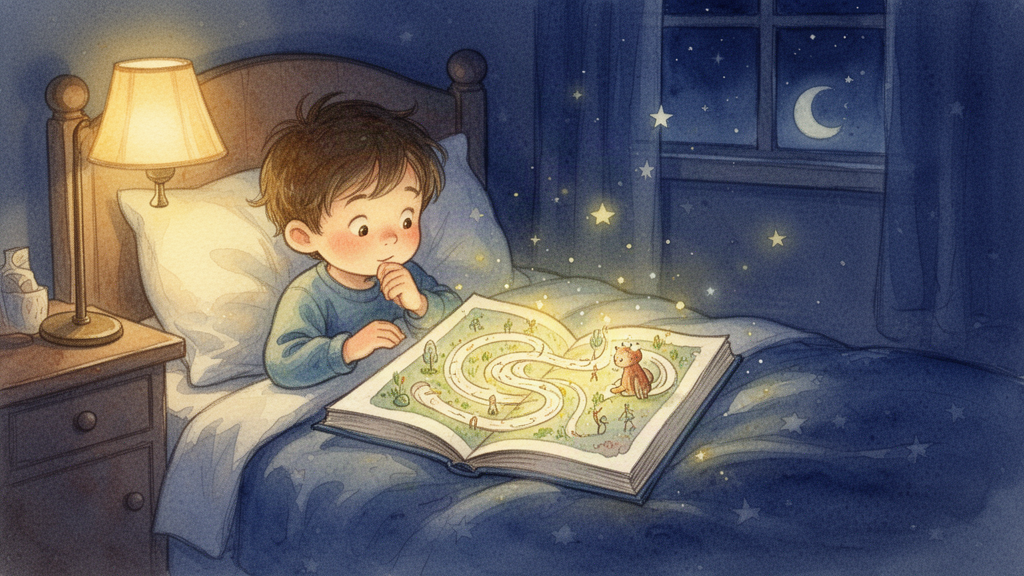
Not all bedtime stories are created equal when it comes to building your child's problem-solving muscles. Here's what to look for in a story, and how to talk about it afterwards, so bedtime quietly grows a more resourceful, resilient thinker.
Every parent has had the moment: your child hits a snag — a jammed zip, a tricky puzzle piece, a disagreement with a friend — and instead of trying a different approach, they simply give up or melt down. Problem-solving isn't something children are born knowing how to do. It's a skill, built the same way as reading or riding a bike: through practice, modelling, and lots of low-stakes repetition. And it turns out one of the most powerful (and most overlooked) places to build that skill is right there at bedtime, in the stories you're already reading.
Not every story does this job equally well, though. A lot of bedtime books are built around a single, tidy resolution that happens to the character rather than because of something they figured out. If you want stories that genuinely stretch your child's thinking, it helps to know what to look for — and what to do with the story once you've finished reading it.
What Makes a Story Good for Problem-Solving
The strongest problem-solving stories share a simple pattern: a character faces an obstacle, tries something that doesn't quite work, adjusts, and eventually finds a way through. That messy middle section — the trying and failing — is the part that matters most. It shows children that struggle is a normal, expected part of getting to a solution, not a sign that something has gone wrong.
Look for stories where:
- The problem is clear and relatable. A lost object, a disagreement, a puzzle, a journey that doesn't go as planned.
- The character tries more than one solution. Bonus points if the first attempt fails — this normalises trial and error.
- The resolution comes from the character's own thinking, not a lucky rescue, a magic wand, or an adult swooping in.
- There's a moment of pause or reflection, where the character stops to think rather than immediately acting.
Fairy tales and folk tales are often surprisingly good at this — think of characters who have to outwit a wolf, cross a river, or solve a riddle. Modern picture books about everyday problems (making a new friend, fixing a broken toy, figuring out how to share) work just as well, especially for younger children who relate more easily to ordinary situations than to giants and castles.
Ask "What Would You Do?" Before the Ending
One of the simplest, highest-value things you can do with any story is pause just before the resolution and ask: "What do you think they should do?" This single question turns your child from a passive listener into an active problem-solver.
It works best when you genuinely pause — resist the urge to jump in with hints. Let there be a bit of silence. Young children often need a few seconds longer than we expect to generate an idea, and jumping in too quickly teaches them to wait for the answer rather than search for it themselves.
If your child suggests something wildly impractical ("they should fly away!"), that's fine. The goal isn't a "correct" answer — it's the mental habit of generating options at all. You can gently follow up with, "That's one idea — what else could they try?" to encourage a second and third option, which is where real flexible thinking starts to develop.
Talk About the Failed Attempts, Not Just the Win
After the story ends, most of us default to talking about how it finished: "Wasn't that a happy ending!" But the far more useful conversation happens around the middle of the story — the part where the character tried something and it didn't work.
Try questions like:
- "What did they try first? Why didn't that work?"
- "How do you think they felt when their first idea didn't work?"
- "What made them think of the second idea?"
This does two things at once. It builds your child's understanding that setbacks are simply information, not failure — and it models the actual mental process of problem-solving: try, notice what happened, adjust, try again. Children who hear this pattern named out loud, night after night, start to apply it themselves when they hit real obstacles during the day.
Let Your Child Rewrite the Ending
Once your child is familiar with a story, invite them to change what the character does. "What if they had tried knocking on the door instead of climbing through the window — what might have happened?" This kind of "what if" thinking is a core problem-solving skill in disguise: it's the same mental flexibility adults use when troubleshooting a plan that's gone sideways.
It also gives you a gentle window into how your child thinks. Some children will invent wildly creative alternatives; others will want to stick closely to the original. Both are fine — the goal is simply the exercise of imagining a different path, not producing a "better" story.
Choose Stories With Problems Your Child Is Actually Facing
Generic problem-solving stories are useful, but stories that mirror your child's real current challenges are even more powerful, because they let your child rehearse a solution in a low-pressure setting before they need it in real life. A child who's nervous about starting swimming lessons benefits enormously from a story about a character who's scared of water and works out, step by step, how to feel braver. A child who struggles to share benefits from a story about a character solving exactly that problem.
This is one area where a personalised story can do something a shelf of picture books can't. Dreamtime lets you generate a brand-new story each night built around your own child's name, age, and interests — so if your seven-year-old is wrestling with a tricky friendship or your four-year-old is scared of the diving board, you can shape a story around that specific problem and let your child watch a character just like them work it out, illustrated and narrated fresh every time.
Bringing It All Together
You don't need a curriculum or a stack of "educational" books to raise a resourceful thinker. You need stories with real obstacles, a habit of pausing to ask what your child would do, and conversations that linger on the struggle as much as the solution. Do this consistently, even just a few nights a week, and you'll start to notice it showing up in daylight hours too — in the way your child pauses before giving up, tries a second approach, or says, "Let me think about it," instead of immediately asking for help.
Bedtime is already one of the most concentrated, distraction-free windows you get with your child each day. With a little intention about which stories you choose and what you talk about afterwards, it can quietly become one of the most effective problem-solving classrooms they'll ever have — no worksheets required.
Give your child a new story every night
Dreamtime creates personalised bedtime stories with beautiful illustrations, tailored to your child, every single night.
Start your free trial →