How to Help Your Child Stop Asking for Bedtime Stories With Scary Villains (Without Banning Them Outright)
Dreamtime
28 September 2026
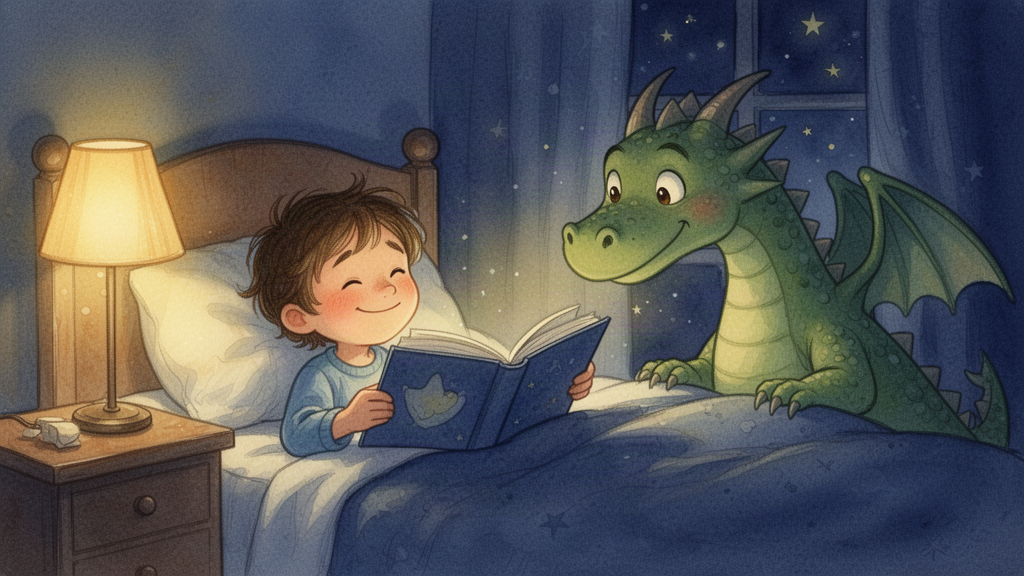
Villains are a bedtime staple, but when the wicked witch or hungry wolf starts causing real worry at lights out, it's time to rethink how you handle them. Here's how to keep the drama kids love without the fear that follows them to sleep.
There's a strange bedtime paradox many parents know well: your child begs for the story with the scary dragon, the wicked queen, or the growling wolf, then lies awake afterwards convinced something is under the bed. They want the villain, they ask for the villain by name, and yet the villain is the very thing that unsettles them once the lights go off. If this sounds familiar, you're not doing anything wrong, and neither is your child. This is a completely normal part of how young children process stories, and there are simple ways to keep the excitement without the aftermath.
Why Children Are Drawn to Scary Characters in the First Place
It seems counterintuitive that a child who's afraid of the dark would specifically request a story about a monster. But villains serve an important psychological purpose in children's stories. They give shape to fears that already exist in a child's imagination, whether that's a fear of being left alone, losing control, or facing something bigger and more powerful than themselves.
A well-told story lets a child experience that fear in a contained, safe way, with a beginning, middle, and end they can predict and eventually control. Psychologists call this "safe danger": the villain is scary enough to be thrilling, but the story format guarantees the child (and the hero) comes out the other side unharmed. This is exactly why fairy tales have leaned on witches, wolves, and giants for centuries. Children aren't just tolerating the scary parts, they're actively using them to rehearse courage.
The trouble starts when the excitement of story time doesn't fully switch off by bedtime, and the villain that felt fun and manageable at 7pm starts to feel very real at 9pm in a dark room.
Signs the Villain Has Become Too Much
Not every child reacts the same way, so it helps to watch for specific signals rather than assuming all scary characters are off the table. Look out for:
- Asking for the light to stay on specifically after a villain-heavy story
- Repeatedly asking "is it real" or "can it get me" well after the story ends
- New reluctance to go to their room alone
- Bringing up the character during the day in a worried rather than playful way
- Physical signs of anxiety at bedtime like a racing heart, clinginess, or tears that weren't there before
If you're noticing one or two of these occasionally, that's normal processing. If it's happening most nights, it's worth adjusting how you handle villains rather than cutting them out completely.
How to Keep the Thrill Without the Fear
Give the villain a weakness. Children feel much safer when they know exactly how a threat can be defeated. A witch who's afraid of laughter, a dragon who just wants a friend, a wolf who's actually just hungry and can be won over with soup: these small tweaks turn menace into a puzzle to solve rather than an open-ended threat.
Let your child help write the ending. Ask "what do you think happens to the villain next?" This hands your child the reins of the story's outcome. When they decide the witch gets turned into a friendly cat or the monster moves to a cave far, far away, they're mentally filing the character under "resolved" rather than "unfinished business."
Separate story time from the villain's world. After finishing a scary story, do a short debrief. Ask what part they liked best, or have them draw the hero winning. This closing ritual acts like a mental full stop, signalling that the story, and the danger inside it, is now over.
Watch your own narration. Kids pick up on vocal cues more than the actual words. If you do a booming, menacing villain voice right before turning off the light, that tone can linger in the room even after you've said goodnight. Consider softening the villain's voice in the final act of the story so the last thing your child hears is calm, not chaos.
Introduce villains earlier in the evening, not right before lights out. If your child is particularly sensitive, save the punchier stories for after dinner or bath time, and choose something gentler for the final story right before sleep.
When to Dial It Back Completely
Sometimes a child asks for scary stories out of habit or because a sibling loves them, even though they personally find them too much. It's worth occasionally asking directly: "Do you want a story with a scary bit tonight, or a calm one?" Giving children the language and permission to choose calmer stories, without it feeling like a failure or a "baby" choice, is powerful. Some children need a season of gentler stories before they're ready to return to villains, and that's completely fine.
This is one of the reasons a personalised story can work so well here. With Dreamtime, you can shape not just the setting and characters but the tone of the adventure, keeping your child's favourite hero front and centre while adjusting how intense the antagonist is on any given night. A child who wants their own name in an exciting dragon story, but without nightmares afterwards, can have both: the app tailors each new story to their age and comfort level, so the thrill stays fun rather than frightening.
The Bigger Picture
Scary characters aren't something to eliminate from your child's storytelling diet, they're a tool your child is instinctively using to build courage and process the world. Your job isn't to remove every villain, but to help your child hold onto the thrill while leaving the fear at the last page. With a few small adjustments to how stories end and how you wind down afterwards, you can keep the magic of the wicked witch and the growling wolf alive, without them following your child under the covers.
Every child's threshold is different, and it will shift as they grow. Trust what you're observing, keep the conversation open, and remember that even the bravest little listener sometimes just needs the light left on a little longer, and that's perfectly okay too.
Give your child a new story every night
Dreamtime creates personalised bedtime stories with beautiful illustrations, tailored to your child, every single night.
Start your free trial →