How to Help Your Child Develop a Love of Nature Through Bedtime Stories
Dreamtime
25 July 2026
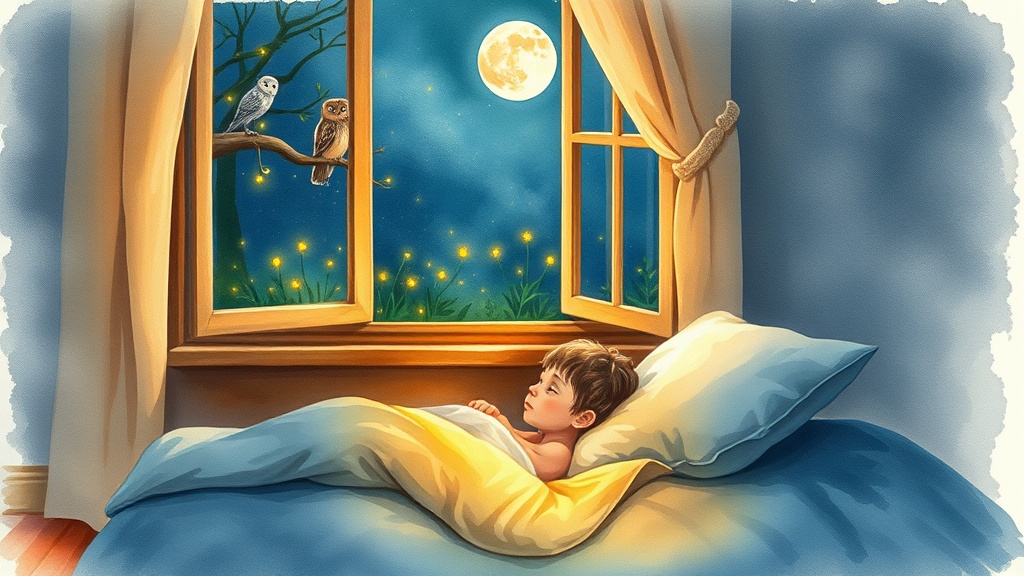
Bedtime is one of the most powerful moments to kindle a lifelong love of the natural world in your child. Discover how the right stories, conversations, and rituals can turn story time into a gateway to wonder — no muddy boots required.
There's a reason so many classic children's stories are set in forests, meadows, and beneath the sea. Nature has always been the perfect backdrop for wonder, and wonder — as any parent of a young child knows — is exactly what bedtime is made for. But in an increasingly screen-filled world, many children are spending less time outdoors and less time thinking about the natural world at all. The good news? You don't need to plan a camping trip or a woodland walk to change that. The quiet, unhurried minutes before your child falls asleep are one of the most powerful opportunities you have to plant the seeds of a lifelong connection with nature — and it all starts with a story.
Why Bedtime Is the Perfect Time to Spark Nature Curiosity
The brain does something remarkable in the moments just before sleep: it becomes especially receptive to narrative, emotion, and imagination. Sleep researchers call this the hypnagogic state — that dreamy in-between space where the mind is relaxed but still listening. It's the same reason children remember bedtime stories so vividly, even years later.
This makes bedtime the ideal time to introduce ideas, images, and questions about the natural world. A story about a hedgehog preparing for winter, a seed pushing up through the soil, or a family of foxes exploring a moonlit garden doesn't just entertain — it creates emotional associations with nature that can last a lifetime. Children who feel emotionally connected to the natural world are more likely to want to protect it, explore it, and find comfort in it as they grow.
Choosing Stories That Bring the Natural World to Life
Not all nature-themed stories are created equal. The most effective ones for young children share a few key qualities:
They centre on a living creature or natural phenomenon, not just a setting. A story where a child visits a wood is nice. A story told from the perspective of a barn owl hunting in that wood is transformational. When children inhabit the point of view of an animal or even a plant, they build genuine empathy with the natural world.
They include sensory detail. The best nature stories make children feel the damp grass, smell the pine needles, hear the rain on the roof. Sensory language activates more of the brain and makes the experience stick. When reading aloud, slow down at these moments and let the image land.
They answer a question or reveal something true. Children are natural scientists. Stories that weave in a real fact — why leaves change colour, how spiders spin silk, where butterflies go in winter — satisfy the deep curiosity that young children carry with them everywhere.
For children aged 2–4, look for simple, rhythmic stories about familiar creatures: birds, worms, snails, and garden animals. For children aged 5–8, the natural world can become more adventurous — deep oceans, ancient forests, seasonal migrations. By ages 8–10, children can handle stories that explore ecosystems, adaptation, and even gentle environmental themes.
Conversation Starters to Use After the Story
The story itself is only half the magic. What you say in the two or three minutes afterwards — before the final goodnight — can deepen the connection and carry it into the next day.
Try some of these gentle prompts after a nature-themed story:
- "If you could be any animal in that story, which one would you be and why?"
- "What do you think [the fox / the bee / the river] does when it gets dark?"
- "Have you ever seen something like that outside? Where?"
- "What's one thing you'd like to find out about [owls / trees / the ocean]?"
These aren't quizzes — they're invitations. The goal is simply to keep the imagination warm and pointed in the direction of the natural world. Don't worry if your child gives a silly answer or drifts off mid-sentence. That's a success, not a failure.
Simple Rituals That Connect Bedtime to the Natural World Outside
Stories work even better when they're anchored in a child's real experience. A few tiny rituals can create a thread between the story world and the world just outside your window:
Look out the window together before bed. Even in a city, there's always something — a moon phase, a cloud, a sparrow on a rooftop. Name it. Wonder about it. It takes thirty seconds and makes the natural world feel present and real, not just something that happens in books.
Keep a nature question jar. Each evening, before the story, your child drops in a folded piece of paper with a question they've wondered about that day — Why do worms come out when it rains? Do fish sleep? Once a week, pull one out and look it up together. This habit builds a beautiful connection between curiosity, story, and discovery.
Match the season in your stories. In autumn, reach for stories about hibernation and harvest. In spring, look for tales of new beginnings and animal babies. This seasonal rhythm helps children understand that they are part of nature's cycles, not separate from them.
If you're looking for stories that can be tailored specifically to your child's current fascinations — whether that's dinosaurs, deep-sea creatures, or the robin that visits your garden every morning — Dreamtime creates a brand-new personalised bedtime story every night, woven around your child's name, age, and interests, complete with watercolour illustrations. It's a lovely way to keep nature-themed storytelling feeling fresh and personal, night after night.
What the Research Says About Children and Nature
The evidence for nurturing a connection with nature in early childhood is compelling. Richard Louv, author of Last Child in the Woods, coined the term "nature-deficit disorder" to describe the growing disconnection between children and the natural world — and its consequences for wellbeing, attention, and creativity. Studies consistently show that children who feel connected to nature have lower levels of anxiety, stronger problem-solving skills, and greater capacity for wonder and awe.
But here's what's often overlooked: that connection doesn't have to start outdoors. It can start in the dark, in a warm bed, with a quiet story about a moth finding its way home by moonlight. Emotional connection precedes physical connection. When children love the natural world through story, they want to go out and find it for themselves.
A Last Thought for Tonight
You don't need to be a naturalist, an outdoor educator, or even particularly outdoorsy yourself to give your child a love of the natural world. You just need a few minutes at the end of the day, a good story, and the willingness to say "I wonder..." out loud. That simple act — wondering together, in the dark, before sleep — is one of the most generous things a parent can do. Because a child who goes to sleep marvelling at the world is a child who will wake up wanting to explore it.
So tonight, when you reach for a story, consider choosing one where the forest rustles, the tide comes in, or a small creature finds its way home under a sky full of stars. The love of a lifetime can begin exactly there.
Give your child a new story every night
Dreamtime creates personalised bedtime stories with beautiful illustrations, tailored to your child, every single night.
Start your free trial →